Air Fryer Tips for Beginners
So you just got an air fryer, or maybe you’re still thinking about buying one. Either way, you’re in the right place. An air fryer can feel like a strange little machine at first. It’s loud, it’s fast, and it doesn’t work like your oven or your stovetop. But once you learn the basics, it becomes one of the easiest tools in your kitchen.
This guide covers everything a beginner needs to know. We’ll talk about how air fryers work, what mistakes to avoid, how to clean them, and how to get that perfect crispy texture every single time. No fancy words, no confusing steps. Just simple, clear tips you can use today.
In this article
What Is an Air Fryer and How Does It Work
An air fryer is basically a small, powerful convection oven. It uses a fan to move hot air around your food very fast. This hot air hits the food from all sides, so it cooks quickly and gets that golden, crispy outer layer, almost like deep frying, but with little to no oil.
That’s the big draw here. You get that crunchy texture people love from fried food, but you skip most of the oil and grease. It’s faster than a regular oven too, since the hot air is concentrated in a small space and circulates non-stop.
Most air fryers have a basket or tray where you place the food, a heating element on top, and a fan that pushes the air down and around. Some newer models also have extra racks, rotisserie functions, or even a window so you can watch your food cook.
Why Beginners Love Air Fryers
Before we jump into tips, let’s quickly cover why this little machine has become so popular.
- It cooks food fast, often in half the time of a normal oven.
- It uses little to no oil, so meals feel lighter.
- Cleanup is simple since most parts are non-stick and dishwasher safe.
- It reheats leftovers better than a microwave, keeping food crispy instead of soggy.
- It works for so many foods: vegetables, meat, frozen snacks, even baked goods.
Now let’s get into the real tips that will save you time, food, and frustration.
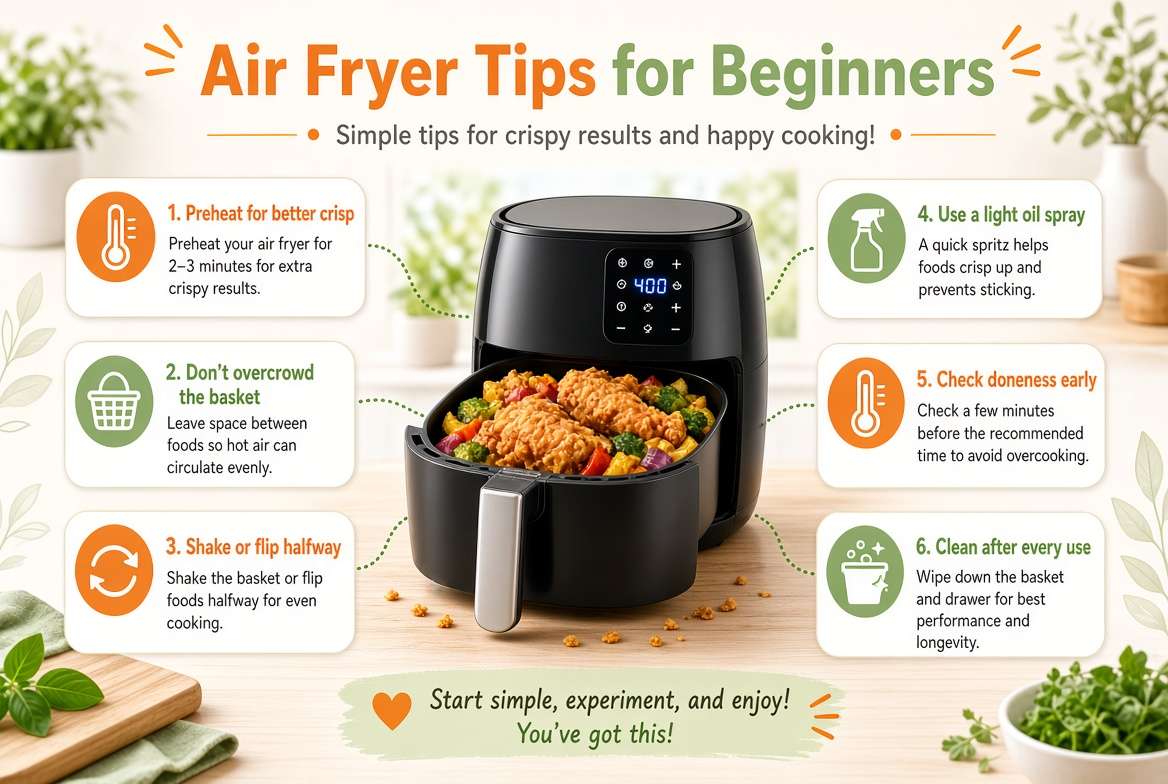
Tip 1: Don’t Skip the Preheat
A lot of beginners skip preheating because they’re in a rush, but this step matters more than you’d think. When you preheat your air fryer for a few minutes before adding food, you help the machine hit the right temperature right away. This means your food starts cooking evenly from the very first second instead of slowly warming up along with the machine.
Most air fryers take about three to five minutes to preheat. Some newer models do this automatically, but if yours doesn’t, just run it empty for a few minutes at your target temperature before adding food.
Tip 2: Never Overcrowd the Basket
This is probably the number one mistake beginners make. It’s tempting to throw a huge batch of fries or nuggets in at once to save time, but air fryers work by circulating hot air around the food. If the basket is packed full, the air can’t move properly, and your food ends up soggy instead of crispy.
Give your food some breathing room. A single layer works best. If you’re cooking a big batch, do it in smaller rounds instead of piling everything in together. Yes, it takes a bit longer overall, but the results are so much better that it’s worth the extra few minutes.
Tip 3: Shake or Flip Halfway Through
Since hot air moves around the basket, food near the edges or bottom can cook a bit differently than food on top. That’s why it helps to shake the basket or flip your food about halfway through the cooking time.
For small items like fries, tater tots, or chicken wings, a quick shake does the trick. For bigger pieces, like chicken breasts or fish fillets, flip them with tongs so both sides get that crispy finish.
Tip 4: Use a Little Oil, Even for “Oil-Free” Recipes
Air fryers are marketed as needing little to no oil, and that’s true, but a light coating still makes a big difference in texture and flavor. A thin spray or light brush of oil helps food crisp up nicely and stops it from drying out too much.
You don’t need to drown your food, just a light mist is enough. Try using an oil spray bottle instead of pouring oil straight from the bottle, since it’s much easier to control the amount this way. Olive oil, avocado oil, and vegetable oil all work well for most recipes.
Tip 5: Don’t Use Cooking Spray Directly on the Basket
This one surprises a lot of beginners. Many non-stick baskets warn against using aerosol cooking sprays directly inside the basket, since the chemicals in some sprays can wear down the non-stick coating over time. Instead, spray oil directly onto your food before placing it in the basket, or use an oil mister filled with your own oil.
Tip 6: Pat Food Dry Before Cooking
If you’re cooking anything marinated or freshly washed, like vegetables or wet meat, pat it dry first with a paper towel. Extra moisture creates steam inside the air fryer, and steam is the enemy of crispiness. Drying your food first helps it brown properly instead of turning soft and pale.
Tip 7: Line the Basket the Right Way
Parchment paper and foil can be handy for easier cleanup, but they need to be used carefully. Always poke a few holes in parchment paper so air can still flow through, or buy pre-cut air fryer parchment liners that already have holes built in.
If you’re using foil, make sure it’s weighed down by food so it doesn’t fly up and touch the heating element, which can be a fire risk. Also, avoid using foil with acidic foods like tomatoes or citrus, since it can react with the metal.
Tip 8: Know Your Temperatures
Air fryers usually cook at temperatures between 180°C and 200°C (350°F to 400°F) for most foods, but this can vary. As a general rule:
- Frozen snacks like fries, nuggets, and mozzarella sticks: around 200°C (400°F)
- Fresh vegetables: around 190°C (375°F)
- Chicken and meat: around 180°C to 190°C (360°F to 375°F)
- Baked goods like muffins or small cakes: around 160°C (325°F)
If a recipe was written for a regular oven, a good rule of thumb is to lower the temperature by about 20°C (25°F to 30°F) and cut the cooking time by around 20 percent when using an air fryer instead.
Tip 9: Keep an Eye on Cooking Time
Because air fryers cook so fast, it’s easy to overcook food if you’re not paying attention. Start checking your food a few minutes before the recommended time is up, especially the first few times you try a new recipe or a new type of food. Every air fryer model runs a little differently, so it helps to learn how yours behaves.
Tip 10: Use the Right Size Basket for the Job
Air fryers come in different sizes, from small two-quart models perfect for one or two people, to large family-sized baskets that hold six quarts or more. If you’re cooking for a big household, a bigger basket saves you from doing multiple rounds. If you live alone or with a partner, a smaller model is often enough and takes up less counter space.
Tip 11: Try Different Foods Beyond Frozen Snacks
Sure, frozen fries and chicken nuggets are the classic starter foods, but air fryers can do so much more. Try roasting vegetables like broccoli, cauliflower, or brussels sprouts for a crispy side dish. Bake small desserts like cookies or brownies. Reheat pizza so the crust stays crunchy instead of getting rubbery like it does in a microwave.
You can even cook eggs, bacon, and toast in an air fryer, making it a great tool for quick breakfasts too.
Tip 12: Season Generously
Because air fryers use less oil than deep frying, food can sometimes taste a little plain if you don’t season it well. Don’t be shy with spices, herbs, and seasoning blends. A little garlic powder, paprika, salt, and pepper can go a long way toward making your food taste as good as it looks.
Tip 13: Don’t Forget to Clean It Regularly
Cleaning your air fryer after each use keeps it working properly and stops old grease and crumbs from building up. Most baskets and trays are dishwasher safe, but it’s worth checking your specific model’s instructions first.
For a quick clean, soak the basket in warm soapy water for a few minutes to loosen any stuck-on bits, then wipe it down with a soft sponge. Avoid using harsh metal scrubbers, since they can scratch the non-stick coating.
Every few weeks, wipe down the inside of the main unit and the heating element too, since grease can splatter up there over time.
Tip 14: Let It Cool Before Cleaning
This sounds obvious, but it’s an easy thing to forget in a rush. Always let your air fryer cool down completely before you start cleaning it. Not only is it safer, but cleaning a hot basket can also warp certain parts or damage the non-stick coating.
Tip 15: Avoid Using Too Much Batter or Wet Coating
If you’re trying to make something like crispy chicken tenders or onion rings, keep in mind that air fryers don’t work exactly like deep fryers. Wet batter can drip through the basket holes and create a mess, or it might not crisp up properly since there’s no hot oil surrounding the food.
A light coating of flour, breadcrumbs, or panko works much better than a thick wet batter. If a recipe calls for a wet batter, try freezing the coated food for a few minutes first to help it hold its shape better in the basket.
Tip 16: Watch Out for Small or Light Foods
Because the fan inside an air fryer blows air quite hard, very light foods like small pieces of bread, herbs, or thin chips can sometimes fly around inside the basket. If this happens, try weighing the food down slightly with a metal trivet or toothpicks, or simply keep an eye on it during the first minute of cooking.
Tip 17: Use a Meat Thermometer for Meat and Poultry
Since air fryers cook fast, it can be tricky to guess doneness just by looking at the outside. A meat thermometer takes the guesswork out completely. Chicken should reach an internal temperature of 165°F (74°C), while ground beef should hit at least 160°F (71°C). This small tool helps you avoid undercooked meat and dry, overcooked meat too.
Tip 18: Don’t Ignore the Manual
It might not be the most exciting read, but your air fryer’s manual often has helpful details specific to your exact model, like recommended temperatures, safety warnings, and cleaning instructions. Different brands and models can behave a little differently, so it’s worth flipping through at least once.
Tip 19: Store Leftover Oil Sprays and Tools Nearby
Keep your oil spray bottle, tongs, and a small brush near your air fryer so you’re not digging through drawers every time you cook. Having your tools within reach makes the whole process smoother and faster, especially on busy weeknights.
Tip 20: Experiment and Take Notes
Every air fryer runs a little differently, even between the same brand and model. The best way to master yours is through practice. Keep a small notebook or a note on your phone with times and temperatures that worked well for your favorite foods. Over time, you’ll build your own personal cheat sheet that takes all the guesswork out of cooking.
Common Beginner Mistakes to Avoid
Let’s wrap up with a quick list of mistakes that trip up a lot of new air fryer owners:
- Overcrowding the basket, which leads to soggy, unevenly cooked food
- Skipping the preheat step
- Using too much oil, which can cause smoking and mess
- Forgetting to shake or flip food halfway through
- Using thick wet batter that doesn’t crisp properly
- Not cleaning the basket regularly
- Ignoring the manual for model-specific instructions
Final Thoughts
Learning how to use an air fryer doesn’t take long, especially once you get the hang of these small habits. Give your food room to breathe, keep an eye on cooking times, season well, and clean your machine regularly. Before long, you’ll be air frying everything from crispy vegetables to golden chicken wings like a pro.
The best part about this kitchen tool is how forgiving it is for beginners. Even if your first batch of fries comes out a little uneven, you’ll learn fast what works and what doesn’t. Stick with it, try new recipes, and soon your air fryer will become one of the most used appliances in your kitchen.

Mary is a home cooking enthusiast and kitchen appliance reviewer who loves helping people find the best tools for everyday meals. She enjoys testing air fryers, deep fryers, and other cooking appliances while sharing honest reviews and practical buying advice. Through FryerPick.com, Mary provides expert guides, product comparisons, and cooking tips to help readers choose the right fryer for their kitchen.