Combo Fryer Energy Efficiency
A combo fryer is one of the hardest working machines in a commercial kitchen. It fries, it pressure cooks, and it saves floor space by doing two jobs in one unit. But there’s a question that every restaurant owner, chef, and kitchen manager should ask before buying or running one: how much power does it actually use, and how can that power use be brought down?
This guide breaks down combo fryer energy efficiency in plain, easy language. No jargon, no confusing technical terms. Just clear facts, smart tips, and real ways to save money on your energy bill while keeping your food quality high.
In this article
What Is a Combo Fryer, Exactly?
A combo fryer combines open frying and pressure frying in a single unit. Open frying works like a normal deep fryer, cooking food in hot oil at regular pressure. Pressure frying seals food in a closed chamber, cooking it faster and locking in moisture. This is the same method used to make crispy fried chicken with a juicy inside.
Because this machine does two things, it needs smart engineering to avoid wasting energy. A poorly built combo fryer can burn through gas or electricity fast, driving up your monthly costs. A well built one, on the other hand, can cut energy use by a large margin compared to running two separate fryers.
Why Energy Efficiency Matters So Much
Running a kitchen is expensive. Rent, staff wages, food costs, and utility bills all add up fast. Out of all these costs, energy use is one of the easiest to control once you understand it.
Here’s why energy efficiency in a combo fryer deserves your attention:
- Lower utility bills: Fryers run for hours every day. Even small savings per hour add up to big savings per year.
- Less heat in the kitchen: An efficient fryer wastes less energy as heat, which means your kitchen stays cooler and your air conditioning doesn’t have to work as hard.
- Longer equipment life: Machines that run efficiently tend to have less strain on parts like heating elements and pumps, so they last longer.
- Better for the planet: Lower energy use means fewer emissions, especially if you’re running gas-powered equipment.
- Compliance with local rules: Many cities now push for energy-conscious commercial kitchens, and using efficient equipment helps you stay ahead of any future rules.
Every one of these points connects back to your bottom line. A restaurant that saves on energy has more room to invest in better ingredients, staff training, or marketing.
Gas vs Electric Combo Fryers: Which One Saves More Energy?
This is one of the biggest debates in commercial kitchens. Both gas and electric combo fryers can be efficient, but they work differently.
Gas Combo Fryers
Gas units heat oil fast and recover heat quickly after food is added. This matters a lot during busy hours because the oil temperature drops every time cold food goes in. A fast recovery time means less energy wasted waiting for the oil to heat back up.
Gas is often cheaper per unit of energy in many regions, so gas fryers can be a budget-friendly choice for high-volume kitchens.
Electric Combo Fryers
Electric units tend to hold a steady temperature better once they reach it, and they don’t produce open flames, so there’s less risk of heat escaping into the room. Electric fryers are often quieter too, and they tend to have simpler venting needs.
The truth is, neither type wins in every situation. A busy kitchen frying nonstop might favor gas because of fast recovery. A smaller kitchen with lighter, steady use might do better with electric because of consistent heat retention. It comes down to your kitchen’s volume, your local energy prices, and your ventilation setup.
Key Features That Affect Energy Efficiency
Not all combo fryers are built the same. Some features make a real difference in how much energy the machine uses over time.
1. Insulation Quality
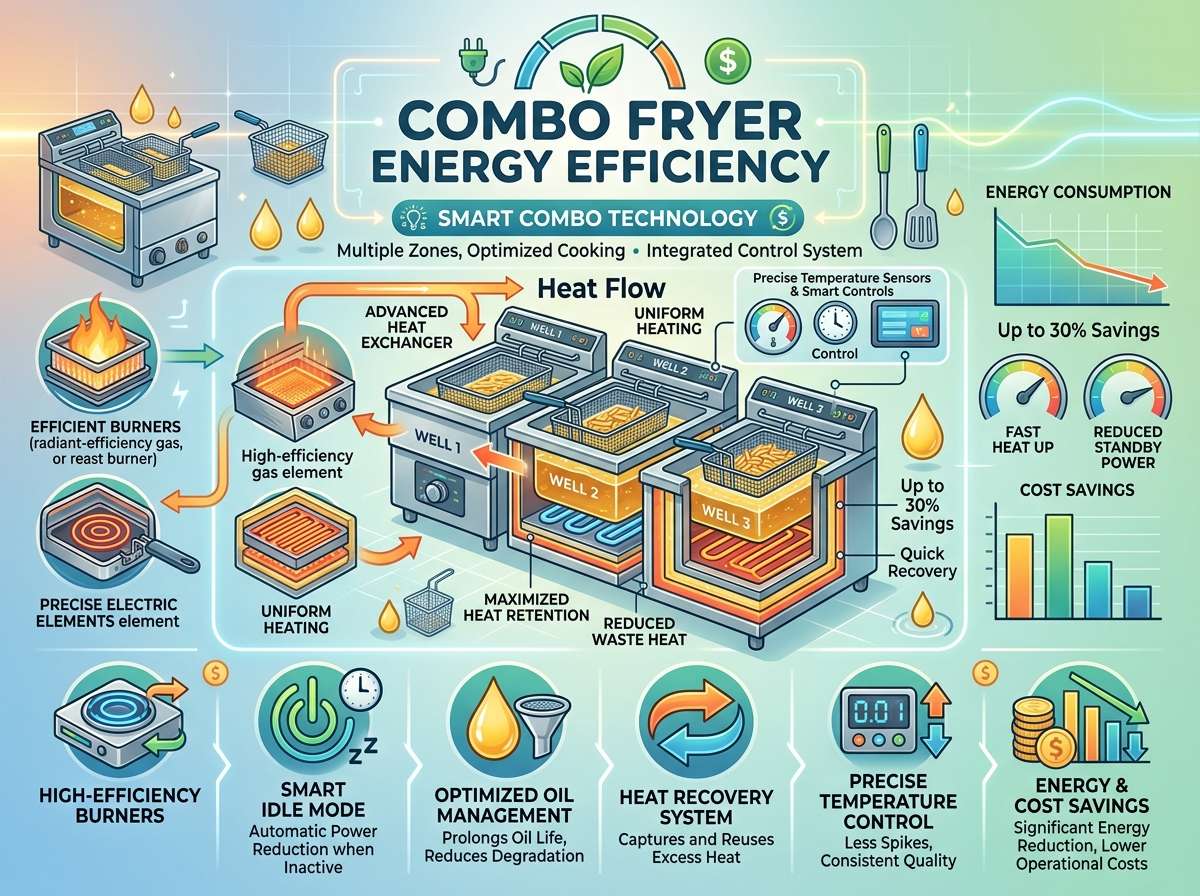
Good insulation keeps heat inside the fryer instead of letting it leak into the kitchen air. Thin or cheap insulation forces the heating system to work overtime just to keep the oil at the right temperature. Look for units with thick, well-sealed insulation around the frying chamber.
2. Heating Element Design
Modern heating elements are built to transfer heat directly into the oil instead of wasting energy heating the surrounding metal. Tube-style or immersion-style elements often perform better than older designs because they sit closer to the oil itself.
3. Digital Controls and Smart Sensors
Old-style dial controls guess at temperature. Digital controls with built-in sensors read the oil temperature in real time and adjust heat output accordingly. This avoids overheating the oil, which wastes fuel and shortens oil life.
4. Oil Filtration Systems
A built-in filtration system keeps oil clean longer. Dirty oil needs more energy to heat properly because burnt particles absorb and trap heat unevenly. Clean oil heats faster and more evenly, saving energy every single fry cycle.
5. Standby Mode
Many newer combo fryers include a standby or idle mode that lowers the temperature slightly during slow periods, then brings it back up fast when needed. This small feature alone can trim a noticeable chunk off daily energy use.
6. Cooking Chamber Size
A fryer sized correctly for your kitchen’s needs will run more efficiently than one that’s too big. An oversized unit heats more oil than necessary, wasting energy on capacity you don’t use.
How to Check If a Combo Fryer Is Energy Efficient
Before buying, there are a few things worth checking:
- Energy certification labels: Look for ratings from recognized energy efficiency programs. These labels tell you the fryer has been tested and meets a certain standard.
- BTU or kilowatt rating: Compare this number against similar-sized units. Lower energy input for the same cooking output usually signals better design.
- Oil recovery time: Ask the seller how fast the oil returns to target temperature after food is added. Faster recovery often means better efficiency.
- Manufacturer efficiency claims: Reputable brands often publish real test data showing energy savings compared to older models. Ask for this data instead of relying on marketing claims alone.
Taking a few extra minutes to compare these numbers before purchase can save thousands over the life of the equipment.
Daily Habits That Cut Energy Waste
Even the most efficient combo fryer can waste energy if it’s used the wrong way. Small daily habits make a big difference.
Preheat Only When Needed
Turning the fryer on too early before service wastes energy holding oil at high heat with nothing cooking. Time your preheat schedule around your actual rush hours instead of turning it on at the start of the shift out of habit.
Avoid Overloading the Basket
Dropping too much food into the oil at once drops the temperature sharply. The fryer then has to work harder and longer to bring the oil back up, burning extra energy in the process. Cook in smaller, steady batches for better results.
Keep the Lid Closed During Pressure Frying
Since pressure frying relies on a sealed chamber, opening the lid too often lets heat and pressure escape. This forces the machine to rebuild pressure from scratch, using more energy each time.
Clean the Oil Regularly
Dirty oil holds onto burnt food particles that block even heat transfer. A quick daily filter or skim keeps oil performing better and reduces the energy needed to maintain temperature.
Turn It Off During Long Idle Periods
If your kitchen has slow stretches during the day, turning the fryer down or off during those windows and turning it back on before it’s needed again can trim daily energy use without hurting service speed.
Train Staff on Proper Shutdown
A fryer left running after close wastes energy overnight. A simple end-of-shift checklist that includes powering down the combo fryer properly can prevent this common and costly mistake.
Maintenance Tips That Keep Efficiency High
Energy efficiency isn’t just about the machine’s design. It’s also about how well it’s cared for over time.
- Check heating elements regularly for buildup or damage, since dirty elements transfer heat less effectively.
- Inspect door seals and gaskets on the pressure chamber, since a worn seal lets heat and pressure leak out.
- Calibrate temperature sensors on a regular schedule so the fryer doesn’t overheat oil trying to reach an inaccurate target.
- Clean vents and filters so airflow around the unit stays steady, since blocked airflow makes electric components run hotter and less efficiently.
- Schedule professional servicing at set intervals to catch small issues before they turn into bigger energy drains.
A well-maintained combo fryer doesn’t just save energy. It also produces better, more consistent food, which keeps customers happy.
The Real Cost Savings Behind Energy Efficiency
Let’s talk numbers in a simple way. Say a standard combo fryer runs for around ten hours a day during service. Over a full year, that adds up to thousands of hours of operation. Even a small percentage drop in energy use, multiplied across that many hours, turns into real savings on the utility bill.
Kitchens that switch to more efficient combo fryers often report noticeably lower gas or electric costs within the first few months of use. Add in savings from less oil waste, since efficient heating reduces oil breakdown, and the total cost benefit grows even more.
For a kitchen running multiple fryers, these savings can be enough to cover part of a staff member’s wages or fund new equipment purchases down the line.
Environmental Benefits Worth Mentioning
Energy efficiency isn’t just about saving money. It also lowers a restaurant’s environmental footprint. Less gas burned means fewer emissions released into the air. Less electricity used means less strain on the power grid, especially during peak demand hours.
Many customers today care about where their food comes from and how it’s made, including the environmental habits of the kitchen behind it. A restaurant that highlights its use of energy-efficient equipment can turn this into a small but meaningful part of its brand story.
Common Mistakes That Waste Energy in Combo Fryers
Even skilled kitchen teams fall into a few common traps that quietly drain energy:
- Setting the temperature too high “just in case.” This wastes energy constantly and can also damage oil quality faster.
- Ignoring oil filtration schedules. Dirty oil forces the machine to work harder for the same results.
- Running the fryer at full capacity during slow hours. Matching output to actual demand saves a surprising amount of energy.
- Skipping routine maintenance. Small mechanical issues often grow into bigger energy losses over time.
- Using the wrong fryer size for the kitchen’s needs. An oversized unit almost always burns more energy than necessary.
Fixing even two or three of these habits can lead to a noticeable drop in monthly energy costs.
Tips for Buying a New Energy Efficient Combo Fryer
If your kitchen is in the market for a new unit, keep these points in mind:
- Compare energy ratings across multiple brands instead of relying on one recommendation.
- Ask for real-world performance data, not just factory specs.
- Think about your kitchen’s actual volume instead of buying the biggest unit available.
- Look for models with digital controls, smart sensors, and built-in filtration.
- Factor in long-term energy savings against the upfront purchase price, since a slightly pricier unit often pays for itself through lower bills.
A smart purchase decision today can lead to years of steady savings ahead.
Final Thoughts
Combo fryer energy efficiency comes down to a mix of smart design, smart habits, and steady maintenance. The machine itself plays a big role, but daily choices in the kitchen matter just as much. Simple steps like avoiding overload, keeping oil clean, and using standby features properly can trim energy waste without slowing down service.
For any kitchen looking to cut costs, protect equipment, and reduce its environmental impact, energy efficiency in combo fryers is a topic worth taking seriously. It’s not a one-time fix but an ongoing habit that pays off meal after meal, shift after shift, and bill after bill.
Small changes add up fast in a busy kitchen. Start with one or two tips from this guide, apply them consistently, and watch how much smoother — and cheaper — your fryer operation becomes over time.

Mary is a home cooking enthusiast and kitchen appliance reviewer who loves helping people find the best tools for everyday meals. She enjoys testing air fryers, deep fryers, and other cooking appliances while sharing honest reviews and practical buying advice. Through FryerPick.com, Mary provides expert guides, product comparisons, and cooking tips to help readers choose the right fryer for their kitchen.