How Are Air Fryers Toxic?
Air fryers have become super popular in kitchens around the world. People love them because they cook food fast and crispy. But are they safe? Let’s talk about the toxic concerns people have been asking about.
In this article
The Rise of Air Fryers and Safety Questions
Everyone seems to own an air fryer now. Your neighbor has one. Your coworker brings air fryer meals to lunch. Your mom just bought one last week. These kitchen gadgets promise quick meals with less oil. But with their popularity comes big questions about health and safety.
The truth is, many people worry about using air fryers. They wonder if the machines release harmful chemicals. They ask if the food becomes unhealthy. They’re concerned about potential dangers. All these questions are totally valid.
What Actually Makes Air Fryers Work
Before we dive into the toxic stuff, let’s understand how air fryers function. Air fryers are not deep fryers. They don’t use oil baths. Instead, they use hot air that circles around food at super high temperatures. This rapid air movement creates a crispy outside layer. The inside stays moist and tender.
The heating element sits on top or at the back. A powerful fan pushes hot air down and around. Food sits in a basket that lets air flow freely. This design means food cooks fast. Most meals finish in just ten to fifteen minutes.
The temperature inside reaches around 350 to 400 degrees Fahrenheit. Some go even hotter. This intense heat is what makes air fryers work so well. But this heat is also where some safety concerns start.
PTFE and Non-Stick Coatings: The Main Concern
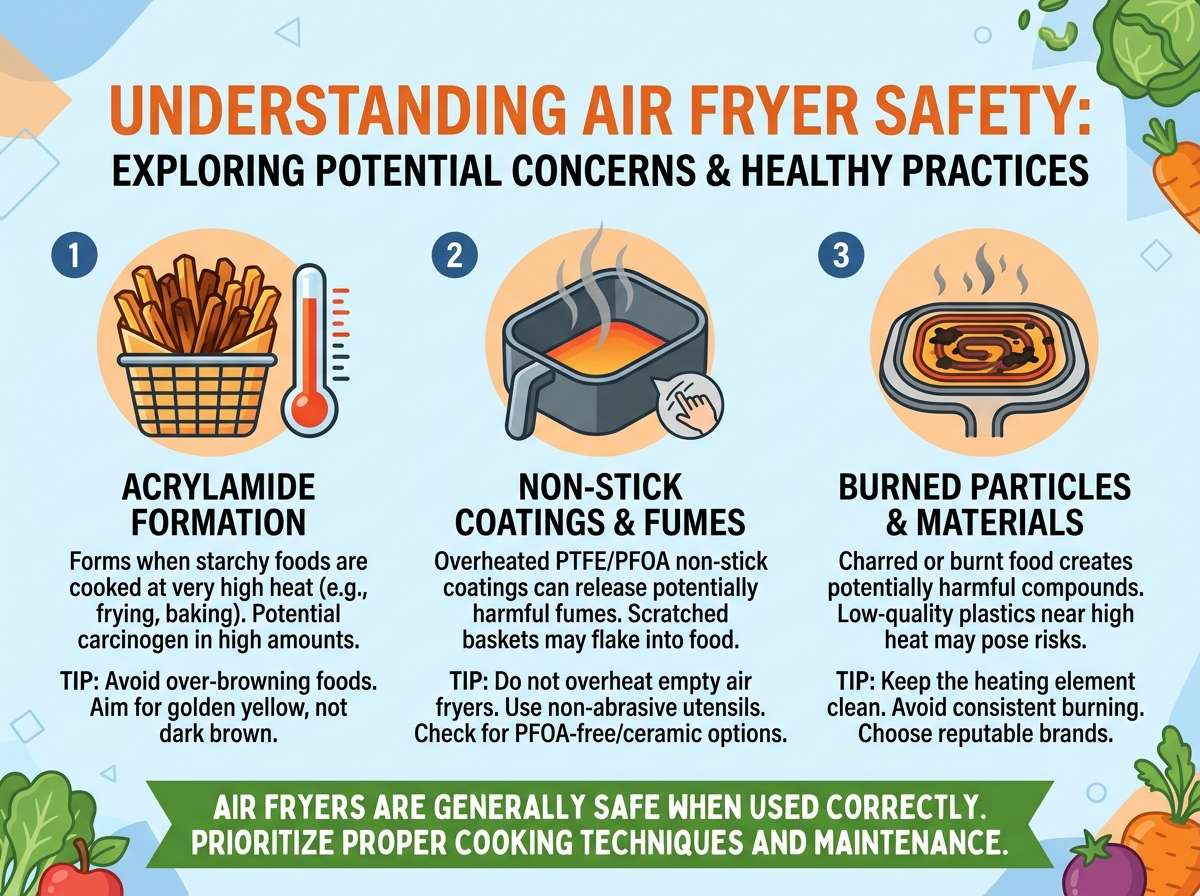
Here’s where toxicity concerns really start to matter. Many air fryers have a non-stick coating on their baskets. This coating is usually PTFE. PTFE stands for polytetrafluoroethylene. You might know it as Teflon, which is a famous brand name.
Non-stick coatings make cleaning easy. Food doesn’t stick. Plates wash up in seconds. But here’s the worry: when PTFE heats up too much, it can break down. It might release fumes into the air. These fumes are called PTFE fumes or Teflon fumes.
The big risk happens when PTFE coatings get scratched or damaged. Damaged coatings break down faster. They release more particles. Some people fear breathing these particles could cause health problems.
Here’s the honest truth though. Air fryers don’t get hot enough to break down PTFE in normal use. PTFE starts breaking down at around 570 degrees Fahrenheit. Air fryers max out at 400 to 450 degrees. That’s almost 120 degrees cooler than the danger zone.
Still, the worry exists. Some people had negative experiences with other non-stick cookware. They’re rightfully cautious. That caution is smart, even if the actual risk is low.
The Acrylamide Issue in Air-Fried Foods
Here’s another big concern people talk about. When you cook starchy foods at high temperatures, something happens. A compound called acrylamide forms. Acrylamide is a chemical that shows up in fried and roasted foods.
Foods like potatoes, bread, and grains create acrylamide when cooked hot and fast. Air fryers use both heat and speed. So yes, acrylamide forms in air-fried foods. It also forms in regular fried foods. It forms in oven-baked foods too.
The real question is whether acrylamide in food actually harms people. Scientists have found acrylamide can cause cancer in animals. But human studies haven’t proven the same thing. The amounts in food appear small. Most experts think the risk is very low.
Still, it’s worth knowing about. You can reduce acrylamide by cooking at lower temperatures. You can also cut cooking times shorter. Keeping foods from turning too brown helps. These simple changes lower acrylamide formation without ruining your meals.
Chemicals Released During Cooking
Some worry that air fryers release toxic chemicals just from normal use. Let’s break this down carefully.
When air fryers heat up, the entire machine warms. Plastic parts can emit fumes. Some cheap plastics release harmful substances when heated. This is a real concern. However, quality air fryers use heat-resistant plastics. These materials stay stable at air fryer temperatures.
The fan motor, the heating element, and the plastic basket all contribute heat. But again, the temperatures stay well below levels that cause real problems. Reputable brands test their products. They make sure materials won’t break down in normal cooking.
That said, not all air fryers are created equal. Cheap, low-quality models might use cheaper plastics. These could release more fumes. Buying from trusted brands matters. Your health is worth the extra money.
The Smoke and Fume Situation
Air fryers produce smoke. This is unavoidable when cooking certain foods. Fatty foods make more smoke. Oils splatter and burn. This smoke could contain harmful particles.
The thing is, regular ovens produce the same smoke. Stovetop cooking creates more smoke actually. Grilling outside creates tons of smoke. So air fryer smoke isn’t unique or special. It’s just part of cooking hot food.
The smoke from burning food contains irritants and potential toxins. But the amounts matter. A little smoke from one meal won’t hurt you. Constant exposure to heavy smoke could be a problem. That’s why ventilation matters.
Make sure your kitchen has good air flow. Use your kitchen exhaust fan. Open a window while cooking. Let air circulate. This simple step reduces any smoke risk. It’s true for air fryers and all cooking methods.
Non-Stick Coating Durability Matters
The condition of your air fryer’s coating directly affects safety. Scratches and peeling coatings are the real problem. When the coating flakes off, pieces can end up in your food. You might swallow tiny plastic or coating fragments.
This is actually more concerning than fumes. You’re directly eating the coating. Over time, this could add up. Damaged coatings should make you stop using that air fryer. It’s time for a replacement.
How do you avoid this problem? Handle your air fryer gently. Don’t use metal utensils inside. Use soft wooden or silicone tools instead. Don’t scrub hard with rough materials. Gentle hand washing keeps coatings intact. Regular inspection catches damage early.
Some people prefer air fryers without any coating. Stainless steel baskets don’t have non-stick layers. These cost more. They also require a bit more oil. But they eliminate coating concerns altogether. If you’re anxious about non-stick coatings, this option exists.
Should You Be Worried About Microplastics
People hear about microplastics everywhere. They worry about plastic in the air. They’re concerned about plastic in their food. Air fryers add to this anxiety.
Here’s the practical reality. Yes, tiny plastic particles exist. Yes, they might come from your air fryer in rare cases. But the risk stays very low. Your air fryer would need severe damage. The coating would need to be actively peeling. Even then, the amount of plastic is tiny.
Compare this to other plastic exposure sources. You breathe in microplastics from the environment. Plastic breaks down everywhere. You get plastic particles from driving behind cars. The single source of microplastics matters less than total exposure.
That doesn’t mean you should ignore air fryer condition. You should absolutely keep your machine clean and intact. Just don’t panic about it. Keep things in perspective.
The Heat and Your Kitchen
High heat is part of air fryer function. This heat can be a safety issue if you’re not careful. Burns happen. Hands get singed. Faces get too close to hot steam.
But this isn’t a toxicity issue. It’s a basic safety issue. Standard ovens get just as hot. Instant pots reach similar temperatures. Any kitchen appliance using intense heat carries burn risks.
Use common sense. Keep hands away from vents. Don’t open the basket while food cooks. Let steam escape before touching anything. Keep children away while cooking. These precautions work for air fryers and all cooking devices.
Comparing Air Fryers to Other Cooking Methods
Is air frying more toxic than other cooking methods? Let’s compare honestly.
Deep frying uses tons of oil. This oil breaks down with heat. Broken down oil releases harmful compounds. Eating fried foods exposes you to oxidized oils. That’s actually quite toxic over time. Air fryers use almost no oil. They’re safer than deep frying in this way.
Traditional ovens work fine for many foods. But they take longer. Food doesn’t brown as quickly. Long cooking times can increase acrylamide formation. Air fryers cook fast. Less time cooking means less acrylamide. So air fryers might actually be better for this concern.
Microwaves heat food quickly. They don’t create acrylamide because temperatures stay lower. But microwaves can create other concerns. Some worry about microwave radiation. Most experts say microwaves are safe. Every cooking method has critics and concerns.
The honest truth is that air fryers aren’t uniquely toxic. They’re pretty safe compared to many methods. The risks they do have apply to other cooking methods too.
Common Air Fryer Toxic Claims Debunked
Let’s tackle some specific claims people make about air fryer toxicity.
Claim: Air fryers emit toxic radiation like microwaves do.
Reality: Air fryers use heat, not radiation. There’s no special radiation risk. They work completely differently from microwaves. This claim simply isn’t true.
Claim: The non-stick coating poisons your food every time you cook.
Reality: The coating is stable at air fryer temperatures. Poisoning requires direct damage or extreme heat. Normal use poses minimal risk. Damaged coatings are a real concern. Normal coatings are not.
Claim: Air fryers release carcinogens into your kitchen.
Reality: Some compounds formed during cooking might be problematic. But this happens in all high-heat cooking. Air fryers aren’t uniquely dangerous. Regular ovens create the same compounds. The amounts are small. Occasional exposure isn’t a cancer risk.
Claim: Every air fryer will eventually poison you.
Reality: This is fear-mongering. Millions of people use air fryers safely every day. Long-term safety data shows no major problems. Like any appliance, quality matters. Maintenance matters. Proper use matters. But poison isn’t inevitable.
How to Choose a Safe Air Fryer
If you want to minimize risks, start with your purchase. Not all air fryers are equal.
Look for brands with good reputations. Read reviews from verified buyers. Check if the company tests their products. Reputable companies publish safety information. They stand behind their products.
Pay attention to materials. Ask what coatings are used. Some brands proudly advertise their materials. Transparency is a good sign. Secrecy about materials raises red flags.
Consider baskets without non-stick coatings. Stainless steel options exist. They cost more. They require slightly more oil. But they eliminate coating concerns entirely. This might be worth it for peace of mind.
Check the warranty. Good companies back their products. Long warranties suggest confidence in durability. Short warranties might indicate expected failure. A good warranty protects your money and your health.
Look at customer service. Can you reach the company with questions? Do they respond quickly? Good companies care about safety questions. They answer thoroughly. They’re not defensive about concerns.
Using Your Air Fryer Safely
Once you have your air fryer, use it properly. Safe use prevents most problems.
Don’t use metal utensils inside. Use wooden spoons or silicone tools. This protects the coating. It keeps your food free from flaking material.
Hand wash rather than using the dishwasher. Heat and harsh cycles damage coatings faster. Gentle hand washing extends the life of your machine. A soft sponge works great.
Inspect your air fryer regularly. Look for cracks, peeling, or damage. Check the heating element. Look at vents for blockages. Catch problems early. Don’t use machines with obvious damage.
Don’t overfill the basket. Proper air flow is essential. Overcrowded baskets don’t cook well. They can also increase smoke. Follow the manufacturer’s guidelines about portion sizes.
Clean up spills quickly. Don’t let grease or food sit. This prevents buildup. It keeps your machine functioning properly. Quick cleaning is easier anyway.
Let your air fryer cool completely before cleaning. Hot parts burn hands. Waiting a few minutes is worth the safety. Plus, burned-on food becomes harder to clean. Patience pays off.
The Verdict on Air Fryer Toxicity
Are air fryers toxic? The honest answer is nuanced.
Air fryers pose minimal toxicity risks when used properly with quality machines. The temperatures don’t break down coatings dangerously. The acrylamide formation is no worse than other cooking methods. The chemicals released during normal operation are negligible.
However, damaged or cheap air fryers pose real concerns. Flaking coatings are a genuine problem. Low-quality plastics might release unwanted fumes. Neglected machines accumulate buildup that could be harmful.
The key is being smart about your purchase and use. Don’t buy the cheapest option. Don’t ignore maintenance. Don’t use a machine that’s clearly damaged. These simple steps eliminate most risks.
Air fryers are actually quite safe compared to many cooking methods. They use less oil than deep fryers. They cook faster, which can reduce acrylamide. They don’t create unique radiation concerns like some people fear.
Millions of people use air fryers daily without problems. They cook healthy meals. They enjoy crispy food without excessive oil. They haven’t experienced poisoning or health crises.
Real Health Benefits of Air Fryers
While we’re discussing safety, let’s talk about actual benefits.
Air fryers use way less oil than traditional frying. This means fewer calories in your meals. Less oil intake is genuinely healthier. Oils break down and oxidize in deep fryers. Air fryer food avoids this problem.
They cook fast. Quick meals mean you’re more likely to cook at home. Home cooking is healthier than takeout. You control ingredients. You know what’s in your food. This reduces exposure to mysterious additives and ultra-processed stuff.
They reduce mess. Less oil splatter means less cleanup. Less smoke in your kitchen. Less potential for burns from hot oil. They’re actually safer than many cooking methods in practical, everyday ways.
You can make crispy food without guilt. This matters psychologically. When healthy cooking feels depressing, people quit. Air fryers make healthy eating feel indulgent. You get crispy fries and crispy chicken without deep frying. This actually supports long-term healthy eating habits.
When to Replace Your Air Fryer
Even good air fryers don’t last forever. Knowing when to replace yours matters.
If the coating peels significantly, it’s time to stop using it. Don’t try to cook through damaged coatings. Don’t pick off pieces. Just replace it. Your health is worth it.
If plastic cracks appear, replacement is smart. Cracks can break further. They can let moisture inside. They expose internal parts. A broken air fryer is a safety hazard.
If it doesn’t heat evenly anymore, replacement helps. Failing heating elements work inconsistently. You can’t trust the temperature. Uneven cooking means some foods might be undercooked. New machines cook better.
If you notice burning smells that aren’t from food, investigate. Strange smells suggest internal problems. Burning plastic or wires indicate real danger. Stop using it immediately.
When performance declines despite good care, consider replacing. Sometimes machines just wear out. That’s normal. Built-in obsolescence is real. Eventually, new machines cook better. New models have better safety features. Upgrades are worth it.
Making Peace with Air Fryer Safety
Here’s the thing about air fryer toxicity: worry doesn’t help. Facts do.
The scientific evidence shows air fryers are safe when used properly. Experts don’t warn people away from them. Regulators haven’t banned them. Millions use them without problems. These are good signs.
You don’t need to be fearless. You don’t need to ignore real concerns. Just be informed. Buy quality machines. Use them properly. Maintain them regularly. Inspect them occasionally. These actions address real risks without requiring constant anxiety.
Most cooking methods have potential concerns. Deep frying uses unhealthy oils. Grilling produces carcinogens. Microwaving raises radiation worries for some. Ovens take forever. Every method trades off differently. Air fryers are actually in the safer range of cooking methods.
If air fryer cooking makes you happy, keep doing it. If you’re anxious about them, that anxiety itself is harmful. Stress affects health more than air fryers ever will. Don’t let unfounded fears steal your peace.
Conclusion: Air Fryers Are Reasonably Safe
Air fryers aren’t magical health devices. They’re not perfectly risk-free either. They’re practical cooking tools with manageable safety considerations.
The toxic concerns people raise are mostly exaggerated. Real risks exist only in extreme situations: broken machines, very low-quality products, or severe neglect. Normal use of quality air fryers doesn’t expose you to dangerous toxins.
Compare this to actual health risks in modern life. Pollution in the air is real. Additives in processed food are real. Microplastics in ocean food sources are real. Air fryers from reputable brands? Not really a major health threat.
Use your air fryer without constant worry. Cook delicious, crispy food. Enjoy eating meals that are healthier than deep-fried alternatives. Just make smart choices. Buy quality. Maintain your machine. Replace it when it shows damage.
That’s all you need to do. Air fryers fit well into a healthy lifestyle. The toxicity concerns are mostly hype. The actual benefits are genuine. Make your choice based on facts, not fear. Your kitchen will be happier. Your meals will be better. Your health will be just fine.

Mary is a home cooking enthusiast and kitchen appliance reviewer who loves helping people find the best tools for everyday meals. She enjoys testing air fryers, deep fryers, and other cooking appliances while sharing honest reviews and practical buying advice. Through FryerPick.com, Mary provides expert guides, product comparisons, and cooking tips to help readers choose the right fryer for their kitchen.