How to Air Fry Bacon?
Bacon is one of those foods that makes everything better. The smoky smell. The crispy texture. The salty taste. You can eat it plain, add it to sandwiches, crumble it over salads, or cook it into recipes. The problem? Cooking bacon the old way is messy and annoying.
Frying bacon in a pan means grease splatters everywhere. Your stovetop gets dirty. Your clothes get hit with hot oil. You have to stand there and watch it so it doesn’t burn. Baking it in the oven is better, but it takes a while and heats up your whole kitchen.
Then there’s the air fryer.
An air fryer is a game-changer for bacon. You can cook perfectly crispy strips with almost zero mess. No splattering oil. No standing over the stove. No smoke filling your home. Just set it and walk away.
This guide will teach you everything you need to know about air frying bacon. You’ll learn the best temperature, the right time, and helpful tips to get restaurant-quality results at home.
In this article
What Is an Air Fryer and Why Use It for Bacon?
An air fryer is a small kitchen gadget that cooks food using hot air. It has a heating element at the top that gets really hot. A fan blows that hot air around a cooking basket at high speed. This rapid air circulation cooks food fast and makes it crispy on the outside.
Air fryers work great for lots of foods. You can make chicken wings, french fries, donuts, and vegetable chips. But bacon? Bacon is where air fryers truly shine.
Here’s why air frying bacon beats other cooking methods:
Less Mess When you cook bacon in a pan, grease splatters everywhere. The air fryer contains that grease. It stays in the basket and drips down to a tray below. Your kitchen stays clean. Your stove stays clean. Your clothes stay dry.
Consistent Results Every strip comes out the same. No burnt pieces. No undercooked streaks. Once you dial in the right temperature and time for your fryer, you get perfect bacon every single time.
Hands Off Set the temperature. Set the timer. Walk away. You don’t need to flip strips or watch them constantly. The air fryer does the work for you.
Space Saving If you’re cooking bacon for a crowd, you can make a lot at once. Most air fryers fit 12 to 16 strips in a single batch. Try doing that in a skillet.
Healthier Option The air fryer uses little to no oil. Most of the bacon grease drips away instead of staying in the food. This means fewer calories and less fat in each strip.
Quick Cooking Bacon in an air fryer takes about 10 to 15 minutes. Compare that to 15 to 20 minutes in a pan or 20 to 25 minutes in the oven.
What Type of Bacon Works Best?
Not all bacon is the same. You have choices, and the type you pick affects your final result.
Regular Bacon This is what most people think of as bacon. It’s pork belly, cured and smoked. Strips are thin to medium thickness. This is the best type for air frying. It crisps up fast and gets that perfect crunch.
Thick-Cut Bacon Some stores sell extra-thick slices. These take longer to cook. They need higher temperatures or extra time in the fryer. If you like chewy bacon with some crispy edges, thick-cut is your choice. Just plan for 15 to 20 minutes instead of 10 to 15.
Applewood Smoked Bacon This bacon has a deeper, richer smoke flavor. It costs a bit more but tastes amazing. The air fryer brings out that smoke taste even more.
Maple Bacon Some brands coat their bacon with maple syrup or maple flavoring. Watch these carefully. The sugar can burn faster than regular bacon. Check around minute 8 instead of waiting the full time.
Turkey Bacon If you want a leaner option, turkey bacon works in the air fryer. It’s less fatty than pork bacon. Cook it at the same temperature but it usually finishes 1 to 2 minutes faster.
Bacon Bits Pre-cooked bacon pieces can be crisped in the air fryer, but honestly, they’re already cooked. Skip this and buy fresh strips instead.
For the best results, pick a good quality regular or applewood smoked bacon. The meat should look pink and white, not gray or brown.
Getting Your Air Fryer Ready
Before you cook bacon, set up your fryer the right way.
Check Your Fryer Size Different models have different basket sizes. A smaller fryer might hold 6 to 8 strips. A larger one can handle 12 to 16. Arrange your bacon so strips don’t overlap. They cook better when they have space around them.
Prepare the Basket Most people line the basket with aluminum foil or parchment paper. This makes cleanup super easy. The bacon grease drips onto the foil, not into your basket. Then you just toss the foil and you’re done.
If you use parchment paper, make sure it’s air fryer safe. Regular parchment paper works fine. The heat won’t hurt it, and it won’t blow around inside the fryer.
Pat the Bacon Dry Fresh bacon from the package is often a little damp. Grab some paper towels and pat each strip dry. Dry bacon crisps up better and faster. Wet bacon steams a bit before it starts crisping.
Don’t Add Oil Here’s the beauty of bacon in an air fryer. You don’t need any extra oil. Bacon has plenty of fat already. That fat renders out during cooking, and that’s what makes it crispy.
Preheat Your Fryer Most air fryers need 3 to 5 minutes to preheat. Some people skip this step. Don’t. Preheating helps you get consistent cooking times and results. Set your fryer to 400 degrees Fahrenheit and let it warm up.
The Best Temperature for Air Fryer Bacon
Temperature is the most important thing to get right.
The Sweet Spot: 400 Degrees Fahrenheit This is the temperature we recommend for most bacon. At 400 degrees, regular thickness bacon comes out crispy on the outside and just slightly chewy in the middle. It takes about 10 to 13 minutes. This works well in almost every air fryer model.
Going Higher: 420 Degrees Fahrenheit If you like extra crispy bacon, try 420 degrees. It still takes about 10 to 13 minutes, but the bacon will be darker and crunchier. The edges get really crunchy. Some people love this. Just watch it carefully. A few extra minutes can turn “crispy” into “burnt.”
Going Lower: 380 Degrees Fahrenheit If your fryer tends to cook hot, or if you like less crispy bacon, drop it to 380 degrees. This takes a bit longer, around 13 to 15 minutes. The bacon stays more tender while still crisping up on the surface.
For Thick-Cut Bacon: 390 to 400 Degrees Fahrenheit Thick-cut strips need slightly lower heat. Start at 390 degrees and cook for 15 to 20 minutes. You want the inside to cook through without the outside burning.
Here’s a helpful tip: different air fryer brands run at different temperatures. One brand’s 400 degrees might cook hotter or cooler than another brand’s 400 degrees. The first time you cook bacon, start at 400 degrees and check the result. Then adjust up or down based on what you get.
Step-by-Step Instructions for Perfect Air Fryer Bacon
Now let’s cook bacon.
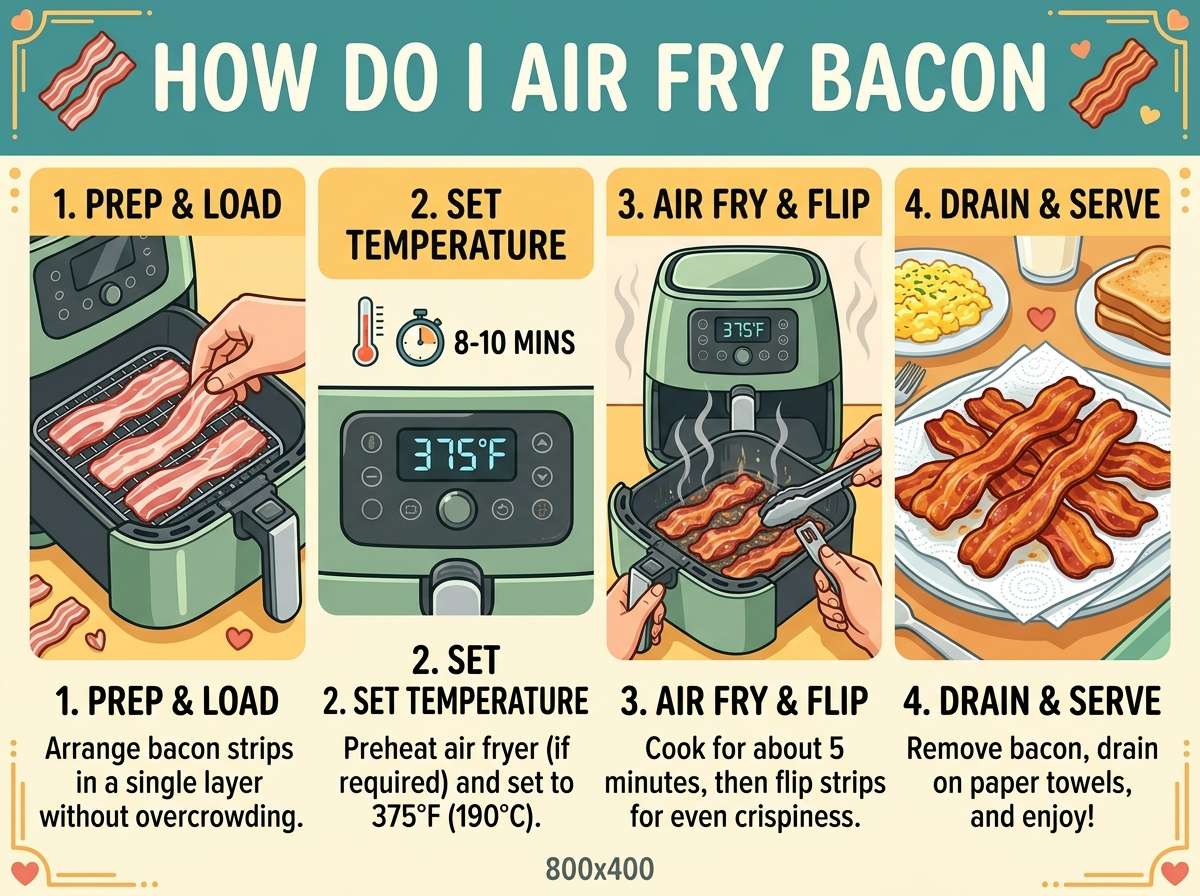
Step 1: Gather Your Supplies Get your bacon strips, foil or parchment paper, paper towels, and a heat-safe plate or paper towel-lined plate. Have everything ready before you start.
Step 2: Prepare the Basket Line your air fryer basket with foil or parchment paper. Make sure the paper covers the bottom and doesn’t hang too far over the sides. You want the hot air to flow around the bacon.
Step 3: Pat the Bacon Lay all your bacon strips on a paper towel. Pat them dry with another paper towel. This step really does make a difference in how crispy they get.
Step 4: Arrange the Bacon Place bacon strips in the basket in a single layer. They can touch a little, but ideally they don’t overlap. If you have to stack them, let them cross in an X pattern rather than lying flat on top of each other.
Step 5: Set the Temperature and Time Set your air fryer to 400 degrees Fahrenheit. Set the timer for 10 minutes. Don’t skip the preheating step.
Step 6: Start Cooking Put the basket in the fryer and hit start. You don’t need to flip the bacon. The circulating air cooks both sides evenly.
Step 7: Check at 10 Minutes After 10 minutes, open the fryer and check how the bacon looks. If it’s already dark and crispy, pull it out. If it’s still a bit light and chewy in spots, give it 2 to 3 more minutes.
Step 8: Remove and Drain Take the basket out carefully. The bacon is hot. Use tongs to move strips to a paper towel-lined plate. The paper towels will soak up any extra grease. Let it rest for a minute or two. As it cools, it gets even crispier.
Step 9: Enjoy or Store Eat your bacon right away while it’s hot and crispy. Or let it cool completely and store it in the fridge for up to 5 days.
Tips for Perfect Results Every Single Time
These tricks will help you nail it.
Batch Cooking If you need a lot of bacon, don’t cram it all in at once. Cook it in batches. You can have one batch crisping while you eat the first batch. Bacon only takes 13 minutes total, so batches go fast.
Room Temperature Bacon Let your bacon sit on the counter for 5 minutes before cooking. Room temperature meat cooks more evenly than cold meat straight from the fridge.
Use the Oven Setting if Available Some air fryers have an “oven” setting. This cooks with less intense air circulation. Try this if you find your fryer makes bacon extra crispy. You might need to add 2 to 3 minutes to the cooking time.
Check Halfway Through Don’t just set a timer and walk away. At the halfway point, around 6 to 7 minutes, peek at your bacon. You can’t hurt anything by looking. This helps you learn how your specific fryer cooks.
Save the Grease All that bacon grease dripping down is liquid gold in cooking. Collect it in a small container. Save it in the fridge. Use it for cooking eggs, making gravy, or roasting vegetables. It adds amazing flavor.
Try Different Brands Not all bacon cooks exactly the same. One brand might have more water content. Another might be thicker or have different curing. Try a few different brands to find your favorite.
Don’t Crowd the Basket I know it’s tempting to stuff in as much as possible. Don’t do it. Crowded bacon doesn’t crisp evenly. You’ll get some overcooked and some undercooked. Leave space between strips.
Flip Half-Way for Extra Evenness Honestly, you don’t need to flip bacon in the air fryer. The circulating air does the job. But if you want the most even crispiness, flip the strips at the 7-minute mark. This is totally optional.
Troubleshooting Common Problems
Bacon Comes Out Too Crispy or Burnt Your fryer runs hot. Drop the temperature to 380 or 390 degrees. Or reduce the cooking time by 2 to 3 minutes. Check your bacon at the 8-minute mark instead of waiting until 10.
Bacon Is Still Chewy or Undercooked Your fryer runs cool. Raise the temperature to 410 or 420 degrees. Or add 2 to 3 minutes to the cooking time. Thick-cut bacon especially needs this adjustment.
Some Strips Are Crispy and Others Are Chewy Your bacon strips are different thicknesses. Separate them before cooking. Cook thin strips and thick strips in different batches. Or arrange them so all the thick pieces go on one side of the basket.
Bacon Is Dry You cooked it too long. Reduce the cooking time by 1 to 2 minutes. Bacon should have a little fat remaining. If it’s completely dry, it’s overcooked.
Grease Is Everywhere You didn’t line your basket. Use foil or parchment paper next time. This makes cleanup so much easier.
My Air Fryer Smokes Some smoking is normal because bacon releases fat. If there’s a lot of smoke, your temperature is too high. Lower it by 20 degrees. Also make sure you’re not using old, rancid bacon. Fresh bacon should smoke minimally.
What to Do with Your Cooked Bacon
You have lots of options.
Eat It Plain Crispy bacon is perfect on its own. No sauce needed.
Make a Sandwich Layer it on toast with lettuce, tomato, and mayo. That’s a classic BLT.
Add to Breakfast Serve it alongside eggs, hash browns, or pancakes. It’s the perfect breakfast side.
Crumble and Top Chop cooked bacon into small pieces. Sprinkle it on salads, baked potatoes, or pasta. It adds great flavor and texture.
Bake Into Recipes Chop cooked bacon and mix it into recipes like quiches, soups, or casseroles. Since it’s already cooked, just add it at the end.
Freeze for Later Let bacon cool completely. Stack the strips with parchment paper between them. Put them in a freezer bag. Frozen bacon lasts about 1 month. Reheat in the toaster oven or microwave.
Use for Bacon Grease As mentioned before, save that precious bacon grease. It’s flavored fat that makes everything taste better.
Cleaning Up After Cooking
This is one of the best parts about air frying bacon.
Remove the Foil Just pull out the foil or parchment paper. All the grease is trapped inside. Toss it in the trash. Done.
Wash the Basket Even with foil, some residue might remain. Hand wash the basket with warm soapy water and a sponge. It comes clean fast. The basket is usually dishwasher safe too, so you can throw it in there.
Wipe the Tray Below the basket is a drip tray that catches grease. Pull it out and dump the grease into a container to save. Wipe it clean with a paper towel.
Leave the Heating Element Alone Never try to clean the heating element. Just leave it. Any small specks of grease burn off when you preheat the fryer for your next cook.
That’s it. Cleanup is genuinely fast and easy.
Why Air Fryer Bacon Is Better Than Other Methods
Let’s compare to see why air frying wins.
Air Fryer vs. Pan Frying Pan frying is fast, but it’s messy. Grease splatters. You need to stand there and watch it. You have to flip the strips. Air frying is hands off, no spatters, and you don’t flip. Easy win for the air fryer.
Air Fryer vs. Oven Baking Oven baking gives good results and is less mess than pan frying. The downside is that it takes longer (20 to 25 minutes) and heats up your whole kitchen. Air frying is faster and produces less heat. The air fryer is also better if you just need a small amount of bacon.
Air Fryer vs. Microwave Microwave bacon is fast, but it comes out chewy, not crispy. The texture isn’t great. Air fryer bacon actually crisps up. Texture wins go to the air fryer.
Air Fryer vs. Slow Cooker A slow cooker can cook bacon, but it takes hours. There’s no reason to use a slow cooker for bacon when an air fryer takes 13 minutes.
FAQs About Air Frying Bacon
Can I cook bacon at a lower temperature for longer? You could, but it’s not ideal. Lower temperatures take much longer and the bacon might steam instead of crisp. Stick with 400 degrees and 10 to 13 minutes.
Do I need to add water to the basket? No. Don’t add water. Water makes bacon steam. You want it to crisp. Skip the water.
Can I cook frozen bacon? Yes, but it takes longer. Add 3 to 5 minutes to the cooking time. There’s really no reason to freeze bacon though. It doesn’t take that long to cook fresh bacon.
Can I stack bacon on top of itself? Try not to. Stacked bacon doesn’t cook evenly. If you need to stack for space, arrange strips in an X pattern and try to minimize overlap.
How do I know when it’s done? It’s done when it’s as crispy as you like it. There’s no universal done point. Some people want light and crispy. Others want dark and extra crunchy. Cook until it matches your preference.
Can I use this method for other meats? Absolutely. Sausage links work great in an air fryer. So does ham, pork chops, and chicken. The same principles apply.
Does the bacon smell? Yes, you’ll smell bacon cooking. Most people love this smell. Open a window if the smell bothers you. It’s not overpowering like pan frying.
What’s the maximum amount I can cook at once? It depends on your fryer size. Most hold 12 to 16 strips in a single layer. Don’t exceed this. Overcrowding leads to uneven cooking.
Final Thoughts
Air frying bacon is genuinely one of the easiest cooking skills you can learn. The method is simple. The results are consistent. The cleanup is minimal. Once you start making bacon in an air fryer, you’ll never go back to pan frying or the oven.
Start at 400 degrees for 10 to 13 minutes. Adjust based on your preferences and your specific fryer. Keep good notes about what works. Soon you’ll be cooking perfect bacon every single time.
The air fryer is a great investment for any kitchen. If bacon is your first recipe, it won’t be your last. You’ll find yourself using that fryer for chicken, vegetables, frozen foods, and so much more.
So get some bacon. Preheat that air fryer. Follow these steps. And enjoy some of the crispiest, easiest bacon you’ve ever made. Your taste buds will thank you, and your stovetop will stay clean. That’s a win-win.
Happy cooking, and enjoy every crispy bite.

Mary is a home cooking enthusiast and kitchen appliance reviewer who loves helping people find the best tools for everyday meals. She enjoys testing air fryers, deep fryers, and other cooking appliances while sharing honest reviews and practical buying advice. Through FryerPick.com, Mary provides expert guides, product comparisons, and cooking tips to help readers choose the right fryer for their kitchen.