
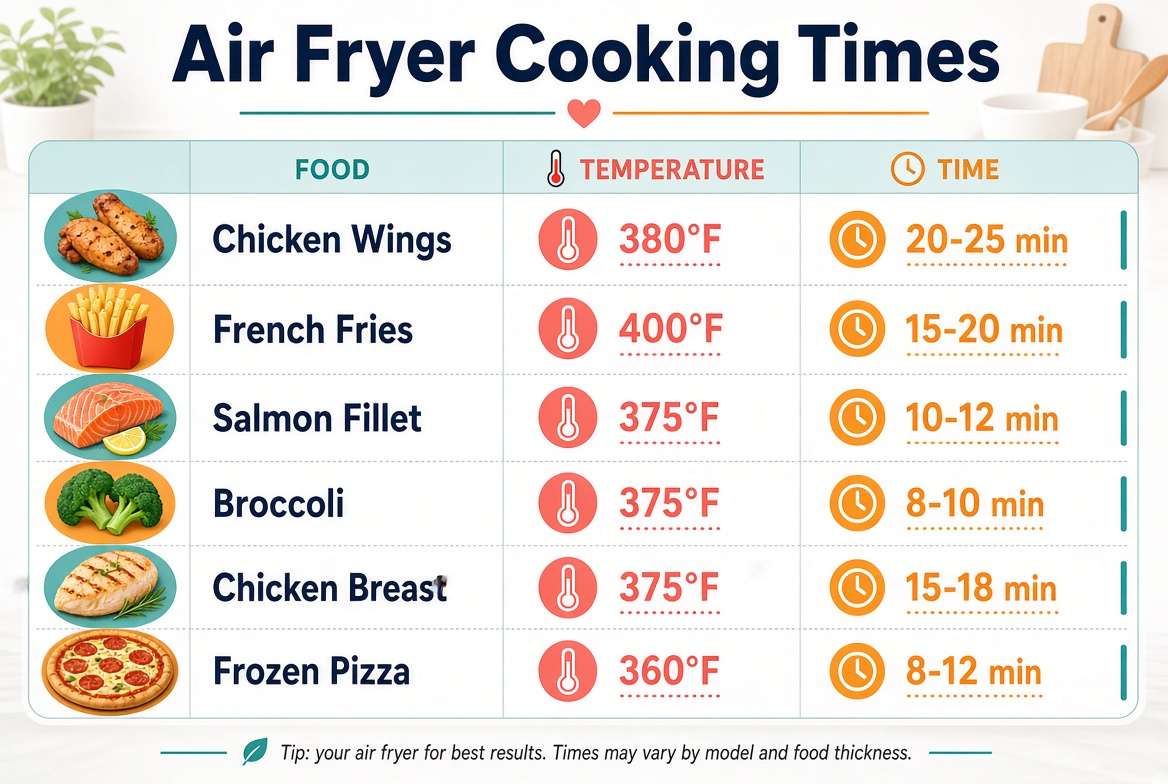
Air Fryer Cooking Times
If you just got an air fryer, or you already own one but keep guessing how long to cook things, this guide is for you. Air fryers cook food fast and give it a nice crispy outside, but the tricky part is knowing the right time and temperature for each food. Cook something too long and it dries out. Cook it too short and it’s raw in the middle. This guide breaks down cooking times for meat, veggies, frozen food, and more, so you never have to guess again.
We’ll walk through the basics first, then get into specific times for different foods. Keep this page open next to your air fryer and use it as your go-to chart.
In this article
How An Air Fryer Actually Cooks Food
An air fryer is basically a small convection oven. It has a heating element on top and a fan that blows hot air around the food at high speed. That fast-moving hot air is what gives your food a crispy, golden layer on the outside without needing a deep pot of oil.
Because the hot air moves around the food from every side, air fryers cook faster than a regular oven. Most recipes need less time than an oven recipe calls for, and often a lower temperature too. That’s the main reason so many people mess up their first few tries. If you use oven times, your food finishes way too fast or burns on the outside before the inside is done.
Basic Rules Before You Start Cooking
Before we jump into the time chart, here are a few simple rules that apply no matter what you’re cooking.
Preheat when you can. A lot of air fryer models don’t need preheating, but giving it three to five minutes to heat up first helps food crisp up faster and cook more evenly. Check your owner’s manual since some brands build preheating into the cook cycle already.
Don’t overload the basket. Air needs space to move around your food. If you pile everything into one thick layer, the air can’t reach the middle pieces, and you end up with soft, soggy spots. Cook in batches if you have a lot of food.
Shake or flip halfway through. Since air only hits the top and sides fully, shaking the basket or flipping your food halfway through the cook time helps it brown evenly on both sides.
Use a light coat of oil. Even though air fryers use little to no oil, a light spray or brush of oil helps food crisp up and stops it from sticking. Skip this step and you might notice drier results, especially with lean meats and veggies.
Check the internal temperature for meat. Time charts are a helpful starting point, but the size and thickness of your meat still changes things. A meat thermometer takes the guesswork out completely and keeps you from serving undercooked chicken or overcooked steak.
Now let’s get into the actual numbers.
Air Fryer Cooking Times For Chicken
Chicken is one of the most popular things people cook in an air fryer, and it comes out juicy with a crispy skin every time, as long as you get the timing right.
| Chicken Cut | Temperature | Cook Time |
|---|---|---|
| Boneless chicken breast | 375°F | 18–22 minutes |
| Bone-in chicken breast | 370°F | 25–30 minutes |
| Chicken thighs (boneless) | 380°F | 18–20 minutes |
| Chicken thighs (bone-in) | 380°F | 22–25 minutes |
| Chicken drumsticks | 375°F | 20–22 minutes |
| Whole chicken wings | 380°F | 20–24 minutes |
| Whole chicken (small, about 3–4 lbs) | 360°F | 50–60 minutes |
Flip chicken pieces halfway through so both sides get that golden color. Chicken is done and safe to eat once it hits an internal temperature of 165°F at the thickest part. Bone-in cuts take longer than boneless ones because the bone slows down how fast heat travels through the meat.
Air Fryer Cooking Times For Beef And Pork
Red meat cooks a little differently since thickness and how well-done you like it both play a big role.
| Meat | Temperature | Cook Time |
|---|---|---|
| Steak (1-inch thick) | 400°F | 10–14 minutes |
| Ground beef patties | 370°F | 10–12 minutes |
| Pork chops (boneless) | 375°F | 12–15 minutes |
| Pork chops (bone-in) | 375°F | 15–18 minutes |
| Pork tenderloin | 375°F | 20–25 minutes |
| Bacon | 375°F | 8–10 minutes |
| Meatballs | 380°F | 10–12 minutes |
For steak, flip it once halfway to get even color on both sides, and let it rest for five minutes after cooking so the juices settle back in instead of running out when you cut into it. Pork should reach an internal temperature of at least 145°F, and ground beef needs to hit 160°F to be safe.
Air Fryer Cooking Times For Fish And Seafood
Seafood cooks fast, so keep a close eye on it since a couple extra minutes can dry it out quickly.
| Seafood | Temperature | Cook Time |
|---|---|---|
| Shrimp | 380°F | 6–8 minutes |
| Salmon fillet | 380°F | 10–12 minutes |
| Tilapia or thin white fish | 375°F | 8–10 minutes |
| Fish sticks (frozen) | 400°F | 10–12 minutes |
| Scallops | 400°F | 5–7 minutes |
| Crab cakes | 375°F | 10–12 minutes |
Shrimp and scallops go from perfectly cooked to rubbery in a matter of minutes, so set a timer and check them early rather than waiting until the full time runs out.
Air Fryer Cooking Times For Vegetables
Vegetables are where an air fryer really shines. It gives you that roasted, slightly crispy edge without turning on a full oven.
| Vegetable | Temperature | Cook Time |
|---|---|---|
| Broccoli florets | 380°F | 8–10 minutes |
| Brussels sprouts (halved) | 380°F | 12–15 minutes |
| Carrots (sliced) | 380°F | 12–15 minutes |
| Sweet potato fries (fresh cut) | 380°F | 15–18 minutes |
| Regular potato wedges | 400°F | 18–20 minutes |
| Zucchini slices | 375°F | 8–10 minutes |
| Asparagus | 375°F | 7–9 minutes |
| Corn on the cob | 380°F | 10–12 minutes |
| Cauliflower florets | 380°F | 10–12 minutes |
| Green beans | 375°F | 8–10 minutes |
Cut vegetables into even sizes so they finish cooking at the same rate. A light toss in oil and a pinch of salt before cooking makes a big difference in flavor and crispiness. Shake the basket halfway through so nothing sticks or burns on one side.
Air Fryer Cooking Times For Frozen Foods
One of the best reasons people love an air fryer is how well it handles frozen food. No thawing needed, and it comes out crispier than a microwave and faster than an oven.
| Frozen Food | Temperature | Cook Time |
|---|---|---|
| French fries | 400°F | 15–18 minutes |
| Chicken nuggets | 400°F | 10–12 minutes |
| Mozzarella sticks | 375°F | 8–10 minutes |
| Frozen dumplings/potstickers | 380°F | 10–12 minutes |
| Frozen pizza rolls | 380°F | 8–10 minutes |
| Frozen breaded shrimp | 400°F | 10–12 minutes |
| Frozen onion rings | 400°F | 8–10 minutes |
| Frozen waffles | 360°F | 4–6 minutes |
| Frozen burgers | 370°F | 15–18 minutes |
Shake frozen foods once or twice during cooking so every piece browns instead of just the top layer. No need to add oil here since most frozen packaged foods already have a coating that crisps up on its own.
Air Fryer Cooking Times For Baked Goods And Snacks
Yes, you can bake in an air fryer too, and it works surprisingly well for small batches.
| Item | Temperature | Cook Time |
|---|---|---|
| Chocolate chip cookies | 320°F | 8–10 minutes |
| Muffins | 320°F | 12–15 minutes |
| Bacon-wrapped anything | 375°F | 12–15 minutes |
| Homemade chicken wings | 380°F | 24–28 minutes |
| Roasted nuts | 320°F | 6–8 minutes |
| Bagel bites | 380°F | 6–8 minutes |
| Hard-boiled eggs (in shell) | 270°F | 15–17 minutes |
Baking in an air fryer needs a lower temperature than most stovetop or frying recipes since the fan speeds up the cooking process a lot. Keep an eye on the first batch you try so you can adjust the time for your specific machine.
Common Mistakes That Mess Up Your Cook Times
Even with a solid chart, a few habits can throw off your results. Here’s what to watch for.
Skipping the shake step. This is the number one reason people end up with food that’s crispy on top and soft underneath. A quick shake every five to eight minutes solves it.
Using too much oil. More oil doesn’t mean more crispy. It actually causes smoke and makes food greasy instead of crunchy. A thin, even coat is all you need.
Overcrowding the basket. This one comes up again because it matters that much. Air needs room to circulate. If food pieces overlap or stack up, some parts stay pale and undercooked.
Ignoring your specific model. Every air fryer brand runs a little different. Some run hotter, some run cooler. If your food finishes early or late compared to a chart, adjust the time by two or three minutes and make a note for next time.
Not preheating for foods that need a crispy start. Things like fries and wings benefit from a hot basket right from the start. Cold-starting these foods can leave them limp instead of crunchy.
Tips For Getting Perfect Results Every Time
A few small habits go a long way toward better food out of your air fryer.
- Pat meat and vegetables dry with a paper towel before cooking. Extra moisture stops food from crisping up and can cause steaming instead of browning.
- Line the basket with parchment paper made for air fryers when cooking sticky or saucy foods, but leave space around the edges so air still flows.
- Season food right before it goes in rather than letting it sit coated in salt for too long, since salt can pull out moisture and make things soggy.
- Cut food into similar sizes so everything finishes cooking around the same time.
- Keep a small notebook or note on your phone with the times that work best for your machine. Once you find your sweet spot, cooking gets a lot easier.
Frequently Asked Questions
Do I need to flip food every single time?
Not always, but it helps. Thin foods like fries and nuggets benefit the most from a shake halfway through. Thicker cuts of meat do better with one flip partway through cooking.
Why does my food take longer than the chart says?
Cooking time depends on the size of the pieces, how full the basket is, and the exact model of air fryer you own. Charts give you a solid starting point, but small adjustments are normal.
Can I stack food in the basket?
Small, light items like fries or nuggets can be stacked loosely since air still moves through the gaps. Larger cuts of meat or thick vegetables need to sit in a single layer for the best results.
Is it safe to cook raw meat straight from frozen?
Some air fryers handle this fine for smaller cuts like chicken breasts or burger patties, but it usually takes longer and can cook unevenly. Thawing meat first gives you more even, reliable results.
Does the size of my air fryer change the cook time?
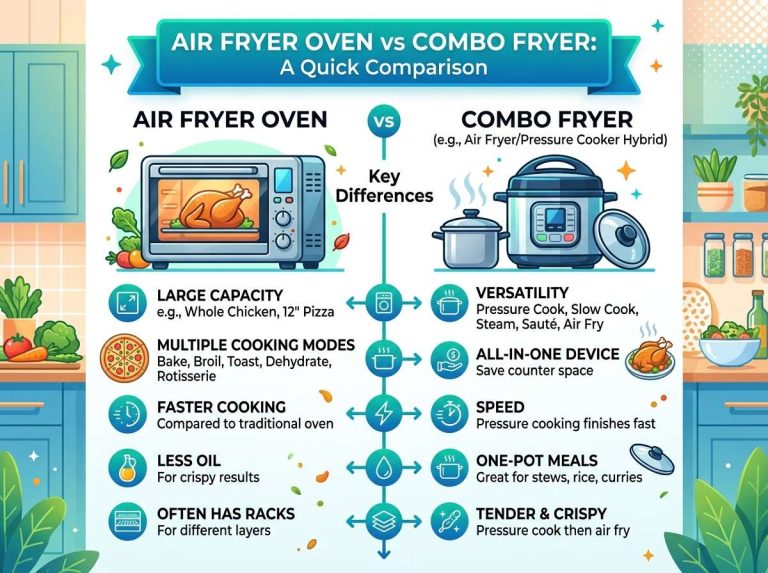
Yes, a bit. Smaller basket models tend to cook a little faster since the hot air has less space to cover. Larger oven-style air fryers might need a couple extra minutes.
Wrapping It Up
Once you get the hang of air fryer cooking times, meals come together fast, and cleanup is way easier than dealing with a deep fryer or a full-size oven. Keep this chart handy, adjust times slightly for your specific machine, and remember the basics: don’t overcrowd the basket, shake or flip when needed, and check the internal temperature on meat before serving. With a little practice, you’ll know exactly how long to cook almost anything without needing to check a chart at all.

Mary is a home cooking enthusiast and kitchen appliance reviewer who loves helping people find the best tools for everyday meals. She enjoys testing air fryers, deep fryers, and other cooking appliances while sharing honest reviews and practical buying advice. Through FryerPick.com, Mary provides expert guides, product comparisons, and cooking tips to help readers choose the right fryer for their kitchen.


One Comment