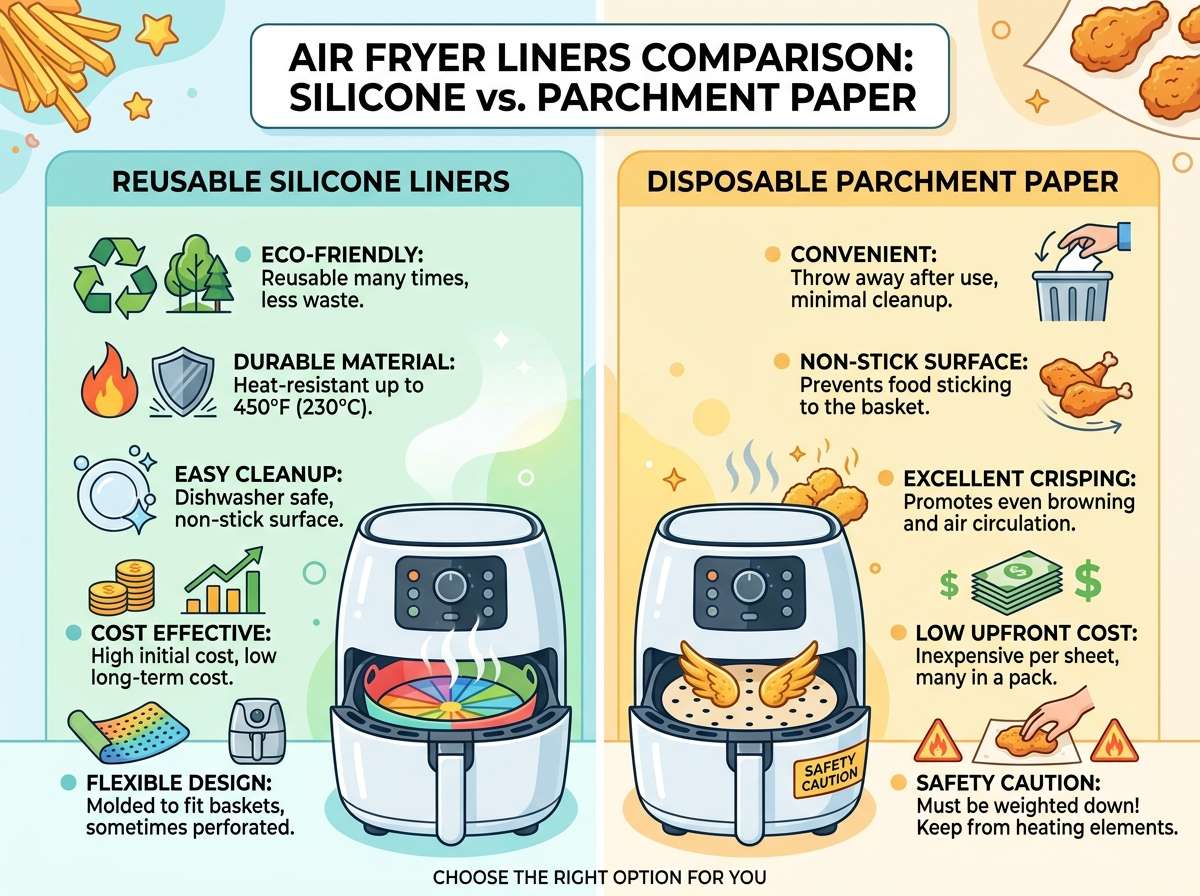
Silicone vs Parchment Liners for Air Fryers
Air fryers have become a kitchen game-changer for people who want faster, healthier cooking. But once you get your air fryer home and start using it, you’ll face a common question: should you use silicone liners or parchment paper liners? Both options help keep your air fryer basket clean and protect your food from sticking, yet they work in totally different ways. Let me break down everything you need to know so you can pick the right liner for your cooking style.
In this article
What Are Air Fryer Liners and Why Do You Need Them?
The Basics of Air Fryer Liners
Air fryer liners sit inside your basket and create a barrier between your food and the metal surface. They’re helpful tools that solve several cooking problems at once. Your food won’t stick to the basket, your cleanup becomes way easier, and you might even get better cooking results with certain foods.
Think of liners like a safety net for your cooking routine. They catch drippings, grease, and crumbs, which means you spend less time scrubbing and more time enjoying your meals. The basket itself stays clean for longer, which extends the life of your air fryer.
Why You Should Consider Using Them
Most people assume liners are optional, but they’re actually pretty useful for everyday cooking. If you cook meat, cheese-covered foods, or anything with sauce, liners protect your investment. They also make your cooking faster because you don’t have to wait for the basket to cool down and soak before cleaning.
The air fryer works by circulating hot air around your food at high speeds. Liners sit flat against the basket and don’t block this airflow, so your food still cooks properly. This is the key to liners working well—they need to stay out of the way while protecting everything underneath.
Parchment Paper Liners: The Classic Choice
How Parchment Paper Works in Air Fryers
Parchment paper is a thin sheet of paper coated with silicone to make it non-stick. It’s been around for decades in regular ovens, and it works just as well in air fryers. The coating prevents food from sticking without adding any taste or weird texture to your meals.
Parchment paper liners come in two forms: regular sheets you cut yourself, or pre-cut rounds and squares designed for specific air fryer basket sizes. Pre-cut liners save you time and fit perfectly every time. They stay in place during cooking and don’t slide around or fly up when the air circulates.
Benefits of Using Parchment Paper
The first advantage is cost. Parchment paper costs almost nothing compared to other liner options. A box of regular parchment paper sheets runs five to ten dollars and lasts for months. Pre-cut air fryer liners cost a bit more but still stay budget-friendly.
Parchment paper is also super versatile. You can use the same rolls in your oven, toaster oven, and food dehydrator. If you’re a baker or someone who cooks a lot, you probably already have parchment paper at home. Using it in your air fryer means one less specialty item to buy.
The heat resistance is another strong point. Quality parchment paper can handle temperatures up to 420 to 450 degrees Fahrenheit, which covers almost every air fryer cooking task. You won’t have to worry about it melting, smoking, or falling apart during cooking.
Parchment paper also gives you total control over the size. You can cut pieces to fit any basket shape or size, making it perfect if you have an odd-shaped air fryer or you like to cook multiple items at once. Just trim the edges so the paper doesn’t stick out above the basket.
Drawbacks to Know About
The main downside is that parchment paper doesn’t last forever. After a few uses, it gets worn, stained, and sometimes tears. You’re basically throwing away fresh paper after each cooking session, which creates waste. If you use your air fryer daily, you’ll go through boxes of parchment paper pretty quickly.
Another issue is that parchment paper sometimes moves around inside the basket. If your food is light and the air circulation is strong, the liner might shift or even fold during cooking. This can cause uneven cooking or let food slide underneath the paper and stick to the basket anyway.
Parchment paper also doesn’t handle oily foods as well as you might think. When you cook something very greasy, oils can seep underneath the edges, and the paper sometimes starts peeling up from the basket. This is frustrating because you’re trying to prevent sticking but the paper itself becomes unstable.
There’s also a safety consideration. Super cheap parchment paper that isn’t properly coated can sometimes smoke at high temperatures. Always buy quality parchment paper and avoid ultra-budget brands that might have coating issues.
Silicone Liners: The Reusable Option
How Silicone Liners Function
Silicone liners are flat mats made entirely of food-grade silicone. They’re thick, flexible, and shaped to fit standard air fryer baskets. Unlike parchment paper, silicone liners are permanent fixtures in your kitchen once you buy them.
The silicone material creates a naturally non-stick surface without any coating or chemicals. It’s the same stuff used in baking mats and muffin cups. The material is flexible enough to bend and fit any basket shape, yet sturdy enough to hold up against normal wear and tear.
Advantages of Silicone Liners
The biggest win with silicone liners is reusability. Buy them once and use them hundreds of times. One silicone liner mat can last for years with proper care. Over time, this saves you money compared to buying endless boxes of parchment paper. If you use your air fryer regularly, you’ll break even on the cost within a few months.
Silicone liners stay exactly where you put them. They won’t slide, fold, or shift during cooking because the material grips the basket bottom. This stability means your food cooks evenly and nothing sticks to the metal underneath.
Another benefit is durability. Silicone doesn’t tear, burn, or fall apart like paper does. You can use the same liner fifty times and it’ll look almost new. Even if it gets stained or discolored, it still works perfectly—the appearance doesn’t affect performance.
Silicone liners are also easy to clean. Just wipe them with soapy water and a sponge, or toss them in the dishwasher. You don’t need to scrub hard or use special cleaners. The material resists staining pretty well, though dark foods like beets or blackberries might leave some marks that don’t fade completely.
The environmental angle matters too. Since you use silicone liners over and over, you’re not creating trash every time you cook. For people who care about reducing waste, reusable silicone is the clear winner over single-use paper.
Limitations to Consider
Silicone liners have a higher upfront cost. A decent food-grade silicone liner runs ten to twenty dollars, depending on the brand and quality. That’s a lot more than a single box of parchment paper, even though the long-term math works out better.
The main performance issue is that silicone absorbs some heat differently than paper. This can sometimes cause the bottom of your food to cook slower or differently than it would with parchment paper. It’s not a huge deal for most foods, but delicate items or things that need a crispy bottom might not turn out perfect.
There’s also the sizing problem. Silicone liners come in standard sizes for common air fryer models. If you have an unusual basket size or a specialty air fryer, you might not find a liner that fits well. Too-small liners don’t protect the whole basket, and oversized ones bunch up and waste space.
Some people don’t like the thickness of silicone mats. The material takes up some space in the basket, which means slightly less room for food. If you’re trying to maximize what you cook at once, this can be annoying.
Temperature limits are also a factor, though not usually a problem. Most silicone liners max out at 400 to 450 degrees Fahrenheit, which works for most air fryer tasks. But if you cook at the absolute highest temperatures for extended periods, you’re getting closer to the material’s limits.
Heat Resistance and Safety Comparison
Temperature Tolerance
Both parchment paper and silicone liners handle air fryer temperatures well, but they have different limits. Quality parchment paper stays stable up to 420 to 450 degrees Fahrenheit. Most air fryers don’t go much hotter than 400 degrees anyway, so this usually isn’t a problem.
Silicone liners typically handle 400 to 450 degrees Fahrenheit consistently. The exact temperature depends on the brand and quality. Cheap silicone might start degrading sooner, so buying food-grade silicone from trusted brands matters.
Here’s the real concern: neither material should ever touch the heating element. In most air fryers, the heating element sits above the basket, so liners are safe. Just make sure the liner fits your basket properly and doesn’t extend up the sides in a way that might touch hot surfaces.
Which Is Safer?
Both options are safe when used correctly. The safety difference comes down to manufacturing quality. A cheap parchment paper might be coated with questionable materials that could release fumes at high heat. A cheap silicone liner might contain fillers or contaminants that aren’t food-safe.
The safest approach is buying from reputable brands. Look for parchment paper labeled “unbleached” and silicone labeled “food-grade” or “FDA-approved.” Don’t assume all products in these categories are equal. Read reviews and check what other people say about temperature performance.
One safety tip for parchment paper: never let the edges stick out above the basket rim. If hot air gets under the edges and lifts them toward the heating element, the paper could potentially smoke or burn. Keep edges tucked down and flush with the basket.
Cooking Results: How Each Liner Affects Your Food
Crisping and Browning
Here’s where things get interesting. Silicone and parchment paper produce slightly different cooking results because they transfer heat differently.
Parchment paper is thin and transfers heat quickly. This means your food tends to brown and crisp up a bit faster on the bottom. If you’re making french fries, chicken wings, or anything you want crispy, parchment paper might give you slightly better results. The crisping happens faster because the heat comes through the paper more readily.
Silicone is thicker and transfers heat a bit more slowly. Your food might take a little longer to crisp, and the bottom surface could stay slightly softer. This isn’t necessarily bad—it’s actually perfect for delicate foods, fish, or items you want to keep tender. Some people prefer silicone because it prevents over-crisping.
The difference is usually small enough that most people won’t notice. If you’re cooking chicken breast, the results look nearly identical either way. But if you’re making something where texture really matters—like homemade chips or dumplings—try both and see what you prefer.
Moisture Content
Parchment paper tends to let more moisture escape during cooking. This means your food might come out slightly drier, which is good if you want crispiness but not so good if you’re cooking something that should stay juicy.
Silicone liners trap a tiny bit more moisture underneath. This creates a slightly steaming effect that keeps foods more tender and moist. It’s almost like cooking with a lid on, except not as extreme. For fish, vegetables, or items you want to stay succulent, silicone might work better.
Again, the difference is subtle. Most home cooks won’t notice unless they’re paying close attention. But if you’re trying to perfect a specific recipe, these small differences matter.
Cleaning and Maintenance
Parchment Paper Cleanup
Cleaning parchment paper is simple because you throw it away. There’s no cleanup involved—just toss it in the trash and grab a fresh sheet next time. This is perfect if you hate washing dishes or you’re cooking something extremely messy.
The downside is you’re generating trash constantly. Over time, you’ll toss out a lot of paper, and it adds up in landfills. For environmentally conscious people, this single-use approach bothers them.
Silicone Liner Care
Silicone liners require actual cleaning, but it’s easy. Most can go straight in the dishwasher with your dishes. Just put them on the top rack and run a normal cycle. No scrubbing needed.
If you hand wash, wipe them with warm soapy water and a sponge. They dry fast and don’t hold onto odors or stains for long. Some tough stains might linger, but they don’t affect how the liner works.
Store silicone liners flat in a drawer or rolled up in a cabinet. They take up minimal space and last for years without degenerating. Some people use small plastic bags to keep them clean and organized.
One cleaning note: avoid super abrasive scrub pads or harsh chemicals that might damage the silicone coating. Regular dish soap and a soft sponge are all you need.
Cost Analysis: Long-Term Spending
Initial Investment
Parchment paper costs almost nothing upfront. A box of fifty sheets runs five to ten dollars. You could buy two boxes for the price of one silicone liner.
Silicone liners cost fifteen to twenty-five dollars for a single mat, sometimes more for premium brands. That feels expensive when you’re standing in the store deciding what to buy.
Ongoing Expenses
This is where the math flips. If you use your air fryer three times per week, you’ll go through about twelve sheets of parchment paper per month. That’s one box every four months, which means thirty to forty dollars per year.
Silicone liners never need replacing if you care for them well. One fifteen-dollar mat becomes your only expense for that function forever.
Break-Even Point
For most people, a silicone liner pays for itself within six months of regular use. After that, every cooking session saves you money compared to parchment paper. Over a three-year period, silicone liners could save you a hundred dollars or more.
But if you use your air fryer rarely—maybe once a month—parchment paper stays cheaper because you won’t use enough liner to justify the upfront cost.
Specific Foods and When to Use Each Liner
Foods That Do Well with Parchment Paper
Crispy foods benefit from parchment paper. French fries, potato chips, chicken wings with seasoning, and breaded items all crisp up nicely. The faster heat transfer means better browning on the outside.
Very wet or saucy foods work well with parchment because it prevents anything from sticking while the sauce reduces. Marinated chicken, saucy meatballs, or glazed vegetables all do great.
Delicate baked goods like cookies or pastries are safer with parchment because the paper prevents sticking without creating any weird texture issues. You get consistent results every time.
Foods That Prefer Silicone Liners
Tender foods that might dry out benefit from silicone. Fish fillets, delicate vegetables, and items you want to keep moist do better with the slight moisture-trapping effect.
Foods you cook repeatedly work better with silicone. If you make the same recipe multiple times, you’ll notice the consistent results. Silicone doesn’t wear out or vary batch to batch like paper does.
Messy foods with lots of oil or grease actually work fine with silicone. The material doesn’t absorb oils the way paper does, so nothing seeps underneath. Your cleanup is easier too.
Foods with strong flavors or colors are good candidates for silicone. The material doesn’t absorb flavors or stain permanently the way paper does, so you can cook fish one day and dessert the next without any flavor carryover.
Common Mistakes People Make
Using the Wrong Size
Buying liners that don’t fit your basket is a common mistake. Too-small liners leave parts of the basket exposed, defeating the purpose. Too-large liners bunch up and block airflow.
Always check your air fryer basket dimensions before buying. Most standard square baskets are around 6 to 8 inches, but some models vary. Measure yours to be sure.
Overlapping or Folding Liners
Some people try to cover more area by overlapping two sheets of parchment paper or folding the corners up. This blocks airflow and creates hot spots that cook unevenly. Stick to one flat liner that fits the bottom only.
Ignoring Airflow Requirements
The whole point of air fryers is rapid air circulation. Any liner that blocks this airflow messes with cooking. Never wrap liners up the sides of the basket or let them cover areas where food needs exposure to moving air.
Not Securing Lightweight Liners
Parchment paper can blow around if your food is light or the air circulation is strong. Weighting it down with food at the start of cooking helps, but some people forget and end up with folded paper mid-cooking.
Using Non-Food-Grade Silicone
Cheap silicone liners might contain fillers or contaminants. They can degrade faster and potentially leach chemicals into your food. Always buy food-grade silicone from trusted brands.
How to Maximize Your Liner Usage
Getting More Life from Parchment Paper
You can sometimes flip parchment paper over and use the other side if it’s mostly clean. This doubles your use per sheet, though it only works if the first side didn’t get too messy.
Store leftover parchment paper properly to prevent it from getting damaged before use. Keep it flat in a cool, dry place away from grease and moisture.
Keeping Silicone Liners in Great Condition
Clean silicone immediately after cooking while it’s still warm. Stuck-on food is harder to remove once it dries completely.
Don’t use silicone liners under the broiler or directly under heating elements. Keep them in the basket where they belong.
Store them flat or loosely rolled, not crumpled or folded tightly. This prevents permanent creases that might affect how they sit in your basket.
Hybrid Approach: Using Both
When to Combine Liners
Some experienced air fryer cooks use both types. They might use silicone liners regularly but keep parchment paper around for specific cooking tasks.
This approach gives you flexibility. Use your reusable silicone most of the time, then switch to parchment for foods that need maximum crispiness or when you’re cooking something so messy you don’t want to clean the silicone.
How to Use Them Together
Never layer parchment over silicone. This creates too much insulation and messes with heat transfer. Use one or the other, not both.
Some people use a thin parchment sheet inside a silicone liner for specific foods, but this is overkill for most cooking tasks.
Final Recommendations Based on Your Needs
For Budget-Conscious Cooks
If you count every penny, parchment paper is your answer. The upfront cost is so low that you can’t beat it. Buy a big box of quality parchment paper and use it until you naturally run out. Then reevaluate.
For Heavy Air Fryer Users
If your air fryer is a daily tool, silicone liners make sense financially. The constant supply of parchment paper gets expensive fast. One good silicone liner eliminates that expense for years.
For Environmentally Aware People
Silicone wins by a landslide. You’re using one mat hundreds of times instead of throwing away paper constantly. This reduces your trash output significantly while saving money.
For People Who Value Convenience
Silicone liners are more convenient overall. Grab it, use it, wipe it clean, done. You never have to buy more or remember to check your supply. Everything stays organized in one drawer.
For Perfectionists About Food Quality
Try both and keep what works best for your favorite recipes. Most people find they naturally reach for one or the other depending on what they’re cooking. Having both options available is perfect.
Key Takeaways
Both parchment paper and silicone liners solve the same basic problem—keeping your air fryer basket clean and your food from sticking. Neither option is perfect for everyone or every situation.
Parchment paper costs almost nothing and works great for crispy foods, but creates waste and wears out quickly. Silicone liners cost more upfront but last for years, reduce waste, and give you consistent results every time.
The right choice depends on your cooking style, budget, and values. Many people end up with both in their kitchen because each has moments where it’s the better option.
Start with whatever feels right to you. If budget is tight, go with parchment paper. If you use your air fryer constantly, silicone liners pay for themselves. There’s no wrong answer here, just different approaches that work for different people.
The good news is that both liners work well enough that you’ll enjoy using your air fryer either way. You’re going to cook great food, keep your basket clean, and enjoy the speed and convenience of air frying. The liner choice is just a small detail that makes the whole experience slightly better.
Now get cooking and enjoy your air fryer!

Mary is a home cooking enthusiast and kitchen appliance reviewer who loves helping people find the best tools for everyday meals. She enjoys testing air fryers, deep fryers, and other cooking appliances while sharing honest reviews and practical buying advice. Through FryerPick.com, Mary provides expert guides, product comparisons, and cooking tips to help readers choose the right fryer for their kitchen.