
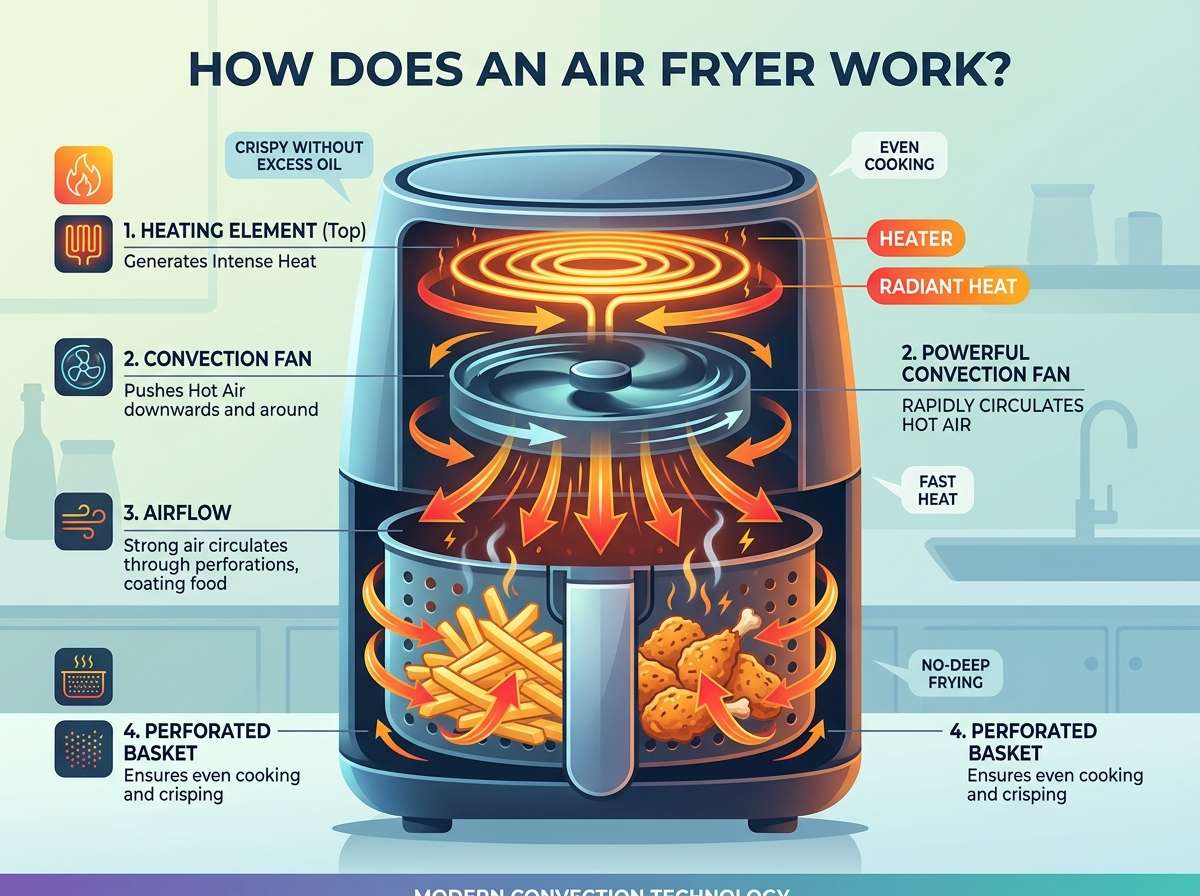
How Does an Air Fryer Work?
Air fryers have become super popular in kitchens everywhere, and for good reason. These little cooking machines promise to give you crispy, delicious food without all the oil. But how does an air fryer actually work? If you’ve been wondering about the science behind your favorite kitchen gadget, you’re in the right place. Let’s break down this cooking phenomenon in a way that makes total sense.
In this article
What Exactly Is an Air Fryer?
An air fryer is a compact countertop cooking appliance that cooks food using hot air instead of oil. Think of it as a smaller, faster version of a convection oven. The machine circulates hot air at high speeds around your food, creating that golden, crispy texture you love. The best part? You use little to no oil to get these amazing results.
These devices have exploded in popularity because they deliver restaurant-quality results right in your home. People love them for cooking everything from frozen French fries to chicken wings to vegetables. The fast cooking times and minimal cleanup are huge bonuses that keep people coming back to use their air fryer again and again.
The Main Components That Make It Work
Before we dive into the actual cooking process, let’s look at the different parts of an air fryer. Each component plays an important role in how the machine does its job.
The Heating Element
At the top of your air fryer sits a powerful heating element. This is basically the heart of the whole system. The heating element gets incredibly hot, reaching temperatures between 300 and 400 degrees Fahrenheit in just a few seconds. This rapid heating is one reason air fryers cook so much faster than traditional ovens.
The heating element uses electricity to generate intense heat. It’s similar to what you’d find in a regular oven, but it’s designed to work in a much smaller space. This concentrated heat source is what makes air fryers so efficient.
The Fan
Right next to the heating element, you’ll find a powerful fan. This fan is absolutely crucial to how an air fryer works. Once the heating element warms up, the fan kicks into action. It spins at high speeds to push that hot air down into the cooking chamber where your food sits.
The fan creates strong air circulation throughout the cooking space. This constant movement of hot air is what gives your food that fried texture. The rapid air movement causes the moisture on the outside of your food to evaporate quickly, which creates that crispy golden layer everyone loves.
The Cooking Chamber
Below the heating element and fan sits the cooking chamber or basket. This is the space where your food actually goes. The chamber is designed to allow air to flow all around the food. Most air fryer baskets have holes or perforations that let hot air move freely around whatever you’re cooking.
The basket sits on a plate that allows air to flow underneath as well. This two-directional air circulation is essential for even cooking. If air only came from the top, your food would cook unevenly.
The Temperature Control and Timer
Your air fryer’s control panel lets you set the exact temperature and cooking time. These controls are connected to sensors that monitor what’s happening inside the cooking chamber. When you set the temperature, the heating element turns on and heats up to that specific setting. The sensors make sure the temperature stays consistent throughout the cooking process.
The timer tells you when your food is done. Most air fryers will beep or alert you when the cooking time ends. Many modern models also have a shake reminder that tells you to shake the basket halfway through cooking for more even results.
How the Air Fryer Cooking Process Actually Happens
Now that you understand the basic parts, let’s walk through exactly what happens when you turn on your air fryer.
Step One: Preheating
When you first turn on your air fryer and set it to your desired temperature, the heating element starts working immediately. It rapidly brings the internal temperature up to the setting you chose. This usually takes just a few minutes, much faster than a regular oven.
Preheating is important because it gets all that hot air ready to go to work on your food right away. Some air fryer recipes call for preheating, while others say you can skip this step. Preheating does help with more even cooking in most cases.
Step Two: Loading Your Food
Once your air fryer reaches the right temperature, you load your food into the basket. It’s important not to overcrowd the basket because the hot air needs space to flow around each piece of food. If you pile food too high or pack it too tightly, some pieces won’t cook as well as others.
The ideal setup is a single layer of food with some space between pieces. This lets the circulating hot air touch every surface of what you’re cooking. Some people like to arrange food in a way that allows air to flow underneath and over each item.
Step Three: The Maillard Reaction Begins
Here’s where the magic happens. As soon as the hot air hits your food, something called the Maillard reaction starts occurring. This is a chemical process that happens when proteins and sugars in food get exposed to high heat.
The Maillard reaction is responsible for that brown, crispy, delicious crust on your cooked food. It’s the same reaction that makes a grilled steak look appetizing or gives bread a golden crust. Without the Maillard reaction, your food would just be hot and dry instead of crispy and flavorful.
The rapid circulation of hot air speeds up this reaction significantly. In an air fryer, the intense heat and constant air movement create the Maillard reaction much faster than in a traditional oven. This is a big reason why air fryers cook so quickly.
Step Four: Moisture Removal
As the Maillard reaction happens, the intense heat also removes moisture from the surface of your food. Water on the surface of your food evaporates very quickly when exposed to this hot, moving air.
This moisture removal is what creates that fried texture, even though no oil is involved in an air fryer. In traditional deep frying, the oil heats up and creates steam that escapes from the food. In air fryers, the circulating hot air does the same job that oil does in deep frying. The main difference is that air fryers use a tiny amount of oil or sometimes no oil at all.
Step Five: Heat Penetration
While the outside of your food is getting crispy, heat is also penetrating toward the inside. The hot air doesn’t just affect the surface. It gradually heats the interior of your food as well, cooking it all the way through.
The time this takes depends on what you’re cooking and how thick it is. Thin items like French fries cook in just a few minutes. Thicker items like chicken breasts take longer. The air fryer’s temperature sensors and your set cooking time work together to make sure your food is done when the timer goes off.
Why Air Fryers Are So Much Faster Than Regular Ovens
You might be wondering why air fryers cook so much faster than traditional ovens. There are several reasons for this speed advantage.
First, air fryers are much smaller than regular ovens. This means there’s less air to heat up. All that power goes directly to cooking your food instead of heating a huge space. A regular oven has to heat up a large chamber, which takes more time and energy.
Second, the fan in an air fryer constantly moves hot air. In a regular convection oven, air circulates, but not nearly as intensely. The high-speed fan in an air fryer creates much stronger air circulation. This stronger movement transfers heat to your food much faster.
Third, air fryers use the Maillard reaction very efficiently. The combination of high heat and rapid air movement triggers this reaction quickly and effectively. In a regular oven, this process happens more slowly because the hot air moves less forcefully around the food.
All these factors combine to make air fryers incredibly fast cooking machines. You can often cook food in an air fryer in about a quarter of the time it takes in a regular oven.
Oil and Air Frying: What’s Really Going On
One common question people have is about oil in air fryers. Do you need oil? Can you use oil? What’s the relationship between oil and air frying?
The truth is that you don’t need oil to use an air fryer, but many people add a small amount anyway. Here’s why. Oil helps food get even crispier because it distributes heat more evenly across the surface. Oil also helps seasonings stick to food better.
If you do use oil, you only need a tiny amount. We’re talking about a light spray or just a teaspoon or two for a whole basket of food. This is dramatically less than you’d use in traditional frying methods.
The air fryer does the heavy lifting when it comes to creating that fried texture. The circulating hot air is what actually creates the crispy exterior you’re looking for. Oil is optional and just enhances the results slightly.
Some people use cooking spray to apply a very light coating of oil. Others use an oil mister or brush. Still others cook with zero oil and still get great results. It really depends on what you’re cooking and your personal preferences.
The Science of Convection Cooking
Air fryers are really a type of convection cooker. Let’s talk about what convection cooking actually is and how it differs from regular cooking methods.
In a regular oven, heat rises from the bottom. Food cooks through a process of heat radiating and rising in the enclosed space. This is called radiant cooking. It works fine, but it’s slower and less consistent.
In a convection oven or air fryer, a fan moves hot air around continuously. This forced circulation of hot air means every surface of your food gets equal exposure to heat. Because air is moving constantly, hot spots don’t develop the same way they do in regular ovens.
Air fryers take convection cooking to the extreme. They use smaller spaces and more powerful fans than traditional convection ovens. This creates even faster and more intense heat transfer to your food.
Different Types of Air Fryers and How They Work
While all air fryers operate on the same basic principle, they come in different styles and sizes. Let’s look at the main types you’ll encounter.
Basket-Style Air Fryers
The most common type is the basket-style air fryer. This is what most people think of when they picture an air fryer. You load food into a removable basket, and the heating element and fan are positioned above it. These work great for single meals or small to medium portions.
Oven-Style Air Fryers
These larger units look more like toaster ovens. They have multiple racks or trays, and the heating element and fan are built into the top. Oven-style air fryers can cook more food at once than basket models, making them great for families or meal prep.
Air Fryer Attachments
Some pressure cookers and instant pots have air fryer attachments that work on the same principle. You remove the lid and attach a heating element and fan that circulates hot air inside the cooker.
Commercial Air Fryers
Restaurants and commercial kitchens use larger, more powerful air fryers. These operate on the same basic principle as home models but can handle much larger volumes of food.
All these different types work through the same basic process: rapid air circulation around food, creating the Maillard reaction and removing moisture to create a crispy exterior.
What Foods Work Best in Air Fryers
Now that you understand how air fryers work, let’s talk about which foods benefit most from this cooking method.
Air fryers absolutely shine when cooking frozen foods. French fries, chicken nuggets, mozzarella sticks, and frozen vegetables all come out crispy and delicious. The rapid heat and air circulation thaw and cook these items perfectly.
Fresh vegetables do great in air fryers too. Broccoli, Brussels sprouts, cauliflower, and zucchini all get crispy on the outside while staying tender inside. You get amazing results in a fraction of the time it takes in a regular oven.
Proteins like chicken breasts, pork chops, and salmon cook through quickly and come out moist inside with a nice browned exterior. Ground beef and sausage also work well.
Baked goods can work in air fryers, though with less consistent results than savory items. Air fryers lack the gentle, even heat that traditional ovens provide for baking. Still, you can make cookies, biscuits, and breads in an air fryer if you’re willing to experiment.
Foods with wet batters don’t work well in air fryers. The intense air circulation blows the batter around. If you want to make tempura or dipped-batter items, stick with traditional frying or baking methods.
Tips for Getting the Best Results from Your Air Fryer
Now that you understand how air fryers work, here are some practical tips to get the most out of yours.
Don’t overcrowd the basket. Remember how important air circulation is? An overcrowded basket blocks that circulation. Cook in batches if you need to, or get a larger air fryer model.
Shake or flip food halfway through cooking. This helps ensure even cooking on all sides. Some foods need more attention than others, but most benefit from a quick shake or flip.
Pat food dry before cooking. Excess moisture on the surface of food takes longer to evaporate. Dry food gets crispier and cooks more evenly.
Use a light spray of oil for better results. While you don’t need oil, a tiny amount helps create crispier food and helps seasonings stick.
Don’t skip preheating. While some foods cook fine without it, preheating usually gives you more consistent results.
Clean your air fryer regularly. Grease and food particles can affect cooking performance. Regular cleaning keeps your air fryer working at peak efficiency.
Experiment with different temperatures and times. Every air fryer is slightly different, and different foods cook at different rates. Take notes on what works best for your machine.
Common Air Fryer Mistakes to Avoid
Understanding how air fryers work helps you avoid common mistakes that people make with these devices.
Don’t think you can just convert regular oven recipes by reducing the temperature. Air fryers cook differently than ovens. You typically need to reduce both temperature and time, and you might need to adjust other aspects of the recipe too.
Don’t assume all air fryers cook the same way. Different brands and models have different heating elements and fans. What works perfectly in one air fryer might need adjustment in another.
Don’t ignore the instruction manual for your specific model. While the basic principles are the same, different machines have different quirks and features.
Don’t use your air fryer for things that require specific cooking methods. Air fryers aren’t great for steaming, boiling, or slow cooking. They’re designed for high-heat cooking that creates crispy results.
Don’t put wet ingredients directly in the basket without a container. Liquids will drip onto the heating element and potentially damage your air fryer.
Comparing Air Fryers to Other Cooking Methods
Let’s see how air fryers stack up against other popular cooking methods.
Air Fryers vs. Deep Frying
Deep frying creates incredible flavor and texture, but it uses lots of oil and creates a big mess. Air fryers give you similar crispiness with minimal oil and no mess. The taste is slightly different because oil brings different flavors than hot air, but most people find air-fried food delicious.
Air Fryers vs. Convection Ovens
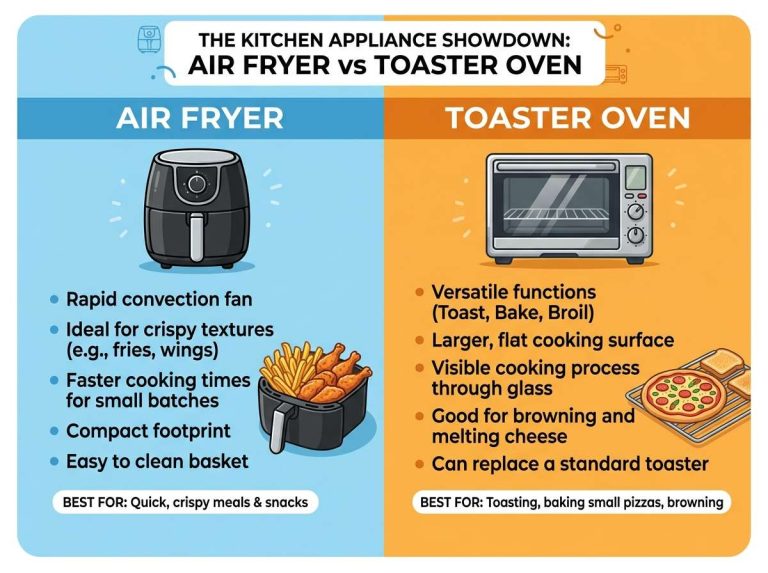
Both use hot circulating air, but air fryers are faster and more compact. Convection ovens are better for baking and cooking larger quantities. Air fryers beat convection ovens for speed and crispy results.
Air Fryers vs. Regular Ovens
Regular ovens are more versatile and better for certain cooking tasks, but air fryers are faster for high-heat cooking. Air fryers excel at making food crispy, while regular ovens handle low-heat cooking and baking better.
Air Fryers vs. Stovetop Cooking
Stovetop cooking gives you precise control over heat and is great for many dishes. Air fryers are faster and require less attention. Both have their place in a complete kitchen.
Energy Efficiency and Air Fryers
One benefit of understanding how air fryers work is realizing how energy efficient they are. Because they’re small and heat up quickly, they use less electricity than regular ovens. They reach cooking temperature in minutes rather than the 10-15 minutes a regular oven needs.
The smaller cooking chamber means less air needs to be heated. All the heating power goes directly to cooking your food. This efficiency saves you money on your electricity bill over time, especially if you cook frequently.
The Future of Air Fryer Technology
Air fryer technology continues to evolve. Newer models feature smarter controls, multiple cooking zones, and improved heating elements. Some high-tech models connect to apps that guide you through recipes.
The basic principle remains the same: rapid air circulation combined with high heat creates the Maillard reaction that gives food that crispy, delicious texture. But manufacturers keep finding ways to make this process more efficient and easier to use.
Final Thoughts on How Air Fryers Work
Air fryers are genuinely clever cooking machines. They work by combining rapid air circulation with high heat to cook food quickly while creating a crispy exterior. The heating element and fan are the key components that make this magic happen.
The science behind air fryers is actually pretty simple once you break it down. Intense heat activates the Maillard reaction on your food’s surface while rapid air movement removes moisture, creating that fried texture. This happens much faster than traditional cooking methods because the process is so concentrated and efficient.
Now that you understand the how and why behind air fryer cooking, you can use your machine more effectively. You’ll know why certain things work better than others and how to adjust recipes for best results. You’ll appreciate that amazing crispy food you’re creating and understand the clever engineering that makes it happen.
Whether you’re a longtime air fryer fan or you’re just getting started with one, knowing the science behind the cooking process makes you a better cook. You can troubleshoot problems, experiment with confidence, and create delicious meals. Air fryers really do deliver on their promise of fast, crispy, delicious food with less oil than traditional frying methods.
So go ahead and fire up your air fryer with confidence. You now understand the magic that happens inside that little cooking chamber. Enjoy your crispy, delicious results!

Mary is a home cooking enthusiast and kitchen appliance reviewer who loves helping people find the best tools for everyday meals. She enjoys testing air fryers, deep fryers, and other cooking appliances while sharing honest reviews and practical buying advice. Through FryerPick.com, Mary provides expert guides, product comparisons, and cooking tips to help readers choose the right fryer for their kitchen.


One Comment