Kitchen Appliance Maintenance Guide
Your kitchen appliances work hard every single day. They heat, cool, blend, chop, and refrigerate your food without complaint. But just like your car needs oil changes and your teeth need brushing, your kitchen appliances need regular care too. When you take good care of them, they last longer, work better, and save you money in the long run. This guide walks you through simple maintenance tasks that any homeowner can handle.
In this article
Why Appliance Maintenance Matters
Think about what happens when you skip maintenance. Your refrigerator starts making weird noises. Your dishwasher leaves spots on your dishes. Your microwave heats unevenly. These problems happen because dirt, dust, and grime build up over time. Regular care stops these issues before they start.
Proper appliance upkeep also keeps your kitchen safer. A clogged vent in your oven can cause fires. A blocked drain in your washing machine can lead to mold and bad smells. When you maintain your appliances, you protect your family and your home. Plus, new appliances cost thousands of dollars. By maintaining the ones you have, you avoid expensive replacement costs for years.
Refrigerator Maintenance: Cold Storage Care
Your refrigerator runs 24/7, making it one of the hardest working appliances in your kitchen. To keep it fresh and efficient, you need a simple maintenance routine.
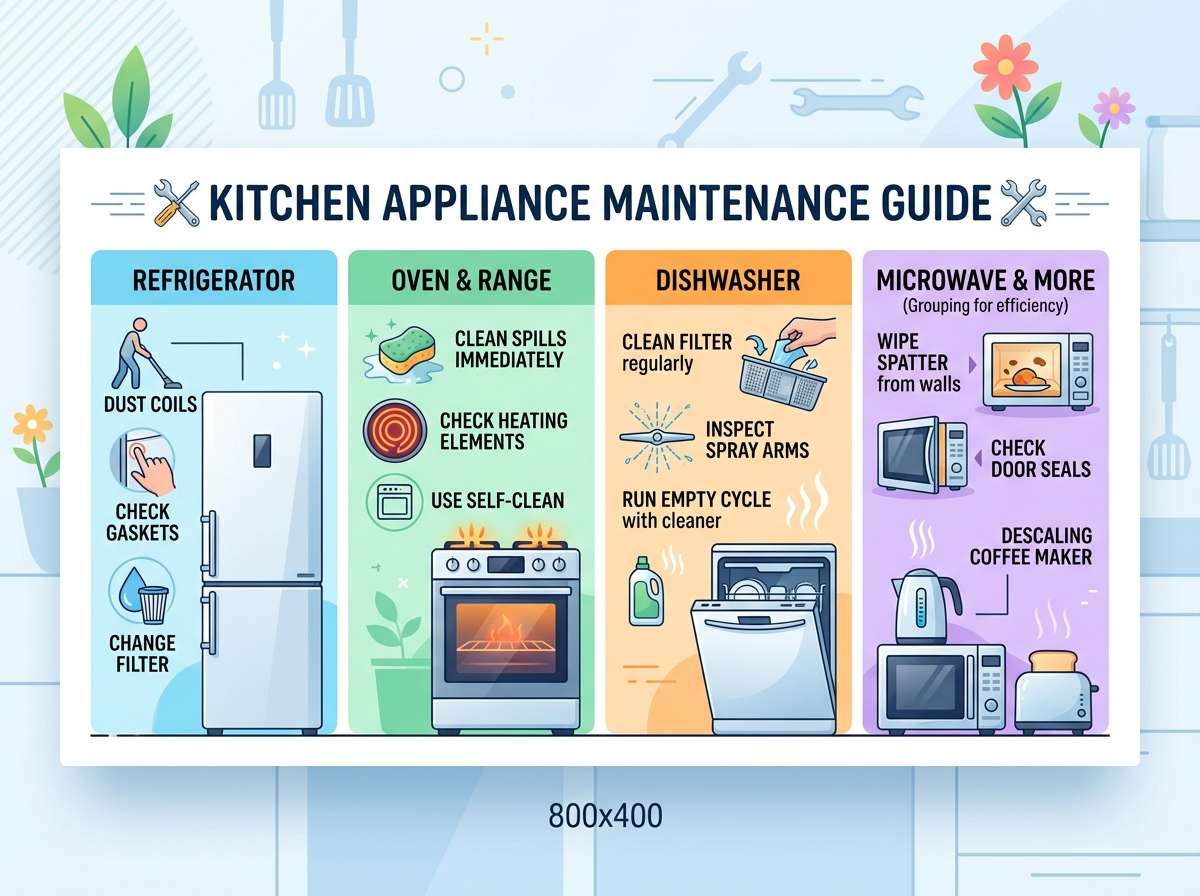
Clean the Door Seals The rubber gasket around your fridge door keeps cold air inside. When it gets dirty, cold air escapes, and your fridge has to work harder. Wipe the gasket with a warm, damp cloth at least once a month. For stubborn grime, use a soft brush or old toothbrush. Make sure both sides get clean.
Vacuum the Coils Behind or underneath your refrigerator sit cooling coils. These coils release heat and help keep food cold. When dust covers them, your fridge can’t cool properly. Pull your fridge out a few inches and look for the coils. Use a vacuum brush attachment to gently remove dust. Do this every three months for best results.
Check and Replace Water Filters If your fridge has an ice maker or water dispenser, it probably has a filter. Old filters let bad taste and bad odor into your water. Replace your water filter every six months, or sooner if water tastes or smells off. Check your manual for the exact replacement process, as different models vary.
Keep Shelves and Bins Clean Spills happen in every refrigerator. Wipe spills right away before they get sticky and hard to clean. Take out removable shelves and bins monthly and wash them with warm soapy water. This stops mold and bacteria from growing.
Check Door Hinges A loose door hinge makes the door not close properly. Every few months, make sure all hinges are tight. If your door hangs crooked, tighten the hinge bolts with an Allen wrench or screwdriver.
Dishwasher Maintenance: Sparkling Clean Dishes
A dishwasher saves hours of hand-washing time, but only if you keep it clean and running well.
Clean the Filter Regularly Dishwashers have filters that trap food bits and grease. When the filter gets clogged, water pools at the bottom of the machine. Check and rinse your filter every week. Once a month, soak the filter in hot water for 15 minutes, then scrub it with an old toothbrush.
Run a Clean Cycle Every month, run your dishwasher empty with a commercial dishwasher cleaner inside. This removes soap buildup, grease, and mineral deposits. You can buy dishwasher cleaner at any grocery store. Just follow the instructions on the package.
Inspect the Spray Arms The rotating spray arms spray water on your dishes. Check them monthly for clogged spray holes. Use a small toothpick to poke out any trapped food or mineral deposits. If the spray arms won’t spin freely, they might need replacing.
Check Door Seals Just like your fridge, your dishwasher door has rubber seals. Wipe them clean monthly with a damp cloth. Dried food and soap can prevent the door from sealing tight.
Clean the Drain Your dishwasher drain can get blocked by food bits and grease. Pour white vinegar down the drain once a month to dissolve mineral buildup and kill odor-causing bacteria. Then run a hot wash cycle.
Microwave Maintenance: Fast and Safe Heating
Microwaves heat food quickly, but they need care to stay safe and work well.
Wipe the Interior Food splatters inside microwaves constantly. Wipe the inside with a damp cloth after each use or at least every few days. For stubborn spots, microwave a bowl of water with lemon juice for three minutes, then wipe. The steam loosens the grime.
Clean the Vents Microwaves have vents that let heat escape. When dust blocks these vents, your microwave can overheat. Use a dry cloth or soft brush to gently clean the vents on all sides at least monthly.
Check the Turntable The rotating turntable keeps food heating evenly. Make sure it spins freely. If it’s stuck or noisy, remove it and wash it with warm soapy water. Check that it sits properly when you put it back.
Inspect the Door Latch The door latch keeps radiation inside the microwave. A broken latch is a safety hazard. Look at the latch every month. If it’s cracked or won’t hold the door closed, you need to replace it right away.
Oven and Stove Maintenance: Safe Cooking
Ovens and stoves take a lot of heat and mess. Keep yours clean and safe with regular care.
Wipe Spills Immediately When spills cook onto your oven floor, they get hard and stick tight. As soon as your oven cools, wipe spills with a damp cloth. This keeps cleaning time short and stops burned-on spots from forming.
Clean Stovetop Burners Gas burners get clogged with food bits and grease. Remove the burner grates and caps, then wash them with warm soapy water. For the burner heads, wipe them with a damp cloth. Use a toothpick to clear any blocked holes. Electric burners just need wiping with a damp cloth.
Deep Clean Monthly Once a month, give your oven a real cleaning. Mix baking soda and water into a paste, spread it inside the oven, and let it sit overnight. The next day, spray white vinegar on the paste (it will foam), then scrape and wipe everything out. This method works great and smells better than harsh chemicals.
Check Your Ventilation Hood Grease clogs your vent hood filter quickly. Every month, check the filter and wash it with hot soapy water. If it looks really dirty, soak it in hot water first. A clean filter lets smoke and steam escape better, keeping your kitchen fresh.
Dishwasher vs. Hand Washing: Maintenance Impact
Hand-washing dishes doesn’t use any appliance energy, so many people think it’s better for appliance maintenance. Actually, using your dishwasher regularly helps it work better. Letting it sit unused can cause seals to dry out and motors to get rusty. The key is proper dishwasher care, not avoiding use.
Freezer Maintenance: Ice-Free Performance
Your freezer compartment needs love too. Frost buildup makes your freezer work harder and take up more space.
Defrost Frost Buildup Every few months, frost builds up on the walls and ceiling. Unplug your fridge or freezer, and let it sit with the door open for a few hours. The ice melts into water that drains out. Wipe away any remaining ice with a cloth.
Clean the Gasket Just like your fridge door, the freezer door gasket needs regular wiping. Do this monthly to keep the seal tight and functioning well.
Keep Things Organized A well-organized freezer runs more efficiently. Remove items you never use. When your freezer isn’t overstuffed, cold air can flow freely, and your freezer doesn’t have to work as hard.
Washing Machine Maintenance: Clean Laundry
Washing machines deal with lots of dirt, soap, and bacteria. They need regular cleaning to keep clothes fresh.
Run a Cleaning Cycle At least once a month, run your washing machine empty with white vinegar or a commercial washing machine cleaner. This removes soap residue and keeps mold from growing.
Clean the Rubber Seal Front-loading washers have a rubber seal around the door. Mold loves to grow here. Wipe this seal dry after every wash, and do a deep clean monthly. Use white vinegar on a cloth to kill mold and mildew.
Check Drain Hoses Your washing machine has hoses that let water drain out. Every six months, look at these hoses for cracks or bulges. Replace any damaged hoses right away, as they can leak and cause water damage.
Leave the Door Open When you finish using your washing machine, leave the door open for a few hours. This lets moisture escape and stops mold and musty smells from forming.
Coffee Maker Maintenance: Better Tasting Coffee
Your morning coffee deserves to taste its best. Keep your coffee maker clean for better flavor.
Descale Monthly Hard water leaves mineral buildup inside your coffee maker. Every month, fill the water reservoir with a mixture of equal parts white vinegar and water. Run this through like you’re making coffee, but catch it in a cup instead of your mug. Then run fresh water through twice to rinse out any vinegar taste.
Clean the Carafe Some stains stick to glass carafes. Fill the carafe with hot water and add one tablespoon of baking soda. Let it sit for 15 minutes, then scrub with a soft brush and rinse well.
Wipe the Exterior Coffee splashes happen. Wipe your coffee maker’s outside daily with a damp cloth. Keep the top and buttons dry so water doesn’t get inside.
Replace the Filter Basket Over time, the fine mesh filter gets tiny cracks that let grounds escape. If you see grounds in your finished coffee, it’s time for a new basket. These are cheap and easy to swap out.
Small Appliance Maintenance: Toasters, Blenders, and More
Smaller kitchen appliances need care too, though their maintenance is simpler.
Empty the Crumb Tray Toasters have crumb trays that need emptying every month. Crumb buildup can catch fire or make your toast taste weird. Just slide the tray out and dump the crumbs.
Wipe Down Regularly All your small appliances collect dust and grease. Wipe them down daily or at least weekly with a dry cloth. For sticky spots, use a slightly damp cloth, but never let water drip inside electrical parts.
Check Cords for Damage Every month, inspect the power cord of each small appliance. Look for cuts, fraying, or discoloration. If you spot damage, stop using that appliance right away and get a new cord or replacement unit.
Clean Blender Blades Blender blades get stuck with food bits. After each use, fill the blender halfway with warm water and a drop of dish soap. Blend for 30 seconds. This cleans the blades without you having to touch them.
Preventive Maintenance Schedule
You don’t need to remember every task separately. Here’s a simple schedule you can follow:
Daily Tasks: Wipe stovetop and microwave after use. Leave washing machine door open. Check that nothing leaks.
Weekly Tasks: Empty toaster crumb tray. Wipe down small appliances. Rinse dishwasher filter.
Monthly Tasks: Clean refrigerator gasket and coils. Run dishwasher cleaning cycle. Descale coffee maker. Deep clean oven. Check all cord for damage.
Every Three Months: Replace refrigerator water filter. Inspect all hoses and seals. Check door hinges and latches.
Every Six Months: Replace washing machine hoses if needed. Vacuum refrigerator coils again. Do a complete appliance check.
What to Do When Something Breaks
Even with good maintenance, appliances eventually break down. When this happens, you have choices. You can call a repair person, try to fix it yourself, or replace the appliance.
Always check your warranty first. If your appliance still has warranty coverage, repairs might be free or cheap. Keep all receipts and warranty papers in a safe place.
For simple fixes like replacing a filter or cleaning a clogged drain, you can often handle it yourself. YouTube has tons of videos showing how to fix common problems. Always unplug electrical appliances before you work on them.
For bigger problems, calling a professional repair person makes sense. They have the right tools and know-how to fix complex issues safely.
Save Money Through Maintenance
Here’s the honest truth: regular maintenance costs you time and a little money for cleaning supplies. But it saves you way more money in the long run. New appliances cost hundreds or thousands of dollars. A refrigerator can run for 15 years with proper care. A washing machine can last 10 years. Every year you keep an appliance working is money saved.
Maintenance also makes appliances run more efficiently. A clean refrigerator uses less electricity. A descaled coffee maker brews faster. These small efficiency gains add up over time on your electric bill.
Final Thoughts
Kitchen appliances make life easier, but they need care to keep working well. The good news is that most maintenance tasks are simple and don’t take much time. Spending 30 minutes a month on appliance care can add years to the life of your appliances and keep your kitchen running smooth.
Start with one appliance this week. Deep clean your refrigerator or descale your coffee maker. Then pick another one next week. Before you know it, you’ll have a simple routine that keeps everything running great. Your appliances will thank you by working reliably for years to come.
Take care of your appliances, and they’ll take care of your meals. It’s that simple.

Mary is a home cooking enthusiast and kitchen appliance reviewer who loves helping people find the best tools for everyday meals. She enjoys testing air fryers, deep fryers, and other cooking appliances while sharing honest reviews and practical buying advice. Through FryerPick.com, Mary provides expert guides, product comparisons, and cooking tips to help readers choose the right fryer for their kitchen.