Smart Kitchen Appliance Trends
Kitchens are getting a lot smarter, and it’s not just hype. Walk into almost any home store today and you’ll spot gadgets that talk to your phone, learn your habits, and even fix small mistakes before they turn into big ones. This shift is changing how people cook, clean, shop, and plan meals every single day.
If you’re new to the world of connected appliances, don’t worry. This guide breaks everything down in plain, simple language. No tech jargon, no confusing terms, just a clear look at where smart kitchens are heading and why it matters for your daily life.
In this article
Why Smart Kitchens Are Growing So Fast
More people are working from home, cooking more meals at home, and looking for ways to save time in the kitchen. That mix has created huge demand for appliances that do more than just heat or cool food.
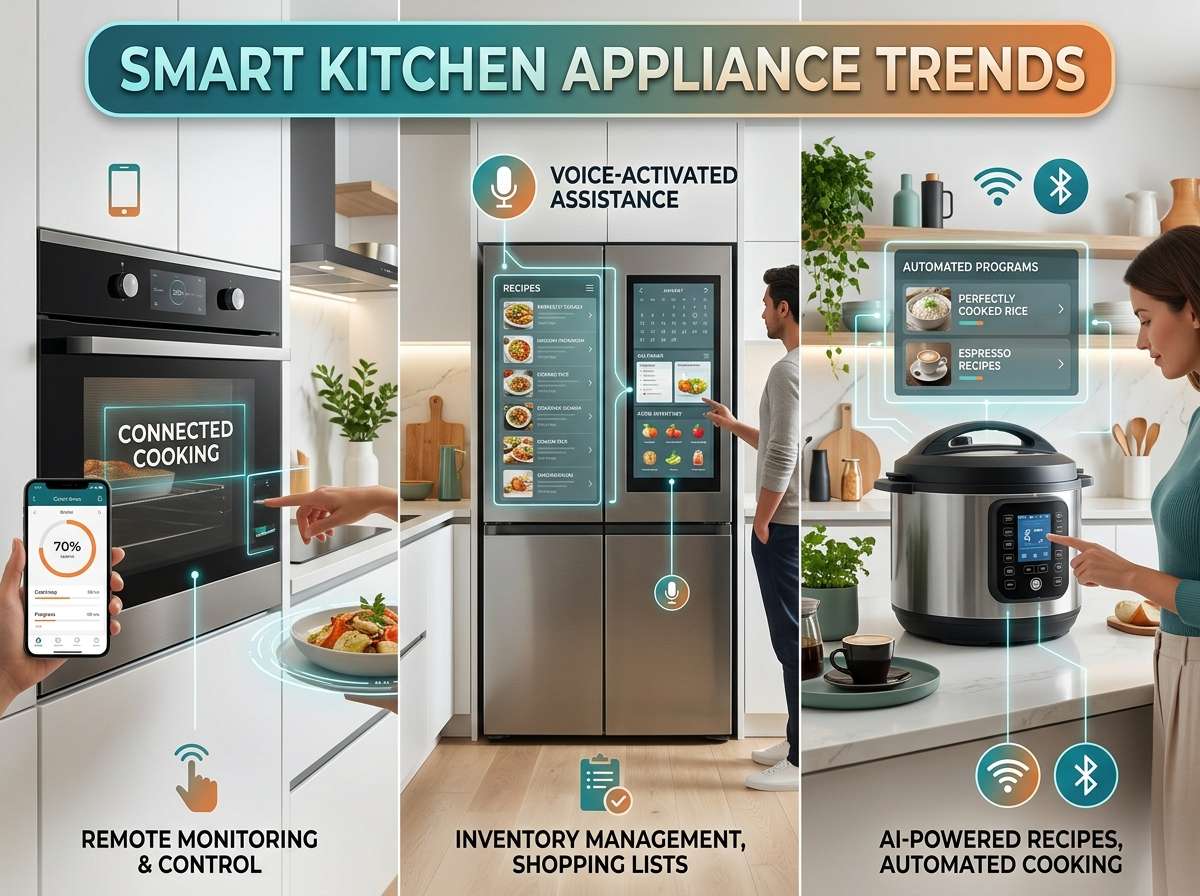
A smart appliance connects to Wi-Fi or Bluetooth, and it usually pairs with an app on your phone. Some models also work with voice assistants like Alexa or Google Assistant. This means you can start your oven from your couch, check if you left the fridge door open, or get a text when your dishwasher cycle finishes.
The bigger reason behind this growth is convenience. People want appliances that take some of the guesswork out of cooking and cleaning. When a machine can tell you exactly how much detergent to add or when your steak has hit the right internal temperature, it removes a lot of stress from daily routines.
Energy savings play a role too. Smart appliances often track power use and suggest ways to cut costs. For anyone trying to lower their electric bill, this feature alone makes a real difference over time.
Voice-Controlled Cooking Is Becoming Normal
Voice control used to feel like something out of a sci-fi movie. Now it’s just part of everyday cooking for a lot of households. You can ask your oven to preheat, tell your coffee maker to start brewing, or have your fridge read out a recipe step by step while your hands are covered in flour.
This hands-free style of cooking is especially helpful for people who juggle multiple tasks at once. Parents cooking dinner while watching kids, or anyone with limited mobility, find voice control makes kitchen tasks a lot easier to manage.
Brands are building deeper voice integration into their products, letting appliances respond to natural speech instead of just simple commands. Instead of saying a robotic phrase, you can talk to your appliance almost like you’d talk to a person, and it still understands what you need.
AI-Powered Cooking Assistance
Artificial intelligence has quietly become one of the biggest forces behind smart kitchen tools. Ovens now come with built-in cameras and sensors that recognize what food you placed inside and adjust cooking settings automatically. Instead of guessing bake time and temperature, the appliance does the thinking for you.
Some smart ovens can identify a piece of chicken, a batch of cookies, or a tray of vegetables, then set the perfect cook time without you touching a single button. This kind of built-in intelligence takes a lot of the trial and error out of home cooking, especially for beginners who are still learning the basics.
Refrigerators are getting the same treatment. Interior cameras let you check what’s inside from your phone while you’re at the grocery store, so you never buy duplicate items again. Some models track expiration dates and suggest recipes based on ingredients that are about to go bad, cutting down on food waste in a natural, effortless way.
Air fryers and multi-cookers now come with AI recipe libraries built right into their touchscreens. You tap a photo of a dish, and the appliance suggests a cook setting that matches. It’s a small feature, but it saves a lot of flipping through recipe books or searching online.
Connected Apps Are Tying the Kitchen Together
One of the biggest shifts in smart kitchens is how appliances now talk to each other through a single app. Instead of managing five separate apps for your oven, fridge, dishwasher, and coffee maker, brands are building unified platforms that control everything from one screen.
This kind of connected ecosystem lets you set a morning routine where your coffee maker starts brewing right after your smart alarm goes off, and your oven preheats at the same time. It sounds like a small thing, but once you get used to that level of coordination, going back to manual controls feels like a step backward.
App-based control also gives you remote access. You can check your oven’s progress from the office, turn off a stove burner you forgot about, or get an alert if your freezer temperature rises above a safe level. That kind of peace of mind matters a lot for busy households juggling work, kids, and everything in between.
Energy Efficiency Takes Center Stage
Rising utility costs have pushed a lot of shoppers to look closely at how much power their appliances use. Smart kitchen tech responds to this by giving users real data instead of vague estimates.
Modern refrigerators can show you exact energy use for each day, week, or month right on the app. Some dishwashers offer eco modes that use sensors to detect how dirty your dishes actually are, then adjust water and energy use to match. Rather than running a full cycle every time, the machine scales its effort based on real need.
Induction cooktops are also gaining popularity because they heat food faster while using less energy than traditional electric or gas stoves. Many newer induction models come with smart features that shut off automatically if a pan is removed, cutting down on wasted power and improving safety at the same time.
This focus on efficiency isn’t just good for wallets. It lines up with a growing interest in sustainable living, where small daily choices add up to a bigger environmental impact.
Smart Fridges Are Leading the Pack
Refrigerators have become the centerpiece of the smart kitchen movement, and it makes sense. They run all day, every day, and touch almost every part of meal planning.
Many current models come with large touchscreens on the door that act like a family command center. You can leave notes for family members, check the weather, stream music, or even mirror your phone screen while cooking. Some screens double as digital calendars, syncing with everyone’s schedule so nothing gets missed.
Inside the fridge, temperature zones have gotten more precise. Instead of one general cooling setting, you get separate compartments that adjust automatically based on what you store, whether it’s fresh produce, meat, or dairy. This kind of precision helps food stay fresh longer and cuts down on spoilage.
Grocery integration is another standout feature. Some smart fridges connect directly to grocery delivery services, letting you build a shopping list based on what’s actually missing from your shelves. A few models even let you reorder staples with a single tap.
Robotic and Self-Cleaning Features
Nobody loves scrubbing a dirty oven or wiping down a greasy stovetop, so appliance makers have leaned hard into self-cleaning technology. Ovens now offer steam cleaning cycles that loosen grime without harsh chemicals, making cleanup faster and safer for your lungs.
Dishwashers have added sensors that detect food particles and automatically run a rinse cycle before the wash even begins, cutting down on clogged filters and lingering odors. Some models also include self-cleaning filters that flush themselves out after every load.
Robotic helpers are stepping into kitchens too. Countertop robots can stir pots, flip pancakes, or monitor a simmering sauce so you don’t have to hover over the stove. While these tools are still fairly new, they point toward a future where routine cooking tasks require far less hands-on effort.
Personalized Cooking Based on Data
A growing trend in smart kitchens involves appliances that learn from your habits over time. The more you use certain settings, the more the device adjusts to match your taste. If you always brew your coffee a little stronger or bake your pizza a bit longer, some smart appliances remember that preference and apply it automatically next time.
This kind of personalization goes beyond simple settings, too. Smart scales paired with cooking apps can track your daily nutrition, log meals automatically, and suggest recipes that fit your dietary goals. For anyone managing a specific diet, whether it’s cutting sugar or watching sodium, this feature saves a lot of manual tracking.
Health-focused appliances are becoming more common as well. Smart blenders that measure exact nutrient content, or scales that sync directly with fitness apps, show how kitchen tech is moving past convenience and into wellness territory.
Compact and Multi-Function Devices Are on the Rise
Not everyone has a huge kitchen, and appliance makers know it. That’s why compact, multi-function devices have become such a hot category. Instead of buying five separate machines, people are turning to all-in-one units that pressure cook, air fry, slow cook, and steam, all controlled from a single smart panel.
These combo appliances save counter space and cut down on clutter, which matters a lot for apartment dwellers and small households. Many come with app connectivity that lets you browse recipes and send cook settings directly to the machine, so you skip the manual programming altogether.
Portability is another growing focus. Small smart appliances built for dorm rooms, tiny kitchens, or even outdoor cooking are becoming more common, proving that smart tech isn’t just for large, expensive setups anymore.
Safety Features Are Getting Smarter Too
Kitchen safety has always mattered, but smart technology is taking it further. Stoves and cooktops now come with sensors that detect if a pan has been left unattended for too long, automatically lowering the heat or shutting off entirely. This kind of feature can prevent house fires before they even start.
Leak detection is another growing area. Smart dishwashers and refrigerators can sense water leaks early and send an alert straight to your phone, giving you time to fix the issue before it turns into major damage.
For households with kids or elderly family members, child lock features and remote shutoff options add an extra layer of protection. Being able to turn off a stove from your phone, even if you’re already at work, brings real peace of mind.
Sustainability Is Shaping Product Design
Along with energy efficiency, sustainability has become a bigger focus in how smart appliances get built. More brands are using recycled materials in their appliance frames and packaging. Water-saving features in dishwashers and smart faucets are also becoming standard rather than an upgrade option.
Composting appliances have entered the smart kitchen space too. These small countertop units break down food scraps quickly, reducing landfill waste and giving people an easy way to create nutrient-rich compost for gardens, all managed through a simple app that tracks the process.
This shift shows that smart kitchens aren’t just about flashy screens and voice commands. A lot of the innovation is quietly focused on reducing waste and lowering the overall environmental footprint of everyday cooking.
What This Means for Everyday Cooks
For beginners, all these smart features add up to one simple benefit: cooking gets less stressful. You don’t need years of kitchen experience to get a perfectly cooked meal anymore, since a lot of appliances now guide you through the process step by step.
For busy households, the time saved through automation and remote control adds real value. Starting dinner from your phone, getting alerts before food spoils, or letting a dishwasher figure out its own best settings frees up mental space for other parts of the day.
And for anyone focused on saving money or living a bit greener, energy tracking and waste-reducing features offer a practical way to make small, steady improvements without a lot of extra effort.
Things to Keep in Mind Before You Buy
Smart appliances come with a lot of perks, but they aren’t perfect for everyone. Here are a few points worth thinking about:
- Wi-Fi dependency: Most smart features stop working if your internet goes down, so it helps to check if the appliance still functions in basic mode without a connection.
- Higher upfront cost: Smart models usually cost more than standard versions, so it’s worth weighing how often you’ll actually use the connected features.
- App reliability: Some apps are smoother than others. Reading recent reviews can save you from buying into a clunky, glitchy system.
- Privacy concerns: Connected appliances collect usage data, so it helps to check a brand’s privacy policy before linking your home network.
- Learning curve: Even simple tech takes a little time to set up and get used to, so patience during the first few uses goes a long way.
None of these points mean smart appliances aren’t worth it. They just mean it helps to go in with clear expectations rather than assuming every feature will work perfectly right out of the box.
Final Thoughts
Smart kitchen technology has moved far beyond a passing trend. From voice-controlled ovens to fridges that track your groceries, these tools are reshaping how people cook, clean, and manage their homes. AI-driven cooking assistance, connected apps, energy tracking, and safety sensors are turning kitchens into spaces that work smarter, not harder.
As more households look for convenience, efficiency, and a bit of extra help in the kitchen, this shift toward connected cooking shows no signs of slowing down. For beginners and seasoned home cooks alike, the modern smart kitchen offers a simpler, safer, and more personalized way to get meals on the table.

Mary is a home cooking enthusiast and kitchen appliance reviewer who loves helping people find the best tools for everyday meals. She enjoys testing air fryers, deep fryers, and other cooking appliances while sharing honest reviews and practical buying advice. Through FryerPick.com, Mary provides expert guides, product comparisons, and cooking tips to help readers choose the right fryer for their kitchen.