
Time Saving Cooking Tips
Cooking every day can feel like a full-time job. Between chopping, washing, cooking, and cleaning up, a simple meal can eat up hours you don’t have. The good news is that you don’t need fancy gadgets or years of kitchen skill to speed things up. Small changes in how you plan, prep, and cook can shave off huge chunks of time, and this guide walks you through the exact tricks that work.
These time saving cooking tips are made for real life. No chef training needed. Just simple habits that any home cook can pick up today and start using tonight.
In this article
Why Cooking Feels So Slow in the First Place
Most people don’t waste time because they’re bad cooks. They waste time because of a few sneaky habits: no plan for the week, a messy kitchen, and doing everything from scratch every single night. Once you fix those three things, cooking speeds up almost automatically.
Think about how much time goes into figuring out what to eat, digging through the fridge, and washing the same pan three times in one evening. That mental and physical clutter adds up fast. Fixing it isn’t about rushing through meals. It’s about cutting out the wasted motion so the actual cooking part goes smoothly.
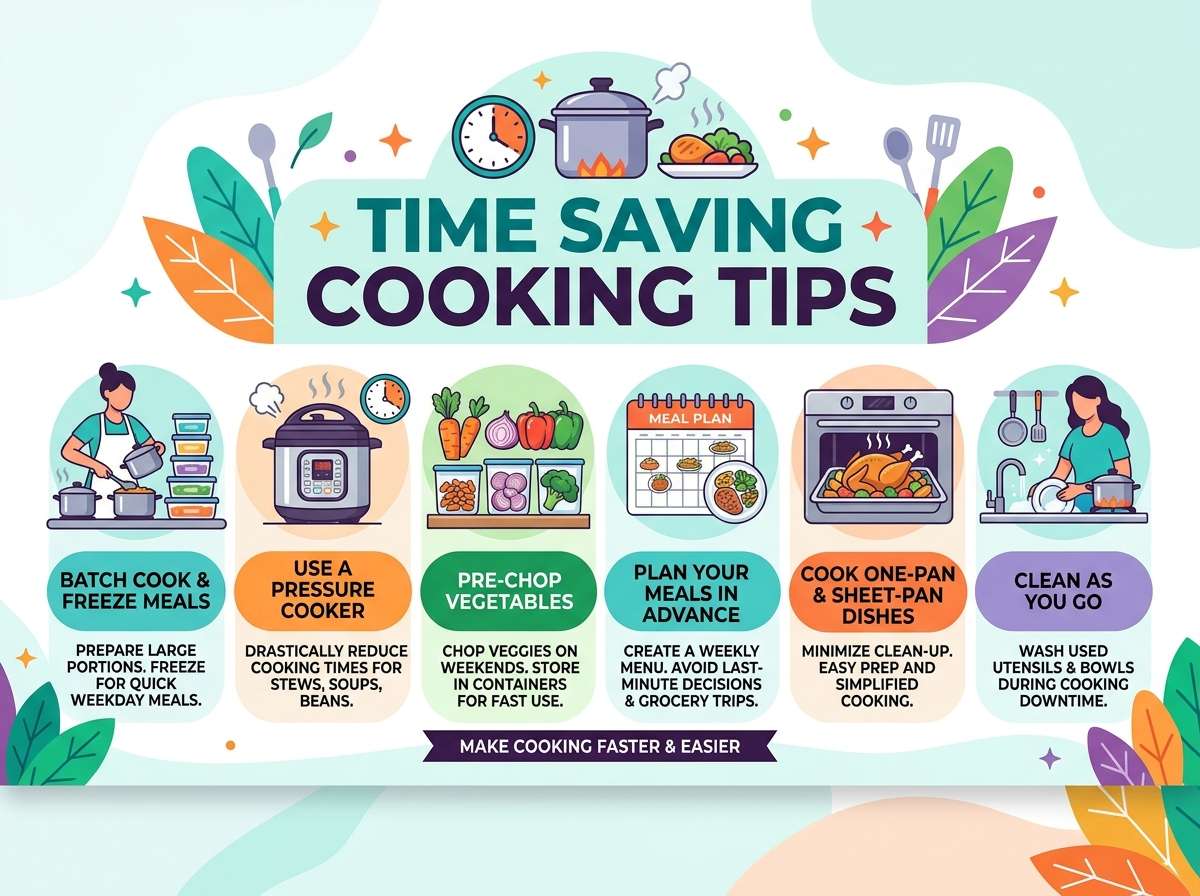
Plan Your Meals Before the Week Starts
This one tip alone can save you hours. When you sit down for ten minutes and decide what you’re eating for the next few days, you stop standing in front of the fridge wondering what to make. That moment of “what should I cook” is one of the biggest time drains in any kitchen.
Grab a notebook or your phone and jot down five or six meals. Try to repeat ingredients across meals so you’re not buying ten different things that each get used once. For example, if you buy a bag of spinach, use it in a salad one night and a stir fry the next. This cuts down on grocery trips and keeps your fridge from turning into a science experiment.
A simple weekly plan also means less food waste, since you’re only buying what you actually need. Less waste means less money spent, and less time spent tossing rotten vegetables into the trash.
Batch Cook on Your Day Off
Batch cooking is one of the most powerful time saving cooking tips out there. The idea is simple: cook large amounts of a few basic items once, then use them across several meals during the week.
Here’s how it works in practice. Pick a day when you have a bit of extra time, maybe a weekend afternoon. Roast a tray of vegetables, cook a big pot of rice or grains, and grill or bake a batch of protein like chicken, tofu, or beans. Once these basics are ready, you can mix and match them into different meals all week without starting from zero each time.
Monday might be a rice bowl with roasted veggies and grilled chicken. Tuesday could turn into a wrap with the same chicken and a quick sauce. Wednesday might be a soup using the leftover veggies. You did the heavy lifting once, and now dinner takes fifteen minutes instead of an hour.
Batch cooking also cuts down on dishes, since you’re using the same pots and pans for bigger portions instead of cooking small amounts every single night.
Prep Your Ingredients Ahead of Time
Chopping vegetables is one of the slowest parts of cooking, especially for beginners still getting used to a knife. Instead of doing it fresh every night, set aside twenty or thirty minutes once or twice a week to chop everything you’ll need.
Wash and cut your onions, peppers, carrots, and other veggies, then store them in airtight containers in the fridge. When it’s time to cook, you just grab and toss them into the pan. This single habit alone can cut your cooking time by a huge margin, especially on busy weeknights.
You can do the same with herbs, garlic, and ginger. Mince a big batch of garlic and store it in a small jar with a bit of oil. Fresh herbs can be washed, chopped, and frozen in ice cube trays with a splash of oil or water for later use.
Use One-Pot and Sheet Pan Meals
If washing dishes is half your battle, one-pot meals are your best friend. Soups, stews, casseroles, and stir fries all come together in a single pot or pan, which means less cleanup and often less active cooking time too.
Sheet pan dinners work the same magic. Toss your protein and vegetables on one tray, drizzle with oil and seasoning, and let the oven do the rest. No need to babysit multiple pans on the stove or juggle timers for five different dishes. Just set it, walk away, and come back to a finished meal.
These meals are also forgiving for beginners. There’s less room for something to burn or overcook when everything is roasting together at the same temperature.
Keep Your Kitchen Organized
A messy kitchen slows everything down. If you can’t find your measuring cups or your favorite knife is buried under a pile of dishes, that’s time lost before you even start cooking.
Take a little time to organize your kitchen so the tools you use most often are within easy reach. Keep your cutting board, knife, and most-used spices near your prep area. Store pots and pans where you can grab them without digging through a cabinet.
A clean, organized space also makes it easier to clean as you go, which means less scrubbing at the end of the night. Wipe down counters between steps, rinse a bowl the moment you’re done with it, and toss scraps directly into a compost bin or trash can instead of letting them pile up.
Invest in a Few Time Saving Tools
You don’t need a kitchen full of gadgets, but a few smart tools can genuinely cut your cooking time in half. Here are some worth having:
- A sharp chef’s knife makes chopping faster and safer than a dull one.
- A food processor handles chopping, shredding, and slicing in seconds.
- An instant pot or pressure cooker turns hours-long recipes into a fraction of the time.
- A slow cooker lets you toss ingredients in the morning and come home to a finished meal.
- A good non-stick pan cuts down on both cooking and cleanup time.
These tools aren’t about spending a ton of money. Even one or two of them can make a noticeable difference in how fast dinner comes together.
Cook Once, Eat Twice (or Three Times)
Cooking a bigger portion than you need for one meal is one of the smartest tricks around. If you’re already making dinner, why not double the recipe and save the extra for lunch tomorrow or dinner later in the week?
This works especially well for soups, stews, casseroles, pasta dishes, and grain bowls. These meals often taste even better the next day once the flavors have had time to blend. Store the extra portions in containers, pop them in the fridge or freezer, and you’ve got a ready-made meal without any extra effort.
Freezer meals are a lifesaver on those days when you’re too tired to cook anything at all. Just pull one out, reheat, and dinner is done in minutes.
Use Frozen and Pre-Cut Produce
Fresh produce is great, but frozen vegetables and fruits are a total secret weapon for saving time. They’re already washed, peeled, and chopped, and they last much longer in the freezer without going bad.
Frozen spinach, peas, corn, and mixed vegetables can go straight into soups, stir fries, and pasta dishes without any prep at all. Pre-cut fresh produce from the store, like bagged salad mixes or pre-diced onions, also saves you a solid chunk of chopping time.
Don’t feel guilty about using these shortcuts. Frozen produce is usually picked and frozen at peak ripeness, so it holds onto most of its nutrients. It’s a totally legit way to cook smarter, not harder.
Keep a Simple Pantry Stocked
A well-stocked pantry means you’re never starting from scratch. Keep basics like rice, pasta, canned beans, canned tomatoes, olive oil, garlic, onions, and a handful of spices on hand at all times. With these staples ready to go, you can throw together a meal even on nights when you haven’t planned anything.
Build a small list of pantry basics you always keep stocked, and restock them as soon as you run low. This way, a quick trip to the store isn’t a scramble to figure out what you need. You’ll always have the building blocks for a fast, simple meal.
Multitask While You Cook
Good multitasking can shave serious time off your cooking process. While water boils for pasta, you can chop vegetables for the sauce. While something roasts in the oven, you can prep a side dish or clean up your workspace.
The trick is to read through your recipe fully before you start, so you know what steps can happen at the same time. This kind of planning turns a thirty-minute recipe into something you can finish in twenty, just by using your downtime wisely instead of standing around waiting.
Simplify Your Recipes
Not every meal needs to be a ten-ingredient masterpiece. Some of the fastest, tastiest meals use just a handful of ingredients cooked well. A simple stir fry with a few vegetables, a protein, and a basic sauce can taste just as satisfying as something far more complicated.
Look for recipes with short ingredient lists and few steps, especially on busy nights. Save the elaborate, multi-step dishes for weekends or days when you actually have time to enjoy the process. On weeknights, simple is almost always better.
Prep Breakfast the Night Before
Mornings are usually the most rushed part of the day, so this is a great spot to save time. Overnight oats, chia pudding, or a batch of muffins made ahead of time mean breakfast is ready the second you wake up.
Even something as simple as setting out your coffee maker or pre-portioning your smoothie ingredients into bags the night before can save you precious minutes when you’re half-asleep and rushing out the door.
Clean As You Go
This tip sounds small, but it makes a massive difference. Instead of letting dirty bowls, spoons, and cutting boards pile up until the meal is done, wash or rinse items as soon as you’re finished with them.
Fill your sink with warm soapy water before you start cooking, and toss dishes in as you go. By the time dinner is ready, you’ll have a mostly clean kitchen instead of a mountain of dishes waiting for you after you eat.
Use Kitchen Shears More Often
A lot of home cooks reach for a knife and cutting board for everything, but kitchen shears can be way faster for certain tasks. Cutting raw chicken into pieces, snipping fresh herbs, trimming fat off meat, or even cutting pizza can all be done faster with a good pair of kitchen shears than with a knife.
They’re also easier to clean and often safer for beginners than handling a large knife for smaller cutting jobs.
Learn a Few Go-To Recipes by Heart
Once you have three or four simple recipes memorized, you stop wasting time flipping through cookbooks or scrolling through recipe sites trying to decide what to make. You already know the steps, the ingredients, and roughly how long it takes.
These go-to meals become your safety net on nights when you’re tired or short on time. Rotate through a small set of reliable dishes and save the new recipe experiments for days when you have more time to spare.
Final Thoughts
Speeding up your time in the kitchen doesn’t mean sacrificing good food. It just means being a little smarter about how you plan, prep, and cook. Start with one or two tips from this list, like batch cooking or prepping your veggies ahead of time, and build from there.
Cooking should feel like something you can handle, not something that drains your entire evening. With a bit of planning and a few smart habits, you’ll find yourself spending less time in the kitchen and more time actually enjoying your meals.

Mary is a home cooking enthusiast and kitchen appliance reviewer who loves helping people find the best tools for everyday meals. She enjoys testing air fryers, deep fryers, and other cooking appliances while sharing honest reviews and practical buying advice. Through FryerPick.com, Mary provides expert guides, product comparisons, and cooking tips to help readers choose the right fryer for their kitchen.


One Comment