Air Fryer Pros and Cons
An air fryer sits on so many kitchen counters right now, and it’s easy to see why. It promises crispy fries, golden chicken wings, and roasted veggies with way less oil than a deep fryer. But like any kitchen gadget, it has its strong points and its weak spots too. If you are on the fence about buying one, or you already own one and want to know if you are using it the right way, this guide breaks down every pro and con in plain, simple words.
By the end, you will know exactly what an air fryer does well, where it falls short, and if it fits your daily cooking style. No fluff, just the real facts.
In this article
What Exactly Is an Air Fryer?
An air fryer is a small countertop appliance that cooks food by blowing hot air around it at high speed. This is called convection cooking. The hot air moves fast around the food, and that creates a crispy outer layer that feels a lot like deep frying, but with a tiny amount of oil, or sometimes none at all.
Inside the basket, a heating element sits near the top, and a fan pushes the hot air down and around your food. The result is a crunchy texture on the outside and a soft, cooked center on the inside. That is the whole trick behind it, and it’s actually pretty simple once you see how it works.
Now let’s get into the real pros and cons so you can decide if this appliance deserves a spot in your kitchen.
The Pros of Using an Air Fryer
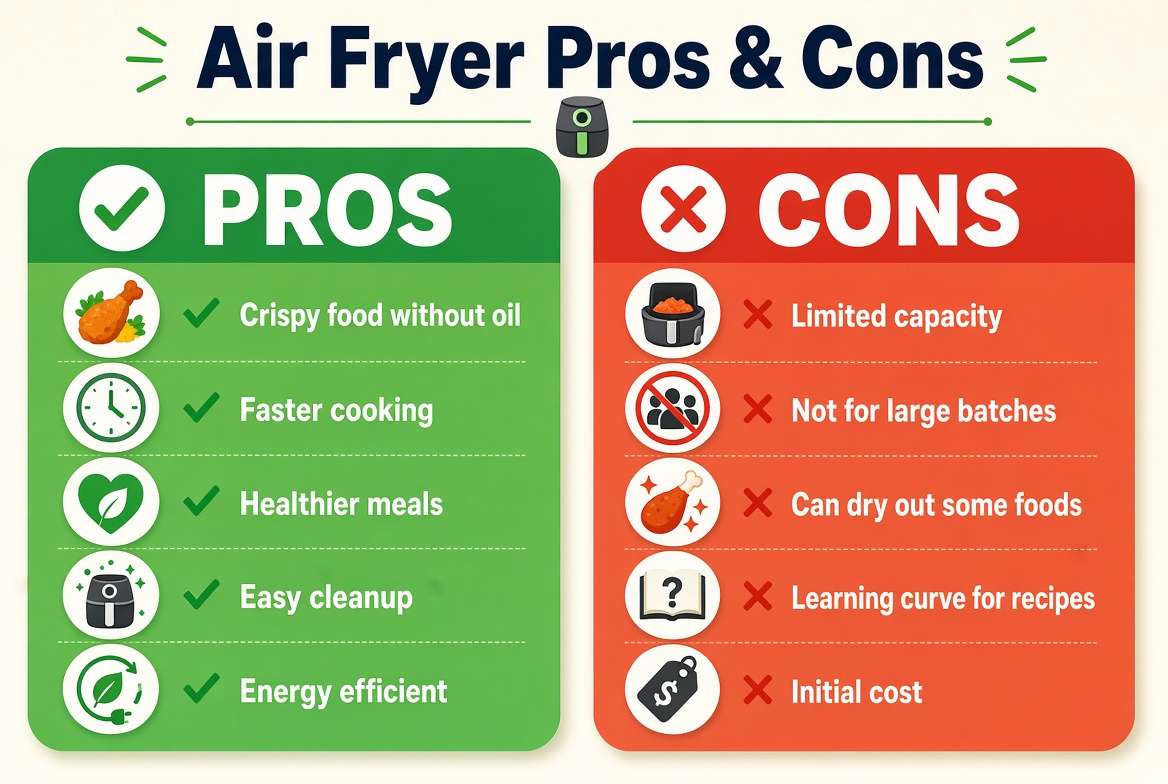
1. It Uses Much Less Oil
This is the number one reason people fall in love with air fryers. A traditional deep fryer needs your food to be fully submerged in oil. An air fryer only needs a light spray or a tablespoon at most. This means your fried chicken, fries, or onion rings end up with far fewer calories and less fat compared to deep-fried versions.
For anyone trying to eat a bit healthier without giving up crispy, comforting food, this is a huge win. You still get that crunch you crave, just without the greasy mess that comes with traditional frying.
2. Food Cooks Faster
Because the hot air circulates so quickly inside the small chamber, food cooks in less time than a regular oven. A batch of frozen fries that would take twenty-five minutes in an oven might only need fifteen minutes in an air fryer. Chicken tenders, fish fillets, and even small roasts cook noticeably quicker too.
This speed makes it a great tool for busy weeknights when you don’t have time to wait around for dinner. It’s also handy for reheating leftovers, since it brings back that fresh, crispy texture that a microwave just can’t do.
3. It’s Easier to Clean Than a Deep Fryer
Deep frying leaves behind pools of used oil that need to be strained, stored, or thrown away carefully. That whole process is messy and honestly a bit annoying. Air fryers skip most of that hassle. Most baskets and trays are dishwasher safe or wipe clean with warm soapy water in just a couple of minutes.
Since there is little to no oil splattering around, your stovetop and counters stay cleaner too. This alone makes a lot of people switch over from traditional frying methods for good.
4. It Saves Energy Compared to a Full Oven
Heating up a large oven for a small meal wastes a lot of energy. An air fryer is compact, so it heats up fast and uses less electricity to cook the same amount of food. If you are cooking a small portion, like a few chicken thighs or a handful of vegetables, an air fryer is often the smarter and cheaper option compared to running your full-sized oven.
Over time, this can actually help lower your electricity bill, especially if you use it often instead of the oven for smaller meals.
5. It Makes Cooking Simple for Beginners
You don’t need fancy cooking skills to use an air fryer. Most models come with a dial or digital screen where you just set the temperature and timer, then walk away. There is no need to watch a pot of hot oil or worry about food burning on the stove. This makes it a great pick for students, people living alone, or anyone who just wants dinner done without much effort.
Many models also come with preset buttons for common foods like fries, chicken, fish, or bacon, taking the guesswork out of temperature and timing completely.
6. It’s Great for Small Households
Cooking a big meal in a full oven for just one or two people often feels like overkill. An air fryer fits the job of small households perfectly. It handles small portions well, so you’re not wasting energy or space heating up a giant oven for a single serving of roasted broccoli or a couple of pieces of salmon.
7. It Handles a Wide Range of Foods
People often think air fryers are only good for frozen fries, but that’s far from true. You can roast vegetables, bake small cakes, cook bacon, reheat pizza, toast bread, and even dehydrate fruit in some models. This kind of flexibility means one small appliance can replace several other gadgets sitting in your kitchen.
8. It Reduces Kitchen Heat
Turning on a full oven during warm weather heats up your whole kitchen, and sometimes your whole house. Since an air fryer is small and enclosed, it doesn’t spread heat around the room nearly as much. This makes cooking during hot months a lot more comfortable, especially in smaller apartments without strong air conditioning.
9. It Cuts Down on Cooking Odors
Deep frying tends to leave strong smells lingering in the house for hours. Air fryers produce far less odor since there is barely any oil involved. Your kitchen, curtains, and clothes won’t carry that heavy fried smell the way they would after using a traditional deep fryer.
The Cons of Using an Air Fryer
Now let’s flip to the other side. No appliance is perfect, and an air fryer has some real downsides worth knowing before you spend your money.
1. The Cooking Basket Is Usually Small
Most air fryers, especially budget models, have a fairly small basket. This can be frustrating if you are cooking for a big family or hosting friends. You often have to cook food in batches, which adds extra time to the whole process and kind of cancels out the speed advantage it offers for smaller portions.
If you plan to cook large meals regularly, you may need to buy a bigger, more expensive model, and even then, the capacity still can’t match a full oven.
2. It Can Dry Out Certain Foods
Because the hot air moves so fast, some foods can end up dry or tough if left in too long. Lean meats like chicken breast can lose their moisture quickly if you’re not careful with timing. This means you need to keep an eye on cook times and avoid just guessing, especially with delicate proteins.
3. Texture Isn’t Always Identical to Deep Frying
Air fryers get you close to that deep-fried crunch, but it’s not always a perfect match. Some foods, especially battered items like tempura or beer-battered fish, don’t crisp up quite the same way they would in hot oil. The texture can end up a bit drier or less golden compared to true deep frying.
4. It Takes Up Counter Space
An air fryer is not tiny. Depending on the model, it can take up a good chunk of your counter, and it needs space around it for airflow too. If your kitchen is already tight on space, fitting in a bulky air fryer alongside your other appliances can become a real challenge.
5. It Can Be Loud
The fan inside an air fryer runs the entire time it’s cooking, and on some models, this fan noise can be pretty noticeable. It’s not extremely loud, but it’s enough that some people find it annoying, especially in a quiet apartment or open-plan living space.
6. Cleaning Can Be Tricky With Certain Models
While air fryers are generally easier to clean than deep fryers, some models have tight corners, mesh baskets, or non-removable parts that trap grease and crumbs. If food isn’t cleaned quickly after use, it can bake onto the surface and become harder to scrub off later.
7. It Can Be Pricey for Larger, Better Models
Basic air fryers are affordable, but larger models with bigger baskets, digital controls, and multiple cooking functions can cost quite a bit more. If you want a model that handles bigger batches and has more features, be ready to spend more money than you might expect for a small kitchen gadget.
8. Overcrowding the Basket Ruins Results
For an air fryer to work properly, hot air needs space to circulate around each piece of food. If you pack the basket too full, the food on the bottom won’t crisp up properly, and you’ll end up with soggy, unevenly cooked results. This means you often need to cook in smaller batches, which again eats into the time you save.
9. Some Recipes Need Extra Trial and Error
Since every air fryer model heats slightly differently, recipes online don’t always match perfectly with your specific machine. You might need to test a recipe a couple of times, adjusting the temperature or timer, before you get the exact result you’re looking for. This learning curve can be a bit frustrating at first.
Quick Comparison Table
| Category | Air Fryer | Deep Fryer | Regular Oven |
|---|---|---|---|
| Oil needed | Very little | A lot | Little to none |
| Cook time | Fast | Fast | Slower |
| Cleanup | Easy | Messy | Moderate |
| Capacity | Small to medium | Medium | Large |
| Energy use | Low | High | High |
| Texture | Close to fried | Truly fried | Baked, softer |
Tips to Get the Best Results From Your Air Fryer
Here are a few simple tricks that make a real difference in how your food turns out:
- Don’t overcrowd the basket. Cook in smaller batches so hot air can move freely around each piece.
- Shake or flip food halfway through cooking for even crisping on all sides.
- Use a light spray of oil on foods that aren’t naturally fatty, like vegetables or plain chicken breast, to help them crisp up nicely.
- Preheat the air fryer for a couple of minutes before adding food, just like you would with a regular oven.
- Pat food dry before cooking, especially meat and fish, since extra moisture can stop food from getting crispy.
- Clean the basket after each use so grease doesn’t build up and cause smoke during your next cooking session.
Is an Air Fryer Worth Buying?
If you cook for one or two people, love crispy food but want to cut back on oil, and enjoy quick, low-effort meals, an air fryer is a smart investment. It fits well into busy routines and makes healthier eating feel a lot less like a chore.
On the other hand, if you regularly cook for a big family, need large batches at once, or you’re tight on kitchen counter space, it might feel more like a limitation than a helpful tool. In that case, a large convection oven might serve you better.
At the end of the day, an air fryer is not a magic replacement for every cooking method in your kitchen. It’s a helpful tool that does certain jobs really well, like crisping frozen snacks, roasting small batches of veggies, and reheating leftovers, while other jobs are still better left to a stove, oven, or traditional fryer.
Frequently Asked Questions
Does an air fryer really cook food faster than an oven? Yes, in most cases. Because the hot air is more concentrated in a small space, food generally cooks faster than in a full-sized oven set to the same temperature.
Can you cook raw meat in an air fryer? Yes, air fryers handle raw chicken, fish, and even small cuts of beef well. Just make sure to check the internal temperature with a food thermometer to confirm it’s fully cooked.
Is air fryer food actually healthy? It can be a healthier option compared to deep-fried food since it uses far less oil. That said, frozen processed snacks like fries or nuggets still carry the same calories and sodium as before, the air fryer just changes the cooking method, not the ingredients.
Do air fryers use a lot of electricity? Not really. Compared to running a full oven, an air fryer uses less power because it’s smaller and cooks food faster.
Can I bake in an air fryer? Yes, many people bake small cakes, muffins, and even bread in an air fryer, as long as it fits inside the basket properly.
Final Thoughts
An air fryer brings a lot of convenience into everyday cooking, especially if you love crispy textures without the oily mess of traditional frying. It cooks fast, cleans up easily, and works well for small households or anyone short on time. At the same time, it has real limits, like smaller capacity, possible dryness in certain foods, and a learning curve for getting recipes just right.
Weigh these pros and cons against your own cooking habits and kitchen needs. If it matches how you already like to cook, it’s a small appliance that can genuinely make your daily meals easier, faster, and a little healthier too.

Mary is a home cooking enthusiast and kitchen appliance reviewer who loves helping people find the best tools for everyday meals. She enjoys testing air fryers, deep fryers, and other cooking appliances while sharing honest reviews and practical buying advice. Through FryerPick.com, Mary provides expert guides, product comparisons, and cooking tips to help readers choose the right fryer for their kitchen.