Are Silicone Air Fryer Accessories Safe?
Air fryers have become a kitchen staple for people who want crispy, delicious food without all the oil. But when you’re using one, you might be wondering about the little accessories that come with it. Silicone air fryer accessories pop up everywhere—from baking liners to trivets to rings and separators. They look handy and promise to make cooking easier, but are they actually safe? Let’s break this down in a way that makes sense.
In this article
What Are Silicone Air Fryer Accessories?
Before we dive into safety, let’s talk about what these things actually are. Silicone air fryer accessories include items like silicone baking liners, trivets, divider rings, egg bite molds, and heat-resistant mats. They fit inside your air fryer basket and help with cooking, organizing food, and protecting your basket from mess. Most come in bright colors—often red, blue, purple, or black—and feel squishy to the touch.
The appeal is obvious: they protect your basket, keep food from sticking, and let you cook multiple things at once. But that squishy, bendy material raises questions. Is it really safe to heat silicone again and again in a hot air fryer?
The Basics of Silicone Safety
Let’s start with what silicone actually is. Silicone is a synthetic rubber made from silica, which you find in sand. It’s not plastic. This is important because plastic and silicone behave completely differently when heated. Manufacturers can engineer silicone to be heat-resistant, flexible, and non-toxic.
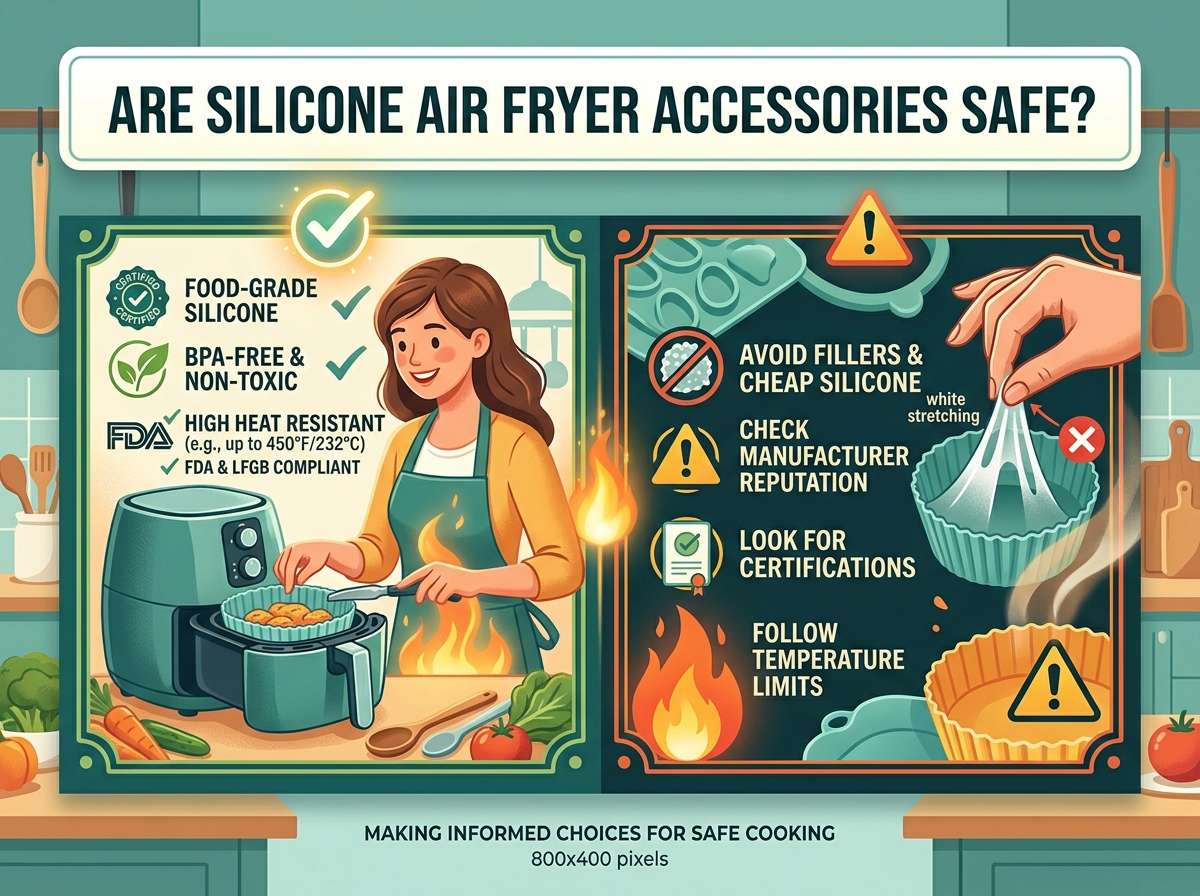
Food-grade silicone—the kind used in kitchen products—is created to handle temperatures up to 400-600°F, depending on the quality and brand. Most air fryers operate between 180°F and 400°F, so in theory, silicone should be fine. The real question is whether all silicone products sold as “air fryer accessories” actually meet food-grade standards.
Why Heat Safety Matters for Silicone
When you heat silicone, you’re not supposed to worry about it breaking down and releasing toxic chemicals, unlike some plastics that can leach harmful substances like BPA when heated. Food-grade silicone is designed to be stable at high temperatures. It doesn’t melt, doesn’t warp, and doesn’t off-gas chemicals into your food.
That said, low-quality or counterfeit silicone products might not meet these standards. Some items sold online or in discount stores might be made with cheaper silicone blends that aren’t truly food-grade. These could release odors or cause problems when heated repeatedly.
The key is knowing what you’re buying. Premium silicone air fryer accessories from trusted brands typically go through testing to ensure they’re safe for food contact and heating. Budget options from unknown sellers might cut corners.
Common Silicone Air Fryer Accessories and Their Safety Profiles
Let’s look at specific items you’ll encounter and what you should know about them.
Silicone Baking Liners
These flat mats fit in the bottom of your air fryer basket and prevent food from sticking. They’re one of the most popular accessories. The good news: quality silicone baking liners are very safe. They don’t leach chemicals, and they’re designed exactly for this use. Just make sure yours is labeled as “food-grade” and rated for the temperatures your air fryer reaches.
The main thing to watch out for is overcrowding. If you pack food too densely on a liner, air can’t circulate properly, and your food won’t cook evenly. This is more of a cooking issue than a safety one, but it’s worth noting.
Silicone Trivets and Stackers
These funky-looking rings or platforms let you stack food vertically inside your air fryer basket. They’re great for cooking more at once and make efficient use of space. Safety-wise, high-quality silicone trivets are safe. They hold their shape and don’t break down under heat.
The issue here is similar to liners: make sure air can still flow. Trivets work best when they’re designed specifically for your air fryer model. Generic ones might block airflow and create hot spots.
Silicone Egg Bite Molds and Cupcake Liners
These specialized molds make cooking muffins, egg bites, or mini cakes in your air fryer easy. They’re safe if they’re food-grade silicone. One thing to remember: remove these items carefully after cooking because they’ll be hot, and silicone won’t feel as hot as metal would. You might burn yourself thinking the silicone is cool when it’s still very hot.
Silicone Heat-Resistant Mats and Trivets
Some accessories include mats to protect the bottom of your air fryer or trivets to keep things elevated off the basket. Food-grade silicone versions are safe. Non-food-grade versions might smell bad when heated or show signs of degradation.
Red Flags: When Silicone Accessories Might Be Unsafe
Not all silicone products are created equal. Here’s what to watch out for.
Cheap, Unbranded Products
If you buy silicone accessories from an unknown brand on a discount site, there’s risk. These products might not be food-grade silicone at all. They could be made with lower-quality materials that leach chemicals or smell bad when heated.
Products That Smell Bad
When you first use a silicone accessory, a slight rubbery smell is normal and fades after the first use or two. But if the smell is strong, chemical-like, or doesn’t go away, that’s a problem. It means the product is likely off-gassing—releasing chemicals. You should stop using it.
Visible Damage or Discoloration
If your silicone accessory shows cracks, tears, or unusual discoloration after just a few uses, it’s probably not food-grade silicone. Quality food-grade silicone is durable and maintains its appearance.
Melting or Warping
High-quality silicone rated for air fryer temperatures won’t melt or warp, even if your air fryer reaches 400°F. If your accessory is melting or changing shape, it’s not rated for the heat, and you shouldn’t use it.
No Temperature Rating Listed
Legit silicone air fryer accessories come with a temperature rating. If the product doesn’t say it’s “food-grade” or doesn’t list a maximum temperature, skip it. That’s a sign the seller isn’t confident in the product’s safety.
How to Choose Safe Silicone Air Fryer Accessories
Ready to buy? Here’s how to pick the right ones.
Buy From Trusted Brands
Stick with well-known kitchen brands or air fryer manufacturers. Companies like OXO, Silicone Zone, and the brand that makes your air fryer often sell compatible accessories they’ve tested. You pay a bit more, but you know what you’re getting.
Look for Food-Grade Labels
The product description or packaging should clearly say “food-grade silicone.” This tells you it’s been tested for food safety and won’t leach chemicals.
Check the Temperature Rating
Your silicone accessories should be rated for at least as hot as your air fryer gets. Most air fryers max out around 400°F, so aim for accessories rated to 400°F or higher.
Read Reviews
Real customer reviews on major retailers can tell you a lot. If lots of people complain about smell, discoloration, or melting, avoid that product. If reviews are consistently positive, that’s a good sign.
Avoid Knockoffs
Be careful with products that look almost identical to name-brand items but cost way less. They might be counterfeit or low-quality imitations. It’s not worth risking your health to save five dollars.
Safe Practices for Using Silicone Air Fryer Accessories
Even if you buy quality accessories, how you use them matters.
Don’t Exceed Temperature Limits
Use your accessories only up to their rated temperature. Even if your air fryer can go to 400°F and the accessory is rated to 400°F, don’t push it. Stick to slightly lower temperatures when using silicone to give yourself a safety margin.
Avoid Direct Flame or Broiler Settings
Some air fryers have a broil or super-hot setting. Don’t use silicone accessories with these extreme heat settings. Keep silicone for regular air frying.
Clean Properly
Wash silicone accessories by hand with warm soapy water, or put them in the top rack of the dishwasher if the product says it’s dishwasher-safe. Don’t scrub with rough sponges or scouring pads because you might damage the silicone.
Let Them Cool Down
After cooking, let silicone accessories cool completely before storing them. Hot silicone can release compounds more easily than cool silicone, so don’t seal them away while they’re still warm.
Replace When Worn
Silicone lasts a long time, but eventually it degrades. If you notice your accessories getting discolored, developing an odor, or showing damage, replace them. Worn silicone is more likely to leach chemicals.
Don’t Stack Wet Accessories
If you wash your silicone accessories and stack them while damp, moisture can get trapped, potentially causing mold or degradation. Let them dry completely first.
Silicone vs. Other Air Fryer Accessory Materials
You might wonder how silicone stacks up against other materials for air fryer use.
Silicone vs. Stainless Steel
Stainless steel trivets and racks are more durable than silicone. They don’t wear out or show discoloration. However, they can rust if not dried properly, and they’re heavier. Silicone is lighter and more flexible, which some people prefer.
Silicone vs. Non-Stick Coated Accessories
Some air fryer accessories have a non-stick coating instead of being made of solid silicone. These can work, but the coating can chip or peel over time. Solid silicone is generally safer because there’s no coating to flake off into your food.
Silicone vs. Parchment Paper
Parchment paper is also popular for air frying. It’s cheap, disposable, and works well for one-time use. Silicone is reusable and better for the environment, but it requires more care. Both are safe if used correctly.
The Bottom Line on Silicone Air Fryer Accessory Safety
Food-grade silicone air fryer accessories are safe when you buy quality products from trusted sources. Silicone is designed to be heat-resistant and non-toxic for food contact. It won’t leach chemicals into your food if it’s actually food-grade silicone rated for air fryer temperatures.
The risk comes from buying cheap, unbranded, or counterfeit products that claim to be silicone but aren’t truly food-grade. These can potentially release chemicals, smell bad, or break down when heated.
So yes, silicone air fryer accessories are safe. Just be smart about what you buy. Stick with brands you recognize, look for food-grade labeling, check temperature ratings, and don’t go for deals that seem too good to be true. Your air fryer will work better with quality accessories anyway, and you’ll have peace of mind knowing you’re using safe products.
Quick Safety Checklist for Silicone Air Fryer Accessories
Before you buy or use a silicone air fryer accessory, run through this list:
- Does it say “food-grade silicone”?
- Is there a temperature rating listed?
- Is it from a trusted brand or major retailer?
- Does the price seem reasonable, or is it suspiciously cheap?
- Do reviews mention any safety concerns?
- Does it smell normal, or is there a strong chemical odor?
- Is it damaged, cracked, or discolored?
- Is it the right size for your air fryer?
If you can answer yes to the first five questions and no to the last three, you’ve got a safe, quality accessory. Happy air frying!

Mary is a home cooking enthusiast and kitchen appliance reviewer who loves helping people find the best tools for everyday meals. She enjoys testing air fryers, deep fryers, and other cooking appliances while sharing honest reviews and practical buying advice. Through FryerPick.com, Mary provides expert guides, product comparisons, and cooking tips to help readers choose the right fryer for their kitchen.