Deep Fryer Safety Tips
Deep frying gives food that crispy skin and juicy inside that everyone loves. Fried chicken, french fries, onion rings, and even a turkey on a big holiday all come out better with hot oil. But hot oil is also one of the most dangerous things in a home kitchen. Burns, fires, and oil splatter injuries happen more often than people think, and most of them can be avoided with a few smart habits.
This guide walks you through every part of deep fryer safety in plain, easy language. No fancy terms, no confusing steps. Just clear tips you can use the next time you fry something at home.
In this article
Why Deep Fryer Safety Matters So Much
Hot oil can reach temperatures between 350 and 400 degrees Fahrenheit. That is much hotter than boiling water, which stops at 212 degrees. If oil touches your skin at that heat, it causes a burn almost instantly. Oil also sticks to skin longer than water, so the burn tends to be deeper and more painful.
There is another risk too: fire. Oil is flammable, and if it gets too hot or touches an open flame, it can catch fire within seconds. Grease fires spread fast and cannot be put out with water. Water actually makes a grease fire worse because it causes the burning oil to explode outward.
Knowing these risks is the first step. Now let’s get into the tips that keep you safe.
1. Use the Right Fryer for the Job
There are a few kinds of deep fryers people use at home:
- Electric deep fryers that sit on the counter
- Stovetop pots used with a thermometer
- Outdoor propane turkey fryers
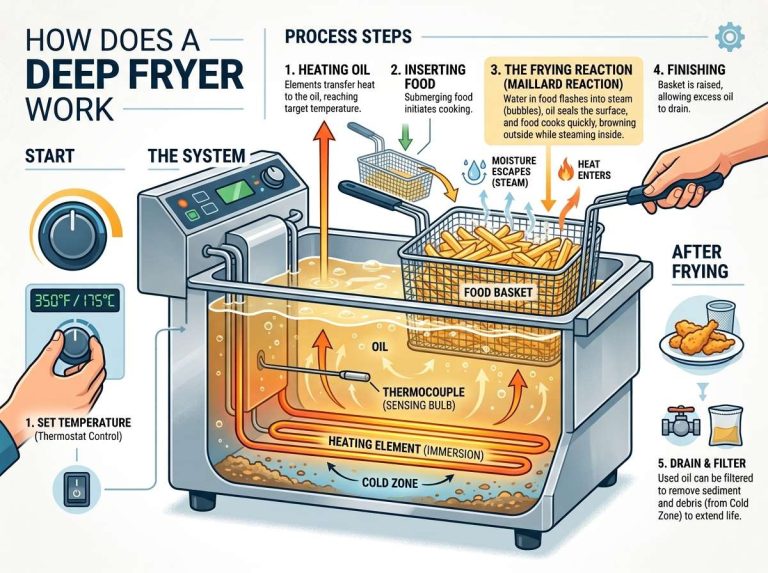
Each one comes with its own safety needs. Electric fryers usually have a lid and a set temperature control, which makes them safer for indoor use. Stovetop frying needs more attention since there is no automatic shutoff. Propane turkey fryers should never be used indoors, in a garage, or under a covered porch because they release carbon monoxide and can tip over easily.
If you are new to frying, an electric fryer with automatic shutoff features is a good starting point. It removes a lot of guesswork and lowers the chance of an accident.
2. Read the Manual Before You Start
It sounds boring, but the manual tells you the exact oil capacity, the safe fill line, and how to clean the machine. Every fryer model is a little different. Skipping this step is one of the main reasons people overfill their fryer or use the wrong oil type.
Keep the manual somewhere you can find it again, or save a photo of the important pages on your phone.
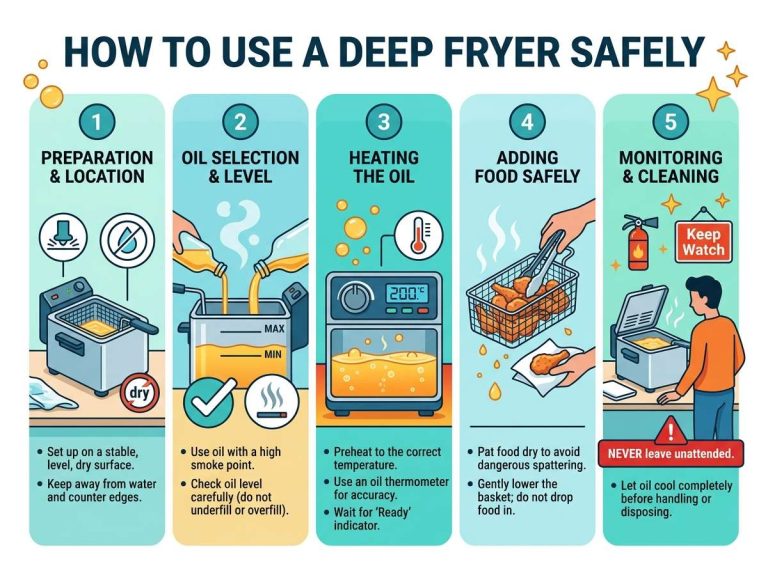
3. Never Fill the Fryer Past the Max Line
Every fryer has a maximum fill line, usually marked inside the pot. This line exists for a reason. When you drop food into hot oil, the oil rises and can bubble up. If the fryer is filled past the line, that rising oil can spill over the side and touch the burner, the electric coil, or the counter.
A good rule of thumb is to fill the fryer no more than two-thirds full, even if the fill line allows more. This leaves extra room for bubbling.
4. Dry Your Food Before Frying
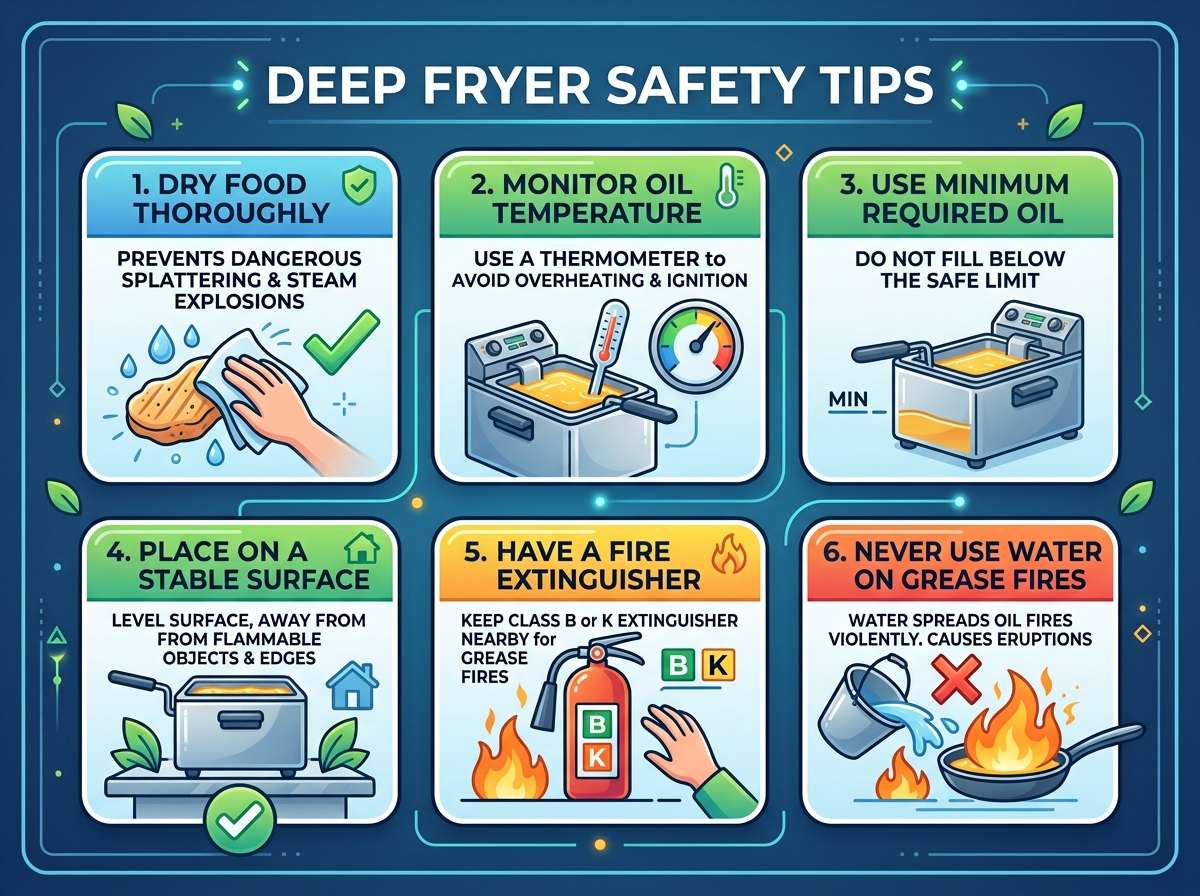
Water and hot oil do not mix well. When wet food hits hot oil, the water turns to steam almost instantly. This causes the oil to pop and splatter, sometimes violently. This is one of the top reasons people get burned while frying.
Pat your food dry with a paper towel before it goes into the fryer. This includes marinated meat, thawed frozen items, and freshly washed vegetables. Even a small amount of surface water can cause a big splatter.
5. Lower Food In Slowly
Instead of dropping food into the oil from a height, lower it in gently using tongs, a fry basket, or a slotted spoon. This small habit does two things: it reduces splashing, and it keeps hot oil from jumping up and hitting your hands or face.
If you use a fry basket, lower the basket into the oil before adding food when possible, or add food gradually rather than all at once.
6. Never Leave Hot Oil Unattended
This is one of the most repeated tips for a reason. Oil temperature can rise quickly if left alone, especially on a stovetop without a thermostat. A pot of oil that gets too hot can start smoking, and smoking oil is very close to catching fire.
Stay in the kitchen the entire time the fryer is on. If you must step away, turn off the heat first. Never leave the room “just for a minute” while oil is heating or food is frying.
7. Keep a Fire Extinguisher Nearby
A Class K or Class B fire extinguisher is made for grease and oil fires. Keep one in the kitchen, ideally within arm’s reach of where you fry. Check the expiration date on the extinguisher every so often to make sure it still works when needed.
If a grease fire does start, do not use water. Do not use flour either, since some kinds can actually make the fire worse. Instead:
- Turn off the heat source if it is safe to reach
- Cover the pot with a metal lid to cut off oxygen
- Use a fire extinguisher rated for grease fires
- Call emergency services if the fire grows or spreads
8. Watch the Oil Temperature Closely
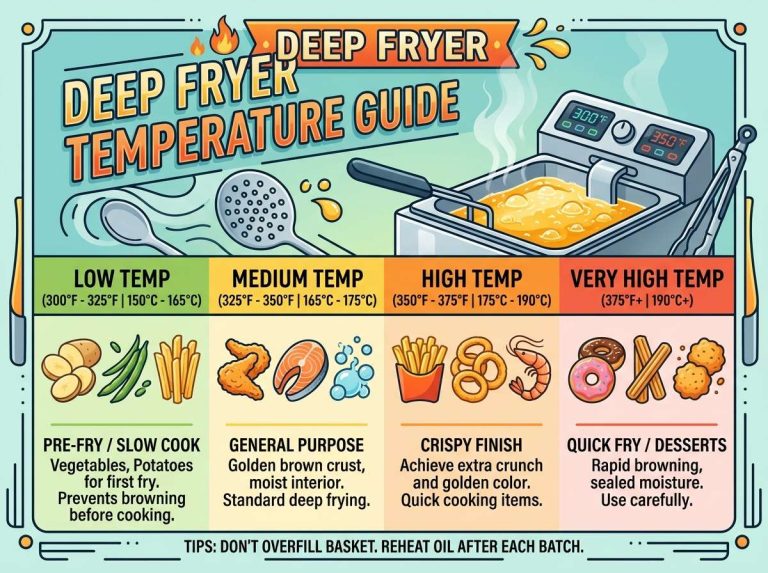
Every oil has a smoke point, which is the temperature where it starts to break down and smoke. Going past the smoke point not only ruins the taste of your food but also raises fire risk. Common frying oils and their approximate smoke points:
- Peanut oil: around 450 degrees Fahrenheit
- Canola oil: around 400 degrees Fahrenheit
- Vegetable oil: around 400 to 450 degrees Fahrenheit
- Olive oil: around 375 degrees Fahrenheit (not ideal for deep frying)
Use a deep-fry thermometer if your fryer does not have a built-in one. Keeping the oil in the 350 to 375 degree range works well for most fried foods and stays a safe distance from the smoke point of common oils.
9. Keep the Fryer Away from Flammable Items
Curtains, paper towels, dish towels, and even wooden spoons resting on the pot can catch fire if they touch hot oil or sit too close to the heat source. Give your fryer plenty of open space on the counter, away from cabinets, walls, and anything that burns easily.
If you fry outdoors with a propane turkey fryer, set it up on a flat, open surface far from your house, deck, garage, or any dry grass or leaves.
10. Dress Smart While Frying
Loose sleeves can dangle into hot oil without you noticing. Roll up long sleeves or wear short sleeves while frying. Avoid dangling jewelry too, since bracelets and long necklaces can dip into oil.
Closed-toe shoes are also a smart choice in the kitchen. If oil spills onto the floor, bare feet or sandals offer no protection.
11. Keep Kids and Pets Out of the Kitchen
Curious kids and pets often wander close to whatever smells good, and frying smells amazing. But a fryer on the counter or stove is at the perfect height for a child to reach up and touch, or for a pet to bump into with its tail or paw.
Set up a barrier or simply keep them in another room while the fryer is on. Turn pot handles inward on the stove so nothing sticks out where it can be knocked or grabbed.
12. Let the Oil Cool Completely Before Moving or Storing It
After frying, the oil stays hot for a long time, sometimes over an hour. Never try to move, pour, or store the oil while it is still hot. Let it cool fully, then strain it through a fine mesh strainer or cheesecloth into a heat-safe container.
Store used oil in a sealed container away from heat and light. Label it with the date and what it was used for, since oil used for fish will carry that smell into the next batch of food.
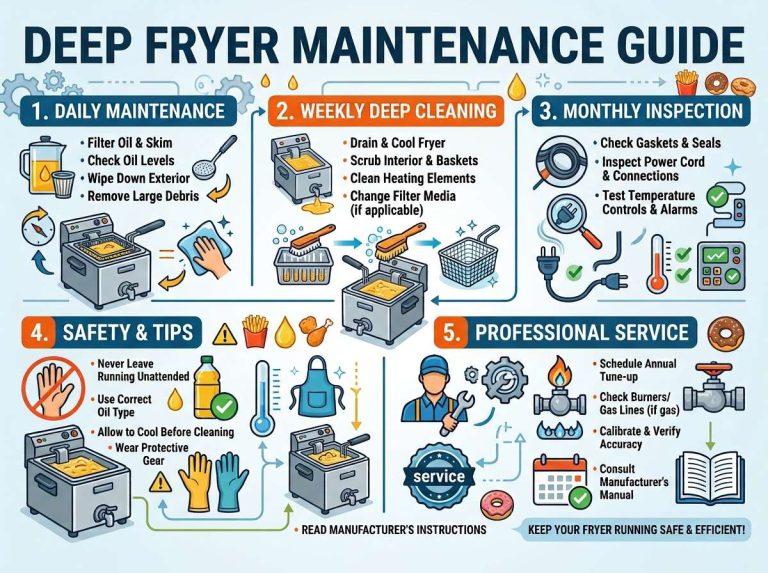
13. Clean the Fryer Regularly
Old food bits left in the oil burn and create smoke, which changes the taste of your food and raises fire risk over time. After each use, once the oil is fully cool, strain out food particles. Clean the fryer basket, lid, and heating element based on what the manual recommends.
A clean fryer also heats more evenly, which means more consistent frying results and less chance of hot spots that could overheat.
14. Never Mix Water with Hot Oil
This one deserves its own spot because it causes so many accidents. Adding even a small splash of water to hot oil causes an intense, fast reaction. The water instantly turns to steam and expands, throwing hot oil upward and outward. This has caused serious burns in home kitchens more than almost any other single mistake.
Always check that pots, baskets, and utensils are completely dry before they touch hot oil.
15. Use Enough Ventilation
Frying releases smoke, oil vapor, and heat into the air. Turn on your kitchen exhaust fan or open a window while frying, especially if you plan to fry for a long stretch of time. Good airflow reduces the buildup of oil residue on your walls and cabinets too, which is a bonus for cleaning later.
If you fry outdoors with a propane fryer, ventilation is less of a concern, but carbon monoxide buildup is a real risk if the fryer is used in an enclosed space like a garage.
16. Know How to Handle Burns
Even with every precaution, small burns can still happen. If hot oil touches your skin:
- Move away from the heat source right away
- Run cool (not ice cold) water over the burn for several minutes
- Do not apply butter, ice, or toothpaste, since these can trap heat or damage skin further
- Cover the area loosely with a clean cloth
- Seek medical care if the burn blisters, covers a large area, or affects the face, hands, or joints
Keep a basic first aid kit in the kitchen with burn gel or aloe vera for minor cases.
17. Turkey Fryers Deserve Extra Caution
Deep-fried turkey has become a popular holiday tradition, but propane turkey fryers cause a large number of house fires and burn injuries. A frozen or partly frozen turkey dropped into hot oil is one of the biggest dangers, since the ice turns to steam almost instantly and can cause the oil to erupt violently.
Always fully thaw and dry the turkey before frying. Lower it slowly using the hooks or basket that come with the fryer. Set the fryer up outdoors on flat ground, far from the house, and never leave it unattended.
18. Keep the Fryer Stable
A fryer that wobbles or sits on an uneven surface can tip over, spilling hot oil everywhere. Place your fryer on a flat, sturdy surface that can hold its weight, and make sure the cord (for electric models) is not stretched tight or lying somewhere someone could trip on it.
For outdoor propane fryers, check that the stand is level and the legs are locked in place before adding oil.
19. Do Not Overload the Fryer Basket
Adding too much food at once drops the oil temperature suddenly, and food cooks unevenly as a result. It also raises splash risk since more food displaces more oil at once. Fry in smaller batches, giving the oil time to return to the right temperature between rounds.
20. Trust Your Senses
If oil starts smoking heavily, smells burnt, or looks darker than usual, something is wrong. Turn off the heat and let it cool before checking things further. Oil that has been used many times can also break down and become more likely to catch fire at lower temperatures than fresh oil, so replace it after a few uses rather than pushing it too far.
Final Thoughts on Frying Safely
Deep frying at home can be simple and safe when you follow a few steady habits: keep the oil at the right temperature, dry your food, stay near the fryer the whole time, and keep a fire extinguisher within reach. None of these steps take much extra time, but they make a huge difference in preventing burns and kitchen fires.
Good food does not need to come with unnecessary risk. With the right setup and a bit of attention, you can enjoy crispy, golden fried food without worrying about what could go wrong.

Mary is a home cooking enthusiast and kitchen appliance reviewer who loves helping people find the best tools for everyday meals. She enjoys testing air fryers, deep fryers, and other cooking appliances while sharing honest reviews and practical buying advice. Through FryerPick.com, Mary provides expert guides, product comparisons, and cooking tips to help readers choose the right fryer for their kitchen.