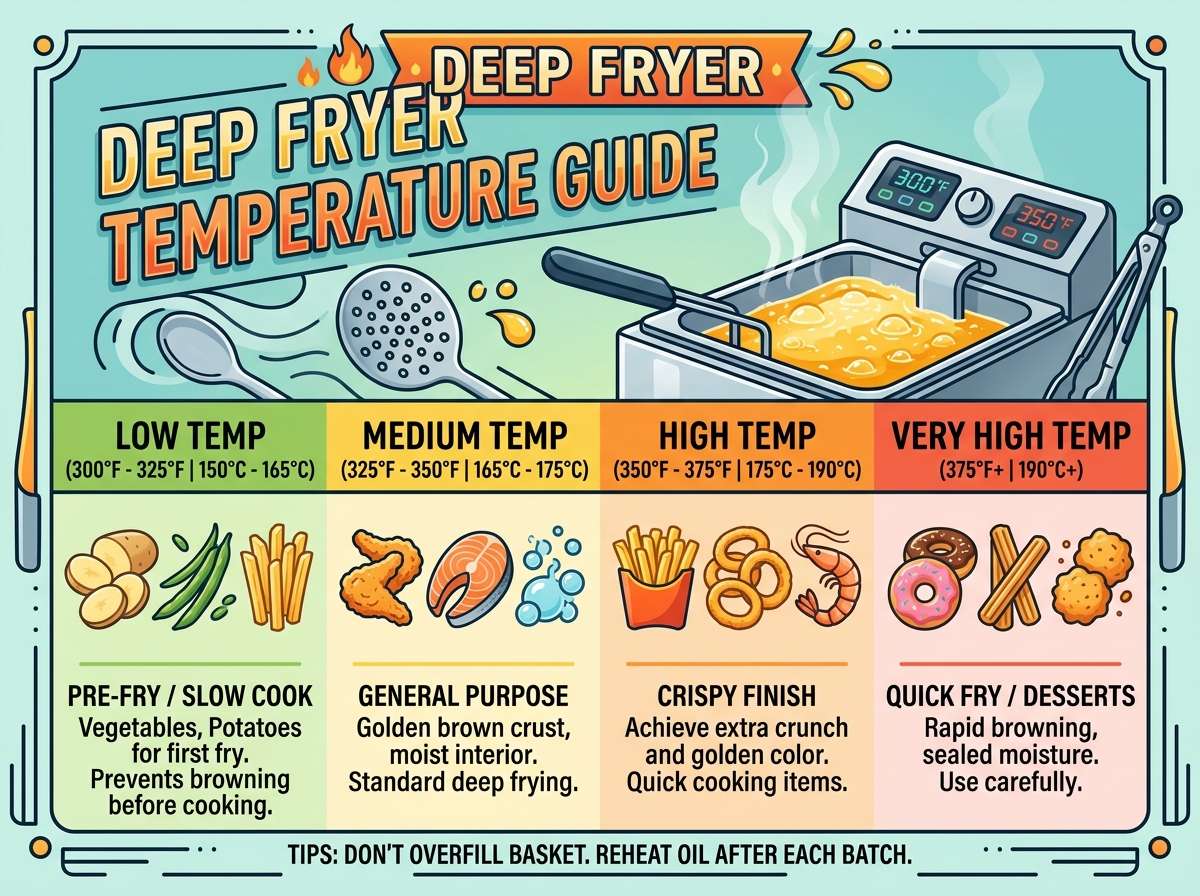
Deep Fryer Temperature Guide
Frying food at home sounds easy until your fries turn soggy or your chicken burns on the outside while staying raw inside. The real secret behind crispy, golden, and safe fried food is one thing: the right oil temperature. Once you get the temperature right, everything else falls into place.
This guide breaks down deep fryer temperatures in plain language. No confusing charts full of jargon, just simple numbers and tips you can use the next time you fry chicken, fries, fish, donuts, or anything else you love.
In this article
Why Temperature Matters So Much When Frying
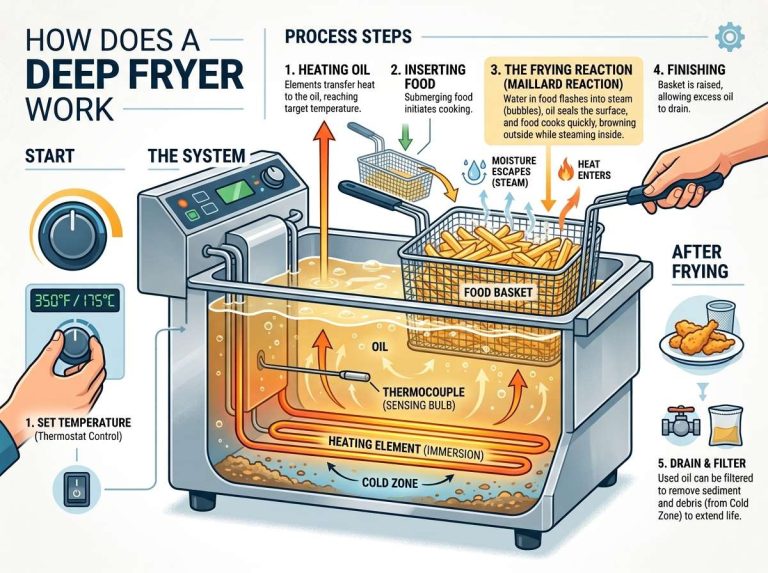
Frying is not just about dropping food into hot oil. The oil temperature controls how your food cooks on the inside and outside at the same time.
If the oil is too cold, food soaks up too much oil. It turns greasy, soft, and heavy instead of crispy. It also takes longer to cook, which means the inside might overcook by the time the outside browns.
If the oil is too hot, the outside burns fast while the inside stays raw. This happens a lot with thick cuts of meat or frozen food that goes straight into the fryer.
The goal is to find that sweet spot where the outside turns golden brown at the same rate the inside finishes cooking. That sweet spot is different for every type of food, and that is exactly what this guide covers.
The Basic Deep Fryer Temperature Range
Most deep frying happens between 325°F and 375°F (163°C to 190°C). This range works for almost everything, from chicken wings to onion rings to fish fillets.
Here is a simple breakdown so you don’t have to guess:
- Low frying range: 300°F to 325°F — used for foods that need to cook slowly all the way through, like bone-in chicken or thick vegetables.
- Medium frying range: 325°F to 350°F — the most common range, great for donuts, fritters, and battered foods.
- High frying range: 350°F to 375°F — used for fast frying like fries, fish, and small pieces of food that cook quickly.
A good kitchen thermometer or a fryer with a built-in temperature gauge takes all the guesswork out of this process.
Best Temperatures for Popular Fried Foods
Let’s go food by food so you know exactly what setting to use next time you cook.
French Fries
French fries actually need two rounds of frying to get that perfect crunch.
First fry: 325°F for about 4 to 5 minutes. This softens the potato without browning it.
Second fry: 375°F for 2 to 3 minutes. This gives fries their golden color and crispy shell.
Skipping the double fry method is the main reason homemade fries often turn out soft instead of crunchy like the ones from a restaurant.
Fried Chicken
Fried chicken needs a lower temperature because the pieces are thick and need time to cook through without burning.
Set your fryer to 325°F to 350°F. Bone-in chicken pieces usually take 12 to 15 minutes, while boneless pieces cook faster, around 8 to 10 minutes.
A meat thermometer helps here too. Chicken is safe to eat once it hits an internal temperature of 165°F.
Fish and Seafood
Fish cooks fast, so a higher temperature works best here. Aim for 350°F to 375°F.
Thin fillets take about 3 to 5 minutes, while shrimp and small seafood pieces only need 2 to 3 minutes. Watch closely because seafood goes from perfectly cooked to overdone in seconds.
Donuts
Donuts need a steady, moderate temperature so they cook evenly without soaking up oil. Set your fryer to 350°F to 375°F.
Most donuts take just 1 to 2 minutes per side. If the oil is too cool, donuts absorb extra oil and feel greasy instead of light and fluffy.
Onion Rings and Battered Vegetables
Battered vegetables cook fast because the vegetable inside is usually already soft. A temperature of 350°F to 375°F gives the batter enough heat to turn crispy and golden in just 2 to 4 minutes.
Frozen Foods
Frozen mozzarella sticks, egg rolls, and similar snacks do best at 350°F. Frying frozen food at a lower temperature risks a soggy coating, while frying too hot can cause the outside to burn before the inside thaws and heats up.
How to Check Oil Temperature Without a Thermometer
Not everyone owns a deep fry thermometer, and that’s okay. There are a few old-school tricks that still work well.
The wooden spoon test: Dip the handle of a wooden spoon into the oil. If small bubbles form steadily around the wood, the oil is ready, usually around 350°F to 375°F.
The bread cube test: Drop a small cube of bread into the oil. If it turns golden brown in about 60 seconds, your oil sits around 350°F to 365°F.
The water drop test: Flick a few drops of water into the oil from a safe distance. If it sizzles and pops right away, the oil is hot enough. Be careful with this method since hot oil can splatter.
These tricks work in a pinch, but a thermometer always gives more accurate results and keeps your frying consistent every time.
Signs Your Oil Temperature Is Off
Sometimes you don’t need a thermometer at all because the food tells you everything through how it behaves in the oil.
Oil too cold signs:
- Food sinks and stays at the bottom instead of floating up
- Little to no bubbling around the food
- Cooking takes much longer than expected
- Finished food feels greasy or soggy
Oil too hot signs:
- Food browns almost instantly, within seconds
- Smoke rises from the oil
- The outside turns dark before the inside cooks
- Oil bubbles violently and splatters a lot
Learning to spot these signs helps you adjust quickly, even if your fryer doesn’t have a precise dial.
Best Oils for Deep Frying and Their Smoke Points
The type of oil you use also affects your frying results because every oil has a smoke point, the temperature where it starts to break down and burn.
- Peanut oil: Smoke point around 450°F, great for high-heat frying and adds a slightly nutty flavor.
- Canola oil: Smoke point around 400°F, neutral flavor and budget-friendly.
- Vegetable oil: Smoke point around 400° to 450°F, one of the most common choices for home frying.
- Sunflower oil: Smoke point around 440°F, light flavor and holds up well under heat.
- Corn oil: Smoke point around 450°F, works well for deep frying large batches.
- Olive oil: Smoke point around 375°F to 405°F depending on the type, better suited for lower-heat frying.
For most deep frying tasks, oils with a smoke point above 400°F give you more room to work with, especially since oil temperature naturally drops a little every time you add food.
Why Oil Temperature Drops When You Add Food
Every time food goes into the fryer, the oil temperature dips for a moment. Cold or frozen food pulls heat from the oil fast, and a full basket of food cools the oil even more than a small batch.
This is why frying in small batches works so much better than dumping everything in at once. Overcrowding the fryer drops the temperature too much, and the oil takes longer to recover. That delay is often the real reason food turns out soggy, not the recipe itself.
A good rule of thumb is to fill the fryer basket no more than half full. This keeps the oil temperature stable and gives every piece of food enough room to cook evenly.
Tips to Keep Your Frying Temperature Steady
Keeping the oil temperature consistent makes a bigger difference than most people realize. Here are a few simple habits that help:
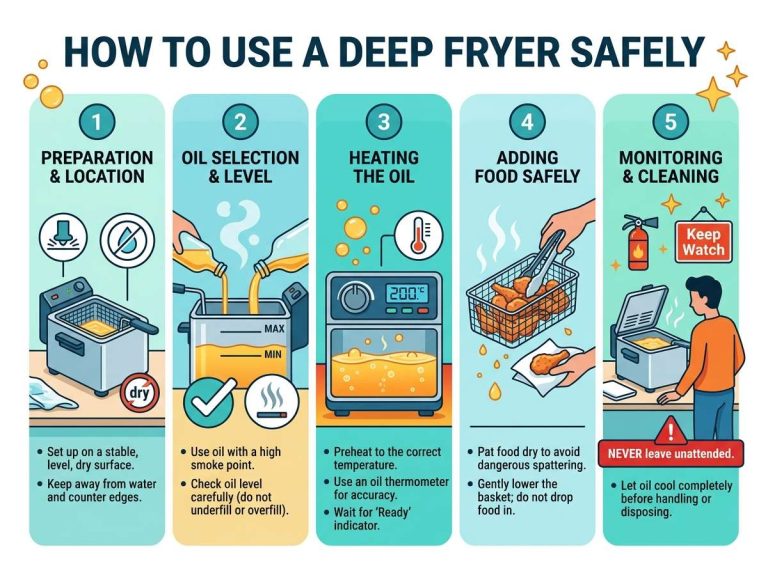
- Preheat properly. Give your oil enough time to reach the target temperature before adding food. Rushing this step is one of the most common frying mistakes.
- Fry in small batches. Smaller batches mean the oil temperature stays steady and recovers fast between rounds.
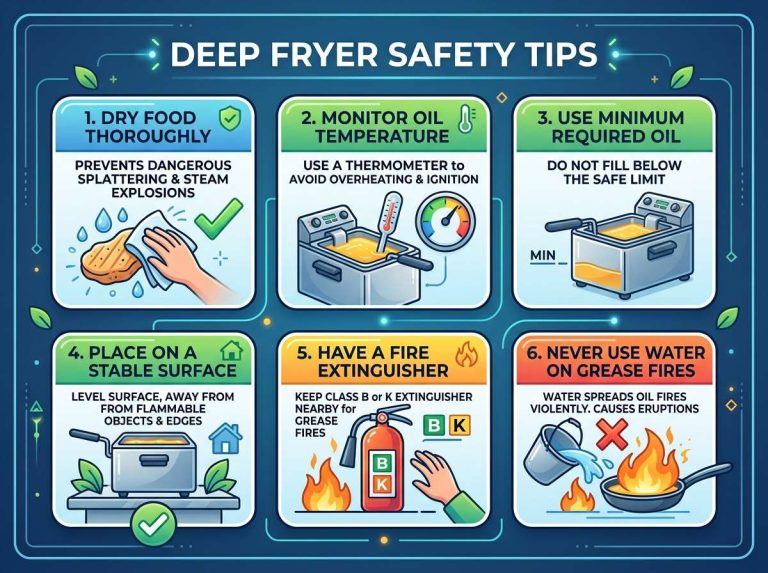
- Pat food dry first. Extra moisture on food causes the oil to bubble more and drop in temperature faster.
- Let frozen food sit for a few minutes. Slightly thawed food cooks more evenly and doesn’t shock the oil as much.
- Use a thermometer. Even a basic clip-on candy thermometer works well and removes the guesswork completely.
- Give the oil time between batches. Let the temperature climb back to the target range before adding the next round of food.
These small habits add up to a big difference between food that comes out crispy and food that turns out greasy or unevenly cooked.
Common Deep Frying Mistakes and How to Fix Them
Even experienced home cooks run into these issues from time to time.
Mistake: Food comes out greasy. This usually means the oil was too cold when the food went in. Raise the temperature slightly and fry in smaller batches next time.
Mistake: Outside burns before inside cooks. The oil is likely too hot for that particular food. Lower the temperature by 10 to 15 degrees and give the food a bit more time to cook through.
Mistake: Food sticks together in the fryer. This happens when too much food goes in at once, or pieces touch each other right after being coated in batter. Give each piece some space and stir gently after adding food.
Mistake: Oil smokes constantly. The oil has likely gone bad from repeated use, or the smoke point is too low for the temperature you’re using. Swap in fresh oil and pick one with a higher smoke point for future frying.
Mistake: Batter falls off during frying. This often means the oil wasn’t hot enough when the food went in, so the batter didn’t set fast enough. Make sure the oil reaches the correct temperature before adding battered food.
How to Keep Oil Safe and Long-Lasting
Good oil temperature control doesn’t just improve your food, it also keeps your oil usable for longer.
Oil that gets overheated breaks down faster and turns dark, sticky, and bitter tasting. Keeping your fryer within the recommended range for each food helps the oil last through more frying sessions before it needs to be replaced.
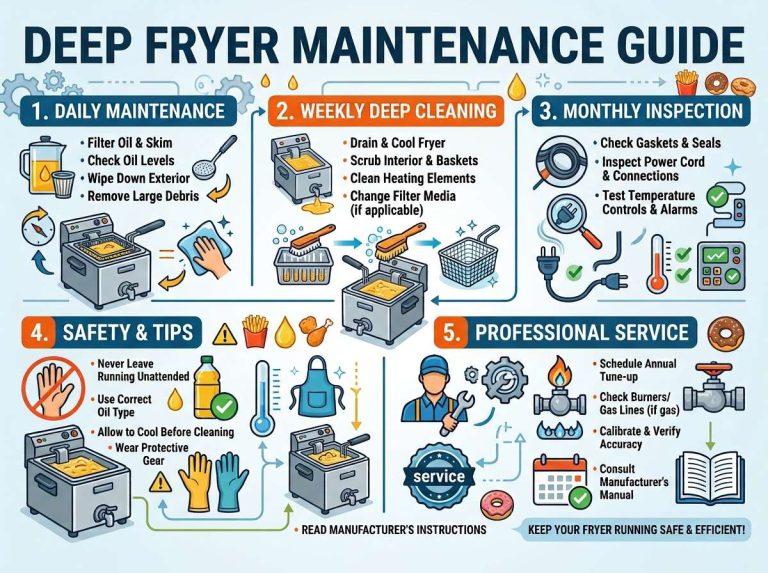
After frying, let the oil cool completely before storing it. Strain out any leftover food bits with a fine mesh strainer, then store the oil in a sealed container away from light and heat. Clean oil that hasn’t been overheated can often be reused several times before it needs replacing.
Quick Reference Temperature Chart
Here’s a simple cheat sheet you can keep nearby the next time you fry:
| Food | Temperature | Time |
|---|---|---|
| French fries (first fry) | 325°F | 4-5 minutes |
| French fries (second fry) | 375°F | 2-3 minutes |
| Fried chicken | 325°F-350°F | 8-15 minutes |
| Fish fillets | 350°F-375°F | 3-5 minutes |
| Shrimp | 350°F-375°F | 2-3 minutes |
| Donuts | 350°F-375°F | 1-2 minutes per side |
| Onion rings | 350°F-375°F | 2-4 minutes |
| Frozen snacks | 350°F | Follow package guide |
Keep this chart handy near your fryer, and adjust slightly based on the size of your food pieces since thicker cuts always need a touch more time.
Final Thoughts on Getting Your Frying Temperature Right
Great fried food really comes down to controlling heat. Get the oil to the right temperature, keep it steady, fry in small batches, and use a thermometer whenever possible. Once these basics become second nature, your fries, chicken, and other fried favorites will turn out crispy and golden every single time.
Frying doesn’t have to feel like guesswork. With the right temperature range for each food and a few simple habits, anyone can fry like a pro right in their own kitchen.

Mary is a home cooking enthusiast and kitchen appliance reviewer who loves helping people find the best tools for everyday meals. She enjoys testing air fryers, deep fryers, and other cooking appliances while sharing honest reviews and practical buying advice. Through FryerPick.com, Mary provides expert guides, product comparisons, and cooking tips to help readers choose the right fryer for their kitchen.