How to Prevent Oil Splatter?
If you love to cook, you know the pain of hot oil jumping out of the pan. It stings your skin, leaves grease on your stove, and makes a mess on your walls. Oil splatter is one of the most annoying parts of frying food. But the good news is, you can stop it with a few easy tricks.
In this guide, we will walk through why oil splatters, what tools can help, and simple habits that keep your kitchen clean and safe. No fancy words, no hard steps. Just plain, useful tips anyone can follow.
In this article
Why Does Oil Splatter in the First Place?
Before we jump into the fixes, let’s talk about the cause. Oil splatters because of water. When water touches hot oil, it turns into steam in a split second. That steam pushes through the oil and throws tiny drops in every direction. This is why wet food, like a piece of chicken that’s not dried well, causes so much splash.
Another reason is heat. If the oil is too hot, it becomes unstable. It moves and bubbles more, and that raises the chance of splatter. High heat also breaks down the oil faster, which can make your food taste bad and your kitchen smell smoky.
Food size and shape also matter. Small pieces of food, or food with a lot of surface area, release more moisture at once. That sudden burst of steam is what sends oil flying onto your counter, your clothes, and sometimes even your face.
Now that we know the “why,” let’s get into the “how” of stopping it.
Dry Your Food Before Cooking
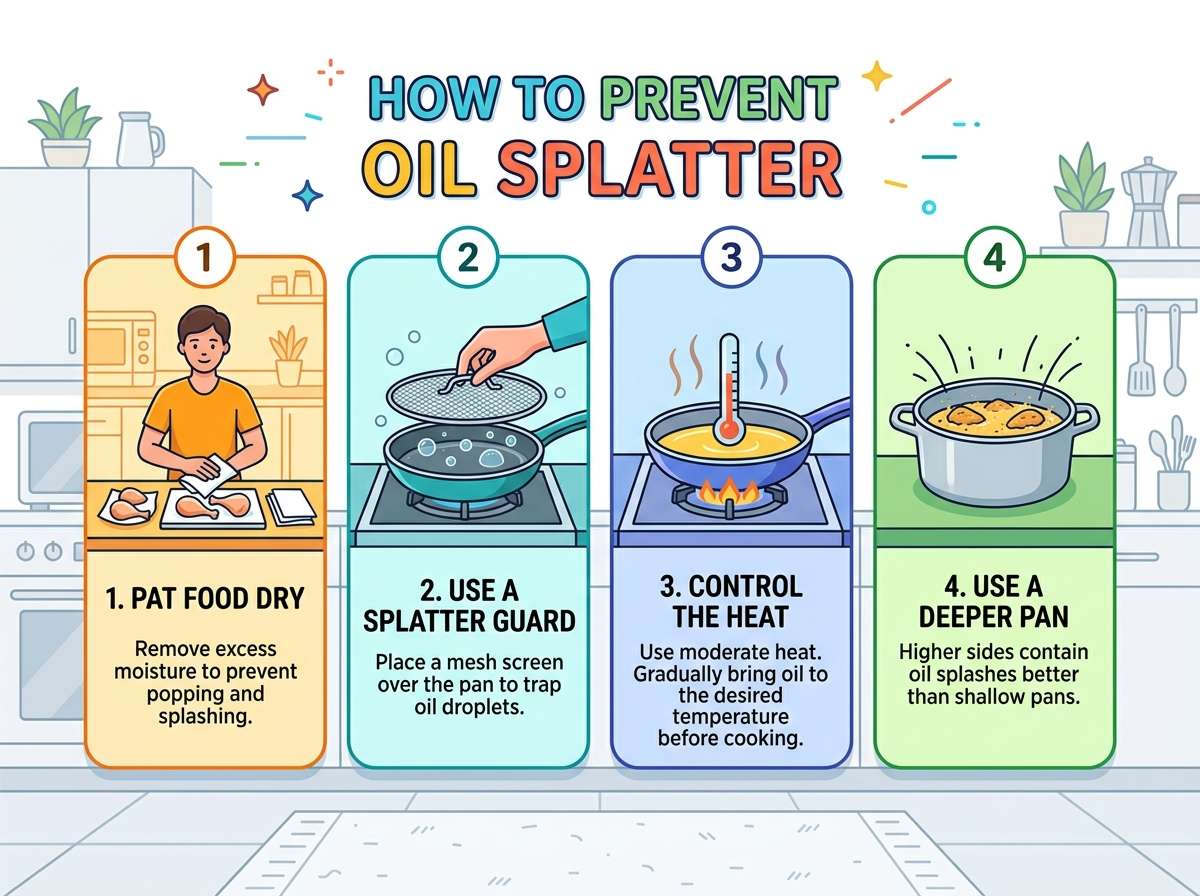
This one step alone can cut splatter by a huge amount. Water is the main trigger for oil to jump, so drying your food is the first line of defense.
Use paper towels or a clean kitchen cloth to pat down meat, fish, or vegetables before they touch the pan. If you just washed your chicken or shrimp, don’t rush. Take an extra minute to dry it fully. That small habit saves you a lot of cleanup later.
For frozen food, let it thaw completely and dry it before frying. Ice crystals melt into water once they hit hot oil, and that causes a strong splash.
Use the Right Amount of Oil
Too much oil in the pan raises the risk of splatter because there’s more liquid to react with any moisture from your food. Too little oil, on the other hand, can cause food to stick and burn, which also leads to popping and smoke.
A good rule is to use just enough oil to coat the bottom of the pan for shallow frying, or fill about one-third of a deep pot for deep frying. This gives your food room to cook evenly without creating a big splash zone.
Keep the Heat at the Right Level
Cooking on high heat feels faster, but it’s not always smarter. High heat makes oil bubble harder and pushes those hot droplets further out of the pan. Medium heat is often the sweet spot for frying most foods.
Use a thermometer if you’re deep frying, since oil that’s too hot burns your food on the outside while leaving it raw inside. It also splatters more. Aim for a steady temperature and adjust the heat as needed instead of blasting it on high the whole time.
If you notice smoke rising fast or the oil looks like it’s moving in wild circles, that’s a sign to lower the heat right away.
Add Food Slowly and Gently
How you add food to the pan makes a real difference. Dropping food in from a height causes a splash the moment it hits the oil. Instead, place food into the pan slowly, starting with the edge farthest from you and letting it slide in gently.
This small change in motion keeps hot oil from jumping back at you and reduces mess on the stove.
Use a Splatter Screen
A splatter screen is a mesh lid that sits on top of your pan. It lets steam escape but blocks oil drops from flying out. This tool is cheap, easy to find, and works well for pan-frying meat, eggs, or bacon.
Unlike a solid lid, a splatter screen won’t trap steam and make your food soggy. It’s the middle ground between full coverage and no coverage at all, giving you protection without ruining the texture of your food.
Try a Regular Lid (Partially)
If you don’t have a splatter screen, a regular pot lid can help too. Just place it slightly off-center so steam can still escape. This blocks a good part of the splatter while still letting air move so your food doesn’t turn soft or steamy.
Keep in mind, this method traps more heat, so check on your food often to avoid overcooking.
Sprinkle a Little Flour or Salt
Some home cooks swear by adding a pinch of flour or salt to hot oil before frying. Both of these absorb small amounts of moisture and can calm down sudden bubbling. This trick works best as a backup, not a main fix, so pair it with drying your food and using the right heat.
Keep the Pan Size Right
A pan that’s too small for your batch of food creates crowding. Crowded food releases a lot of steam at once because pieces are packed close together. That steam has nowhere to go but up and out, taking oil with it.
Cook in batches if needed, and give your food some space in the pan. This also helps your food cook evenly and get that nice golden color instead of turning soggy from trapped steam.
Protect Your Stove and Counter
Even with the best techniques, a few drops might still escape. It helps to protect the area around your stove. Lay a paper towel or silicone mat around the pan to catch stray oil drops. This makes cleanup fast and keeps your counters from turning greasy.
Some cooks also like to place a baking sheet under the pan area if they’re deep frying, since it catches drips that fall past the edge.
Wear an Apron
An apron isn’t just for looks. It protects your clothes and skin from hot oil drops. If you fry often, a simple cotton or silicone apron can save your favorite shirt from grease stains and small burns.
Use a Deep Pot for Deep Frying
If you’re deep frying, always use a pot with tall sides instead of a shallow pan. The extra height gives oil more room to move without splashing over the edge. A deep pot also holds heat steady, so you get more even cooking with less mess.
Fill the pot only about halfway with oil. This leaves enough space for food to be added without oil rising too close to the rim.
Pat Marinated Food Dry Too
Marinades add flavor, but they also add liquid. Before frying marinated meat or tofu, wipe off the extra sauce with a paper towel. You’ll still get plenty of taste, but you’ll avoid the burst of steam that comes from wet marinade hitting hot oil.
Try Cooking with a Lower-Moisture Oil
Some oils splatter more than others because of their water content and smoke point. Oils with a higher smoke point, like avocado oil or refined peanut oil, tend to stay more stable at higher heat. This means less breakdown and fewer wild bubbles compared to oils with lower smoke points.
Store your oil properly too. Old oil that’s been reused many times can break down and behave unpredictably, leading to more splatter and smoke.
Don’t Walk Away From the Pan
Splatter often gets worse the longer food sits in oil that’s too hot. Stay close to your pan, watch how the oil reacts, and adjust the heat as you go. A few seconds of attention can stop a big mess before it starts.
Use Tongs Instead of Your Hands
Placing food in with tongs instead of your fingers keeps your hand farther from the hot oil. It also gives you better control over how gently the food enters the pan, which reduces splash compared to tossing food in by hand.
Clean Spills Right Away
If oil does splatter onto your stovetop, wipe it up once the surface cools a bit. Grease that sits too long can bake onto the stove and become harder to remove. Keeping a damp cloth nearby while you cook makes quick cleanup part of your normal routine instead of a big chore later.
Common Mistakes That Cause More Splatter
Let’s go over a few habits that often make splatter worse without people realizing it:
- Adding cold food straight from the fridge into very hot oil
- Overfilling the pan with too much food at once
- Using a lid that traps too much steam and causes it to burst out suddenly
- Ignoring the oil’s smoke point and letting it get too hot
- Skipping the step of drying food before frying
Fixing even one or two of these habits can already make a noticeable difference in how much mess you deal with.
Quick Checklist Before You Fry
Here’s a short list you can glance at before your next frying session:
- Dry your food fully with a paper towel
- Use the right amount of oil for your pan size
- Heat the oil to medium, not blazing high
- Add food gently, starting from the edge
- Cover with a splatter screen or tilted lid
- Avoid crowding the pan
- Keep tongs nearby instead of using your hands
- Protect the counter with a mat or paper towel
Keep this list handy near your stove, and soon these steps will become second nature.
Final Thoughts
Oil splatter feels like an unavoidable part of cooking, but it really isn’t. With a few small changes, like drying your food, watching your heat, and using a splatter screen, you can fry your favorite meals without turning your kitchen into a mess. These tips are simple, low-cost, and easy to build into your normal cooking routine.
Give them a try during your next cooking session, and you’ll likely notice a big drop in both mess and minor burns. Cooking should be fun, not stressful, and a splatter-free kitchen makes the whole process a lot more enjoyable.

Mary is a home cooking enthusiast and kitchen appliance reviewer who loves helping people find the best tools for everyday meals. She enjoys testing air fryers, deep fryers, and other cooking appliances while sharing honest reviews and practical buying advice. Through FryerPick.com, Mary provides expert guides, product comparisons, and cooking tips to help readers choose the right fryer for their kitchen.