Deep Fryer vs Air Fryer
If you love crispy food but you feel stuck between two kitchen gadgets, you are not alone. Deep fryers and air fryers both promise golden, crunchy meals, but they work in totally different ways. One uses hot oil, and the other uses hot air. That one small difference changes almost everything about taste, health, cost, and cleanup.
In this article, we will break down deep fryers and air fryers in plain, simple language. No fancy words, no confusing jargon. Just clear facts so you can decide which appliance fits your kitchen and your lifestyle.
In this article
What Is a Deep Fryer?
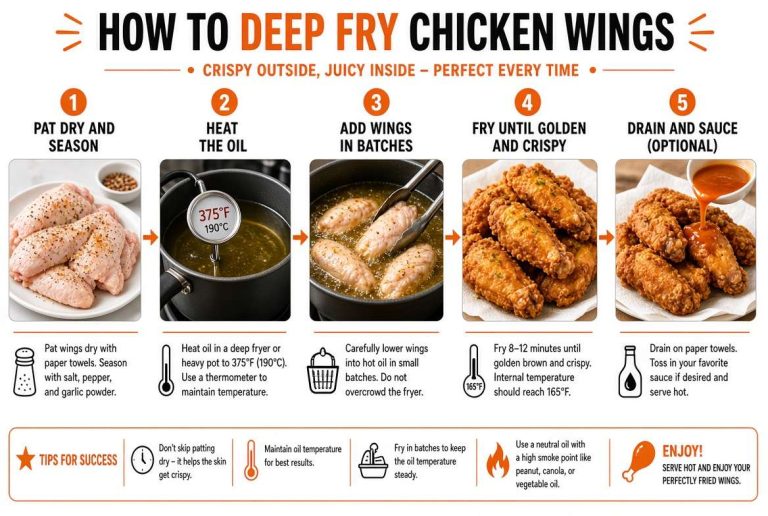
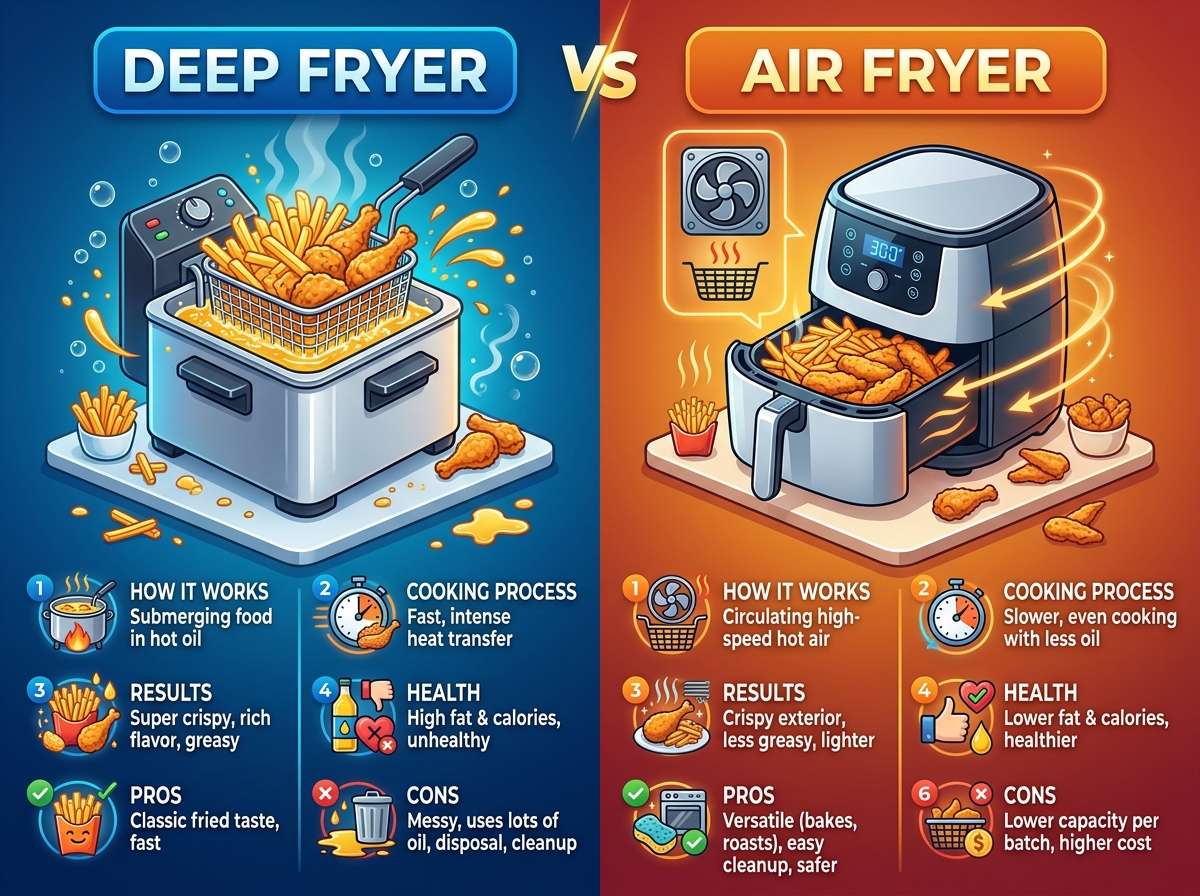
A deep fryer is a machine that cooks food by fully dipping it into hot oil. The oil heats up to a high temperature, usually between 350°F and 375°F, and it cooks the food fast from every side at once. This is the classic way to make fried chicken, French fries, onion rings, and doughnuts.
Deep fryers come in two main types:
- Countertop electric deep fryers: These are stand-alone units with a heating element built in. You just plug them in, fill them with oil, and turn them on.
- Stovetop deep fryers or deep pots: These use a pot filled with oil placed on your stove. You control the heat manually, so it takes more attention.
The oil bath is what gives deep-fried food its signature taste. The heat transfers quickly through the oil, so the outside gets crispy while the inside stays juicy and soft.
What Is an Air Fryer?
An air fryer is a small countertop appliance that cooks food using hot air instead of oil. It works like a mini convection oven. A heating element sits near the top of the machine, and a strong fan blows hot air around the food at high speed. This hot air circulation cooks the food evenly and gives it a crispy layer on the outside, similar to frying, but without dunking it in oil.
Most air fryers only need a tiny amount of oil, sometimes just a light spray, and some recipes need none at all. That is the main reason people call air fryers a healthier cooking method compared to traditional deep frying.
How Deep Fryers and Air Fryers Actually Work
To understand the real difference, it helps to know how heat moves in each machine.
In a deep fryer, food sits completely submerged in oil. Oil conducts heat really well, so it cooks food fast and evenly from all directions. This also seals the surface of the food quickly, which locks in moisture and creates that classic fried texture.
In an air fryer, hot air moves around the food in a small enclosed basket. Since air does not carry heat as efficiently as oil, the machine relies on speed and strong airflow to mimic the crispy effect. The food does not get submerged, so it needs to be flipped or shaken sometimes for even browning.
Basically, one method cooks with liquid heat, and the other cooks with moving air. Both aim for the same crispy result, but they get there in different ways.
Taste and Texture: Which One Wins?
This is where personal preference comes into play a lot. Deep-fried food has a rich, deep flavor because the oil soaks slightly into the food during cooking. The texture is often crunchier and more consistent across the whole piece, especially with battered items like tempura or fried chicken.
Air-fried food is lighter. It gets crispy on the outside, but the inside can feel a bit drier compared to deep frying. Some people describe air-fried snacks as “close to fried” rather than truly identical. Foods that already have some natural fat, like chicken wings or bacon, tend to turn out great in an air fryer. But foods that rely heavily on oil for flavor, like classic funnel cakes or beer-battered fish, often taste noticeably different.
So if pure taste and traditional crunch matter most to you, deep frying still leads. But if you are fine with a slightly lighter texture in exchange for other benefits, an air fryer does a solid job.
Health Comparison: Oil Content and Calories
This is probably the biggest reason people switch from deep fryers to air fryers.
Deep frying involves food sitting in hot oil, which means it absorbs a good amount of fat during cooking. This raises the calorie count and fat content significantly. Regularly eating deep-fried food has been linked to higher cholesterol levels and a greater risk of heart issues over time.
Air frying uses little to no oil, so the fat and calorie content drop a lot. Studies and comparisons often show air-fried food can contain up to 70 to 80 percent less fat than deep-fried food. For anyone watching their weight, cholesterol, or trying to eat cleaner, air frying is the clear winner in this category.
However, it is worth mentioning that air frying does not make food “healthy” on its own. Frozen fries and processed snacks are still processed food, no matter how you cook them. But less oil generally means fewer calories and less saturated fat, which is a real benefit.
Speed and Cooking Time
Deep fryers usually cook food faster because oil transfers heat so efficiently. A batch of fries might only need three to five minutes in hot oil. Deep fryers also handle larger batches at once since food gets fully surrounded by oil.
Air fryers take a bit longer for most recipes, often needing ten to twenty minutes depending on the food. Since hot air needs to circulate around each piece, overcrowding the basket leads to uneven cooking. This means you might need to cook in smaller batches, which adds extra time when you are feeding a big family or group.
So if speed and batch size matter most, especially for restaurants or big households, deep fryers still have the edge.
Cost: Upfront Price and Long-Term Expenses
At first glance, air fryers and deep fryers can cost around the same, ranging anywhere from budget models to higher-end versions with digital controls and larger capacity.
But the real cost difference shows up over time.
Deep fryers need a steady supply of cooking oil. Oil is not cheap, and it needs to be replaced regularly since it breaks down after repeated use. Buying gallons of oil again and again adds up fast over months of regular frying.
Air fryers barely use any oil at all, so you save a good amount of money in the long run. Electricity use is roughly similar between the two, though air fryers tend to run slightly more efficient since they are usually smaller and better insulated.
For anyone trying to save money on groceries and cooking supplies, an air fryer often pays for itself over time simply by cutting oil costs.
Cleaning and Maintenance
This is another area where air fryers pull ahead by a wide margin.
Cleaning a deep fryer means dealing with a large amount of used oil. You have to let it cool down completely, strain it if you plan to reuse it, store it properly, or dispose of it safely. On top of that, the fryer basket, walls, and lid often get greasy and need a good scrub after each use. It is messy, and it takes real effort.
Air fryers, on the other hand, usually come with a removable, non-stick basket and tray. Since there is little to no oil involved, cleanup is often as simple as rinsing the parts or tossing them in a dishwasher. Most people find air fryer cleanup takes just a few minutes, compared to a much longer process with deep fryers.
If you hate spending time scrubbing greasy pots after cooking, this alone might be a deciding factor for you.
Safety Considerations
Hot oil brings real safety risks. Splashing oil can cause burns, and there is always a small risk of fire if oil overheats or spills onto a hot stove. Kids and pets need to stay far away from an active deep fryer.
Air fryers are much safer for home use. Since there is no open pool of hot oil, the risk of burns or splatter drops drastically. The enclosed basket design also keeps hot surfaces more contained. That said, air fryers still get hot on the outside during use, so caution is still needed, especially in homes with small children.
For families who worry about kitchen safety, air fryers offer real peace of mind.
Kitchen Space and Portability
Deep fryers, especially countertop electric models, tend to take up a decent chunk of counter space. Some larger models are bulky and heavy, making them harder to store away when not in use.
Air fryers come in a wide range of sizes, from compact models perfect for one or two people to larger family-sized baskets. They are generally easier to store in a cabinet and lighter to move around. If you live in a small apartment or have limited kitchen space, an air fryer usually fits your needs better.
What Foods Work Best in Each
Not every food behaves the same way in these two appliances. Here is a quick breakdown.
Deep fryers shine with:
- Battered items like fish and chips or tempura
- Doughnuts and other fried desserts
- Large batches of French fries or fried chicken for a crowd
- Foods that need a fully submerged, even fry
Air fryers shine with:
- Frozen foods like fries, nuggets, and mozzarella sticks
- Chicken wings, drumsticks, and other naturally fatty meats
- Roasted vegetables with a crispy edge
- Reheating leftovers to bring back some crunch
Knowing which foods each appliance handles best can help you get the most out of either machine, or decide if you actually need both.
Environmental Impact
Deep frying uses a good amount of oil that eventually needs to be thrown away or recycled. Pouring oil down the drain causes plumbing problems and environmental harm, so proper disposal takes extra effort. Buying oil repeatedly also adds to overall waste and packaging.
Air frying skips most of that. With barely any oil used, there is far less waste to deal with after each meal. For anyone trying to live a bit greener in the kitchen, this is a small but real benefit of switching to air frying.
Who Should Buy a Deep Fryer?
A deep fryer makes sense if:
- You cook fried food often and want that classic, rich taste
- You cook for large groups or a big family regularly
- You run a small food business or love hosting parties with fried snacks
- Speed and batch size matter more to you than health concerns
Who Should Buy an Air Fryer?
An air fryer makes sense if:
- You care about cutting down oil, fat, and calories in your meals
- You live alone or cook for just one or two people
- You want fast, low-effort cleanup after cooking
- You have limited kitchen space and need a compact appliance
- Safety around hot oil is a concern in your home
Can You Use Both?
Plenty of people actually own both appliances and use them for different purposes. An air fryer becomes the go-to for quick weekday meals, healthy snacks, and reheating leftovers. A deep fryer comes out for special occasions, parties, or when a traditional deep-fried taste is exactly what the recipe calls for.
There is no rule that says you must pick only one. Your kitchen setup, budget, and cooking habits should guide the final decision.
Frequently Asked Questions
Does an air fryer taste as good as a deep fryer? Not exactly the same, but it comes close for many foods, especially frozen snacks and fatty meats like wings. Battered and heavily oil-dependent foods still taste better from a deep fryer.
Is an air fryer really healthier? Yes, in terms of fat and calorie content, air frying uses far less oil compared to deep frying, which generally results in a lighter, less greasy meal.
Which one is cheaper to run over time? Air fryers tend to be cheaper long term since they use very little oil, saving money on repeated oil purchases.
Which one is easier to clean? Air fryers win here too, thanks to their simple, mostly oil-free design and dishwasher-safe parts.
Can I fry frozen food in a deep fryer? Yes, though it takes a bit more care since frozen food can cause oil to splatter more.
Final Thoughts
Deep fryers and air fryers both have their strengths. Deep fryers deliver that rich, traditional crispy taste and cook large batches fast, but they come with more oil, more mess, and more health concerns. Air fryers offer a lighter, healthier way to enjoy crispy food with far less cleanup and lower long-term costs, even if the taste and texture are not always a perfect match for true deep frying.
In the end, it comes down to your personal priorities. If health, convenience, and easy cleanup matter most, an air fryer fits your daily cooking needs. If bold flavor and traditional texture matter more, a deep fryer still holds its place in the kitchen. Either way, both appliances can help you enjoy crispy, satisfying meals right at home.

Mary is a home cooking enthusiast and kitchen appliance reviewer who loves helping people find the best tools for everyday meals. She enjoys testing air fryers, deep fryers, and other cooking appliances while sharing honest reviews and practical buying advice. Through FryerPick.com, Mary provides expert guides, product comparisons, and cooking tips to help readers choose the right fryer for their kitchen.