Are Air Fryers Good For Health
Many people wonder if air fryers are good for health. They can be, mainly because they usually need much less oil than deep frying. The health result depends on what you cook, how you cook it and how often you use it.
This article explains how air fryers work, how they compare with other methods, and their possible benefits and concerns. It also offers simple tips for balanced cooking.
Key Takeaways
- Air fryers often use far less oil than deep frying, which can lower fat and calorie intake.
- Health results depend on the food you pick and how much oil you add.
- Starchy foods cooked at high heat can form acrylamide, so aim for light browning.
- Vegetables and lean protein are often easy to prepare in an air fryer.
- Basic safety and cleaning habits help you use the appliance well.
What Is an Air Fryer?
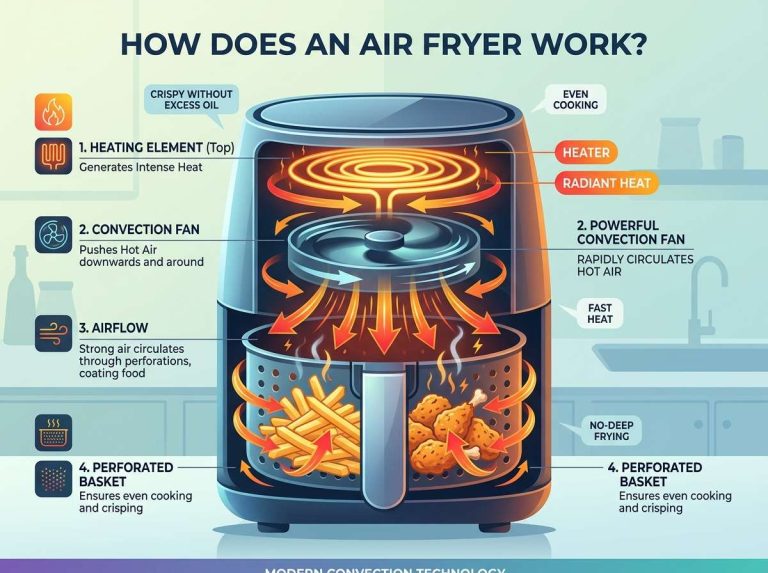
An air fryer is a small countertop appliance. It cooks food by circulating hot air quickly inside a compact chamber. Most models use a basket or tray with a fan and a heating element above it.
It is often described as a type of convection oven. Its small size lets it heat quickly and cook food faster than a full-sized oven.
How Air Fryers Cook Food With Hot Circulating Air
The fan pushes hot air across the food from every direction. This removes surface moisture and helps the outside turn golden and crisp. Because the air does most of the work, only a small amount of oil is needed.
You usually spray or brush a light coat of oil on the food. Some foods, such as frozen fries, need almost none.
Air Fryers Compared With Ovens and Deep Fryers
A traditional oven heats a large space and takes longer to warm up. An air fryer heats a small space, so it often cooks faster. Both use dry heat, so neither adds the large amounts of oil that deep frying needs.
A deep fryer submerges food in hot oil, and food absorbs some of that oil, raising its fat and calorie content.
How Air Fryers Affect Calorie and Fat Intake
Calorie and fat intake depends mostly on how much fat is added to food. Air fryers need little oil, so they can lower the fat in many fried-style dishes. This is one of the main reasons people consider them a healthier option.
The appliance does not remove calories on its own. Portion size, toppings and sauces still shape the final result, and even a small amount of oil adds calories.
Why Air Frying Uses Less Oil Than Deep Frying
Deep frying requires enough oil to cover the food, and much of that oil stays on the food after cooking. Air frying relies on hot air, so oil is only needed for browning and flavour.
As a result, you can often cut the oil for a dish by a large share. The amount you use is still up to you.
Oil Amounts and Calorie Differences in Everyday Cooking
Calorie differences depend on the food and the oil quantity. Chicken wings cooked with a light spray may contain far less fat than the same wings deep fried. Nutrition labels and recipes vary, so checking them helps.
The biggest savings usually come from cutting the oil, not from the appliance alone. Measuring oil with a spoon or spray helps you keep track.
Possible Health Benefits of Air Frying
Lower Use of Oil and Saturated Fat
The most common benefit is that air frying usually needs less oil, which generally means less total fat and less saturated fat. Many health guidelines suggest limiting saturated fat, so this can matter for everyday meals.
The benefit still depends on how much oil goes into each batch.
Fewer Harmful Compounds From Browning at Lower Oil Levels
Frying at very high temperatures can cause browning reactions that create compounds some people want to limit. Deep frying often involves high heat for long periods. Air frying can reach similar temperatures but often cooks for less time.
Some foods may therefore form fewer of these compounds, though the effect varies widely. Light browning is generally a better goal than very dark, crisp surfaces.
Easier Cooking of Vegetables and Lean Protein
Air fryers can make vegetables taste roasted and savoury with very little oil. Broccoli, peppers and sweet potato are common choices. Lean proteins such as chicken breast, fish and tofu also cook well in the basket.
These foods add fibre, vitamins and protein to a meal. Pair them with whole grains or salads for more variety.
Possible Health Concerns to Keep in Mind
Air fryers are not automatically healthy in every case. Some concerns are worth knowing before you start. Simple habits can reduce most of them.
Acrylamide and Browning in Starchy Foods
Acrylamide can form when starchy foods like potatoes are cooked at high heat for a long time. Health bodies advise keeping intake low. Cooking potatoes to a golden colour rather than dark brown helps limit it.
Soaking cut potatoes in water before cooking is a common tip. No single method removes acrylamide completely.
Nonstick Coatings and Safe Temperature Use
Many air fryer baskets have a nonstick coating. Overheating the empty basket or using metal tools can damage it. Follow the maker’s temperature limits and use silicone or wooden utensils.
Read the instruction booklet and place the appliance on a heat-resistant, clear surface. Good ventilation also helps when cooking at high heat.
Food Quality When Air Frying Processed Foods
Frozen chips and breaded items are popular in air fryers. These foods are often high in salt, starch and additives. An air fryer makes them easier to cook, but it does not change their basic nutrition.
Fresh ingredients seasoned at home give more control. Checking labels is a practical way to compare options.
Healthy Air Frying Tips for Beginners
Small habits make a noticeable difference. The tips below focus on flavour, safety and balance.
Picking Foods That Suit the Air Fryer
Foods with a fairly even shape cook best. Vegetables, lean meats, fish fillets and firm tofu work well. Very wet batters and loose ingredients can drip and make a mess.
Pat wet food dry before cooking. Dry food browns more evenly and needs less oil.
Using Little Oil and Avoiding Overcrowded Baskets
A light spray or brush of oil is usually enough. Too much oil can drip, smoke and make food soggy rather than crisp.
Overcrowding blocks airflow. Cook in a single layer, and shake or turn the food halfway through. Cooking in batches often gives better results.
Cleaning and Maintaining Your Air Fryer Safely
Unplug the appliance and let it cool before cleaning. Wash the basket and tray with warm, soapy water and a soft sponge. Avoid abrasive pads, which can scratch the nonstick surface.
Wipe grease from the heating element and fan area with a damp cloth, and never submerge the main unit in water. Regular cleaning keeps smoke and odours down.
Air Fryer Recipes That Support a Balanced Diet
Vegetable and Lean Protein Meal Ideas
Try roasted vegetables such as courgette, carrot and red pepper with a light spray of oil and herbs. Add a lean protein like chicken breast or salmon for a complete meal. Serve with brown rice or quinoa.
Keep the plate balanced. Half vegetables, a quarter protein and a quarter whole grain is a simple guide.
Simple Snacks With Less Added Fat
Chickpeas tossed in a small amount of oil and spices make a crunchy snack. Apple slices dried at a low setting are another option. Both use ingredients you may already have.
Store leftovers in a sealed container and eat them within a few days.
Air Fryer Versus Other Cooking Methods for Health
Air Frying, Baking, Grilling and Pan Frying Compared
Baking and grilling also use little added fat and suit many of the same foods. Pan frying often uses more oil, though a small amount in a good pan can still be modest.
Air frying is one useful option among several. The healthiest method is usually the one that fits your food, time and taste.
When Traditional Methods May Still Be a Better Fit
Large batches, whole roasts and layered dishes often suit a conventional oven better. Soups and stews are better cooked in a pot. An air fryer has limited space, so it is not ideal for every meal.
Many households use an air fryer alongside other appliances rather than instead of them.
Frequently Asked Questions
Are air fryers healthier than deep fryers?
Air fryers usually need much less oil than deep fryers, which can lower fat and calorie intake. The overall result still depends on the food and the amount of oil used.
Do air fryers reduce calories in food?
An air fryer does not remove calories from food on its own. Its main effect is that it usually needs less added oil than deep frying. Portion size, sauces and toppings still affect the total.
Is it safe to cook with an air fryer every day?
Daily use is generally considered safe when the appliance is kept clean and used as the maker advises. Avoid overheating an empty basket. Balanced meals matter more than the appliance itself.
Does air frying create harmful chemicals?
High-heat cooking of starchy foods can form acrylamide, which health bodies advise limiting. Cooking to a light golden colour rather than dark brown helps reduce it. Varying your cooking methods is also sensible.
Can air fryers help with weight loss?
An air fryer can support weight loss by making it easier to cook lower-fat meals. Weight change depends mainly on your overall energy balance across the whole diet. The appliance is a helpful tool, but not a solution on its own.
Conclusion
Air fryers can be a good choice for health because they usually need far less oil than deep frying. They also make it easy to cook vegetables and lean protein with a crisp finish. The benefits depend on how you use them, so light oil, careful browning and balanced meals matter most.

Mary is a home cooking enthusiast and kitchen appliance reviewer who loves helping people find the best tools for everyday meals. She enjoys testing air fryers, deep fryers, and other cooking appliances while sharing honest reviews and practical buying advice. Through FryerPick.com, Mary provides expert guides, product comparisons, and cooking tips to help readers choose the right fryer for their kitchen.