Can I Use Pink Stuff On Air Fryer
Many home cooks reach for a familiar cleaner when their air fryer gets greasy. Pink Stuff is a popular paste cleaner that many people already keep under the sink. So a common question is if you can use it on an air fryer safely. This article explains what the product is and what to consider before using it on your appliance.
You will also learn how to clean the basket, tray and interior step by step, plus common mistakes to avoid. The goal is to keep your air fryer clean without wearing down its non-stick surface.
Key Takeaways
- Pink Stuff is an abrasive paste cleaner, so it can scratch delicate non-stick coatings.
- Always check the air fryer manual before using any cleaning product on it.
- Gentle options like warm soapy water and a soft sponge are usually the safest choice.
- Never let the heating element get wet, and let every part dry fully before reuse.
- Regular quick cleaning after each use reduces the need for harsh scrubbing.
Pink Stuff Basics
Pink Stuff is a cleaning paste sold for general household use. It is designed to lift grease, grime and stains from hard surfaces. Many people use it on sinks, hobs and oven trays. Knowing its purpose helps you decide if it suits a small kitchen appliance.
It is a cleaner meant for tough jobs, and those jobs can be too rough for some kitchen tools. Knowing its limits before you apply it is the best starting point.
What Is Pink Stuff and Why Do People Use It?
Pink Stuff is a paste you apply with a cloth or sponge and then rinse away. People like it because it can handle baked-on residue that ordinary washing up liquid may not remove easily.
What Pink Stuff Is Made Of
Pink Stuff contains mild cleaning agents combined with fine abrasive particles. Abrasives are tiny grains that help scrub away dirt. The exact formula is set by the manufacturer, so check the product label for details.
Because it contains abrasives, the paste works by physically rubbing away residue. That is useful on hard, sturdy surfaces but less suitable for surfaces that scratch easily, which matters a lot for air fryers.
Common Uses Around the Home
People commonly use the paste on bathroom tiles, sinks, taps and stainless steel. It is also used on oven shelves, hobs and some pans. These surfaces are usually hard and can handle a gentle scrub.
Many households also use it on the outside of appliances. Using it on a food-contact coating is a different question, and those surfaces need extra care.
How Pink Stuff Works on Oven and Appliance Surfaces
Knowing the mechanics helps explain why some surfaces handle it well and others do not. The process has two main parts. The first is chemical loosening of grease. The second is mechanical scrubbing with abrasive grains.
How the Cleaning Action Works
The cleaning agents break down grease so it loosens from the surface. The abrasives then lift the loosened residue when you scrub. This combination works well on oven glass and hard metal. On soft or coated surfaces, the same scrubbing can leave fine marks.
Pressure and friction matter because the abrasives do the physical work. Light pressure with a soft cloth is gentler than firm scrubbing with a rough pad. Match the pressure to the surface, using more effort on hard metal and a light touch on coated parts.
Why Dwell Time Matters
Dwell time is how long a cleaner sits on a surface before you wipe or rinse it. A longer dwell time gives the agents more time to loosen grease, which can reduce how hard you need to scrub. Leaving any product on too long, however, can leave residue or dull some finishes.
The product label is the best guide here. It usually explains how long to leave a cleaner in place. Following that advice keeps the job effective and avoids unnecessary wear.
Can You Use Pink Stuff on an Air Fryer?
The short answer is that it is generally not recommended for the parts that touch food. Most air fryer baskets and trays have a non-stick coating, and abrasive pastes can damage that coating over time. The safest approach depends on your appliance and its manual.
What the Manufacturer Guidance Usually Says
Most manufacturers recommend warm water, mild washing up liquid and a soft sponge or cloth. Many also warn against abrasive cleaners, steel wool and harsh chemicals, since these can harm the coating and heating parts. Reading the manual first is the simplest way to avoid mistakes.
If the manual does not mention a specific cleaner, avoid strong or abrasive products. When in doubt, contact the manufacturer for advice. A short check can prevent costly damage.
Risks of Using Harsh Cleaners on Non-Stick Coatings
Abrasive particles can scratch the non-stick layer. Once scratched, the coating may lose its slipperiness and start to flake, and flakes can mix into food. Scratches can also make food stick more, which means more scrubbing later.
Harsh chemicals can weaken coatings over time and leave residue that affects taste or smell. Gentle cleaning is usually the better long-term choice.
Safe Alternatives for Air Fryer Cleaning
Warm water and washing up liquid handle most everyday residue. Soaking the basket briefly can soften stuck-on food, and a soft sponge or nylon brush removes what remains. These options are gentle on coatings and easy to find.
For stubborn spots, a paste of baking soda and water can help. Apply it lightly, leave it briefly, then rinse thoroughly. Test any method on a small area first to check how the coating reacts.
Step-by-Step Guide to Cleaning Your Air Fryer Safely
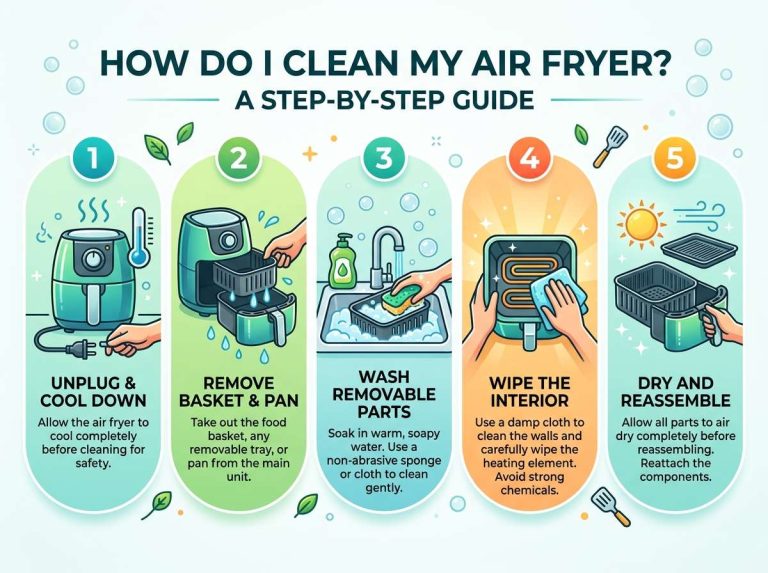
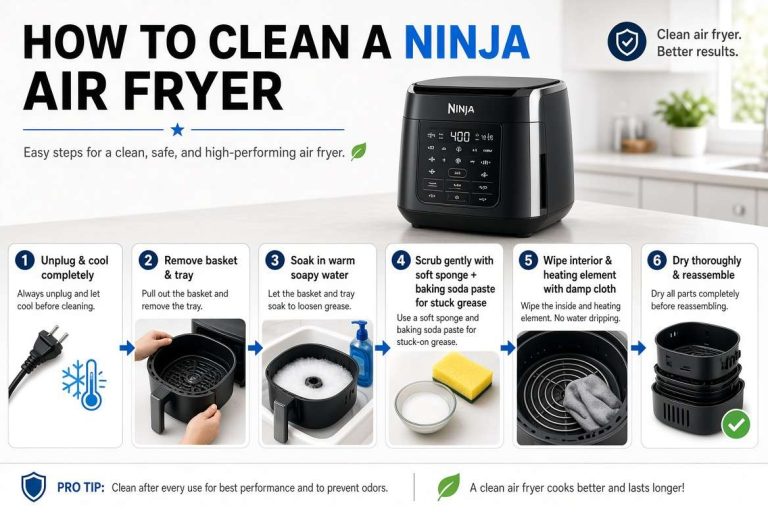
A clear routine makes cleaning quicker and safer. Follow these steps once the appliance has cooled, and always unplug it before you begin.
Preparing the Air Fryer for Cleaning
Unplug the appliance and let it cool completely. Remove the basket, tray and any liners, then empty the crumb tray into the bin.
Cleaning the Basket, Tray and Crumb Tray
Wash these parts in warm water with a small amount of washing up liquid, using a soft sponge. For stuck-on food, soak the parts briefly before wiping. Rinse well and check that no soap remains.
Cleaning the Heating Element and Interior
Wipe the heating element and inside walls with a damp cloth. Never spray liquid directly onto the heating element, and keep water away from electrical parts. A lightly damp cloth is usually enough for the interior.
Drying and Storing After Cleaning
Let every part dry fully before reassembling. Trapped moisture can cause odours or affect the next cook. Store the parts in a clean, dry place.
Tips for Keeping Your Air Fryer Clean Between Deep Cleans
Regular light cleaning reduces the need for deep cleans. Small habits stop grease from building up.
Daily and Weekly Habits
Wipe the basket and tray after each use while they are still slightly warm. Empty and rinse the crumb tray regularly, and give the interior a quick weekly wipe to help prevent smoke and odours.
Check the drawer and seals too, since food bits can collect in corners and gaps.
Using Liners and Parchment Paper Correctly
Liners and parchment paper can catch drips and reduce mess. Choose liners made for air fryers, and make sure they do not block airflow or touch the heating element.
Common Mistakes Beginners Make When Cleaning Air Fryers
Most cleaning problems come from a few common errors. Knowing them helps you avoid damage. Small changes to your routine can make a noticeable difference.
Soaking the Basket Too Long
Leaving the basket in water for hours is a frequent mistake. Long soaks can loosen the coating or affect the metal. A short soak is usually enough to soften food, then a sponge can wipe it away.
Using Abrasive Pads on Non-Stick Surfaces
Steel wool and rough scouring pads can scratch non-stick coatings quickly. Once scratched, the surface may lose its release properties. A soft sponge or nylon brush protects the coating and extends the life of the basket.
Pink Stuff Compared With Other Cleaning Options
Comparing options helps you pick the right tool for the job. Each cleaner suits different levels of mess and different surfaces. The table below gives a simple overview.
| Option | Strength | Suitability for Air Fryer Coatings |
|---|---|---|
| Pink Stuff | Strong on baked-on grime | Usually not recommended on non-stick parts |
| Warm water and washing up liquid | Good for everyday residue | Generally suitable and gentle |
| Baking soda paste | Mild, helps with stubborn spots | Suitable when applied lightly and rinsed well |
Pink Stuff Versus Dish Soap and Warm Water
Dish soap and warm water are gentler and widely recommended for air fryers. They work well for regular cleaning. Pink Stuff has more cutting power but also more risk, so the milder option is the better first choice.
Pink Stuff Versus Baking Soda Paste
Baking soda is mildly abrasive but generally gentler than many commercial pastes. It can lift light to moderate residue when used with care. Apply a thin layer, rinse thoroughly, and check the coating afterwards.
When a Specialist Cleaner Might Be Needed
Some heavy, long-term grease may need a cleaner designed for appliances. Check the manual first and look for products labelled safe for non-stick surfaces. If you are unsure, contact the manufacturer. Replacing a worn part can be safer than risking further damage.
Frequently Asked Questions
Will pink stuff damage the non-stick coating on my air fryer basket?
It can. The paste contains abrasive particles that may scratch the coating over time, reducing the non-stick effect and possibly causing flaking. Gentler cleaners are usually the safer choice for the basket.
Can I put pink stuff directly on the heating element?
Avoid putting any cleaner directly on the heating element. Keep liquids and pastes away from electrical parts. Wipe the element only with a dry or very lightly damp cloth, once the appliance has cooled and is unplugged.
How long should I leave pink stuff on before rinsing?
Follow the time on the product label, as it is the most reliable guide. Leaving abrasive paste on too long can leave residue or dull surfaces. Rinse thoroughly and check that no paste remains before using the air fryer again.
Is pink stuff safe to use around food?
Products like this are designed for household surfaces, not for parts that touch food. Any residue left behind could end up in your next meal. For food-contact parts, warm water and washing up liquid are the safer option.
What should I do if my air fryer still smells after cleaning?
Make sure every part is completely dry and free of soap or paste. Wipe the interior and heating area with a damp cloth, then let it air out. Persistent smells often come from food stuck in corners, so check the drawer and seals.
Conclusion: Clean Your Air Fryer With Care
Pink Stuff is a strong abrasive paste, but air fryer coatings need gentler care. The manual is the best starting point for any cleaning decision. For most jobs, warm water, washing up liquid and a soft sponge work well. A regular, light routine keeps your appliance clean and protects its non-stick surface for longer.

Mary is a home cooking enthusiast and kitchen appliance reviewer who loves helping people find the best tools for everyday meals. She enjoys testing air fryers, deep fryers, and other cooking appliances while sharing honest reviews and practical buying advice. Through FryerPick.com, Mary provides expert guides, product comparisons, and cooking tips to help readers choose the right fryer for their kitchen.