How To Clean Air Fryer With Dish Soap
Key Takeaways
- Dish soap and warm water handle most everyday grease on air fryer parts.
- Always unplug the unit and let it cool before cleaning.
- Avoid abrasive pads and never submerge the main unit in water.
- Rinse and dry every part well to remove soap residue and odors.
Introduction
Air fryers cook food with hot air and a small amount of oil, but grease and crumbs still build up over time. Cleaning an air fryer with dish soap is one of the simplest ways to keep it working well. Most of the job needs only supplies that many households already have.
This guide explains what to gather, how to stay safe, and how to clean each part step by step. It also covers common mistakes and how often to clean. A beginner should feel ready to care for the unit with confidence.
Why Dish Soap Works for Air Fryer Cleaning
Dish soap is designed to break down grease, the main residue left by cooking. It lifts oil off surfaces so water can wash it away. That makes it effective on the greasy film that forms on baskets and trays.
Dish soap is also gentle on most kitchen surfaces when used in normal amounts. It rinses away easily. For routine cleaning, it is a practical first choice.
Dish soap works best on fresh or lightly baked grease. Heavily burned residue may need more time or a different approach.
What You Need Before You Start
Gathering the right supplies before you begin makes the job faster and safer. Most of these items are already in a typical kitchen.
Basic Cleaning Supplies
You will need mild dish soap, warm water, a soft sponge or non-abrasive cloth, and a clean dry towel. A small bowl or the kitchen sink works well for soaking removable parts. Choose a soap labeled for dishes, since these are formulated for grease removal.
A soft-bristled brush helps reach the corners of the basket and crisper tray. Keep a separate cloth for the outside so grease does not spread.
Tools for Stubborn Grease
For tougher residue, a plastic scraper or wooden spatula can lift stuck food without scratching the surface. A nylon scrub brush works well on textured areas. These tools are firm enough to loosen baked-on bits but gentle on coatings.
Avoid steel wool, scouring powders, and harsh scrubbing pads. They can damage nonstick coatings and leave tiny scratches. Soft tools combined with soaking usually do the job.
Safety Basics Before Cleaning
Safety comes first with any kitchen appliance. Air fryers use electricity and heating elements, so a few simple precautions protect you and the unit. Taking time here prevents most accidents.
Unplugging and Letting the Unit Cool
Always unplug the air fryer from the wall before cleaning. This removes any risk of electric shock while you work near the controls and heating parts. Leaving it plugged in, even when switched off, is not safe.
Then wait until the unit has cooled completely. The basket, chamber, and outer shell can stay hot long after cooking. Handling hot parts can cause burns, and cold water on a hot surface can sometimes cause cracking.
Checking the Manual for Heating Element Care
Each model has its own cleaning rules, especially for the heating element. Read the instructions before you touch it. Some manufacturers advise against wetting the element at all, while others allow a gentle wipe once the unit is fully cool. Following the manual protects the warranty and keeps the appliance working safely.
How to Clean the Basket and Crisper Tray with Dish Soap
The basket and crisper tray collect the most grease and crumbs. They are also the easiest parts to clean with dish soap and water. A short soak followed by gentle scrubbing handles most buildup.
Soaking Removable Parts
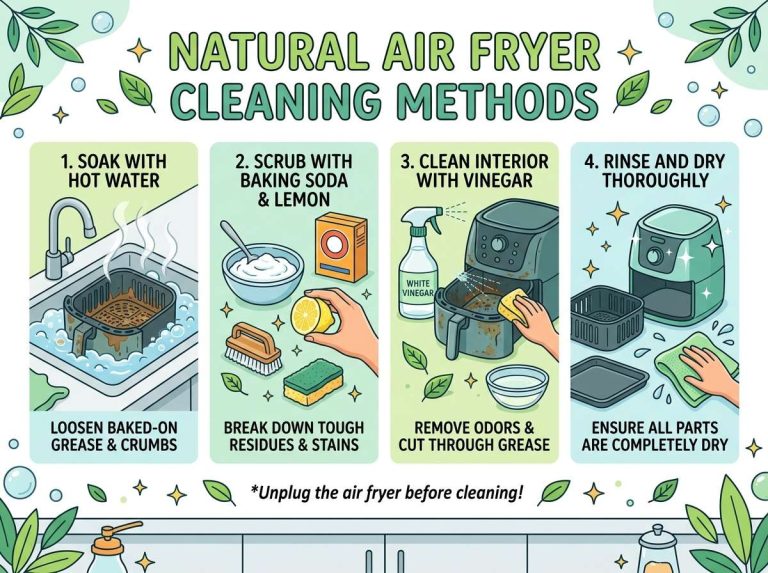
Fill the sink or a large bowl with warm water and add a small squirt of dish soap. Place the basket and tray in the water and let them soak for about 10 to 15 minutes. Soaking loosens grease so it lifts away with less effort.
Warm water softens fat better than cold. Keep the water level below any electrical parts if your model has them attached. Only removable parts should go in the water.
Scrubbing Off Baked-On Food
After soaking, use a soft sponge or brush to wipe the surfaces in small circles. Pay attention to the corners and the holes or ridges in the tray, since these areas often trap food bits.
For stuck-on pieces, use a plastic scraper or wooden spatula to lift them gently. If residue remains, soak the part a little longer before scrubbing again. Patience usually works better than pressing harder.
Rinsing and Drying Completely
Rinse each part under running water until no soap bubbles remain. Leftover soap can leave a film and a slight taste on the next meal. Running water helps remove every trace.
Dry the parts thoroughly with a clean towel or let them air dry before reassembling. Trapped moisture can cause odors and may affect the unit over time.
How to Clean the Inside of the Air Fryer with Dish Soap
The inside of the cooking chamber needs a light touch. It holds the heating element and fan, which must stay dry. Careful wiping prevents grease buildup without risking damage.
Wiping the Cooking Chamber
Dampen a soft cloth with warm water and a little dish soap. Wring it out so it is damp, not dripping. Wipe the walls and floor in gentle strokes.
Use a second cloth with plain water to remove any soap, then dry the chamber completely. Leftover moisture can cause odors during the next use.
Cleaning the Heating Element Gently
The heating element is the metal coil or tube at the top of the chamber. Many manuals advise cleaning it only when the unit is fully cool and dry. Use a soft dry brush to remove loose crumbs.
For grease, a barely damp cloth may be allowed if your manual permits it. Never spray liquid directly onto the element, and confirm the method in your instructions first.
Removing Grease from Fan Vents
Fan vents can collect a fine layer of grease over time. Wrap a dry or very lightly damp cloth around a cotton swab to reach small gaps. Work slowly so no moisture gets inside the housing.
Check the vents regularly, since buildup can affect airflow and even heating. Never force anything into openings.
How to Clean the Outside and Control Panel
The outside of an air fryer collects splashes and fingerprints during everyday use. The control panel needs extra care because it is sensitive to moisture.
Wiping the Exterior Surfaces
Use a soft cloth dampened with warm, soapy water to wipe the outer shell. Work from top to bottom so drips do not run over clean areas. Rinse the cloth and wipe again to remove soap.
Dry the surface with a separate towel. Pay attention to the handle and the area around the basket opening, where grease tends to collect.
Protecting the Display and Buttons
Keep liquid away from the display and buttons. Wipe these areas with a slightly damp cloth, and never spray cleaner directly onto them. Moisture can seep under the panel and cause problems over time.
Finish with a dry cloth. If you see sticky residue on the buttons, a little more care with a damp cloth usually lifts it. Always confirm the approach in the owner’s manual.
Common Mistakes to Avoid
Most cleaning problems come from a few common habits. Knowing them helps you protect the unit. Small changes in technique often make a big difference.
Using Abrasive Pads on Nonstick Coatings
Steel wool and rough scouring pads can scratch the nonstick basket coating. Scratches make food more likely to stick. Use soft sponges and plastic tools instead.
Submerging the Main Unit in Water
The main body contains electrical parts and should never go in water. Only removable parts belong in the sink. Wipe the base and housing with a damp cloth.
Leaving Soap Residue Behind
Leftover soap can cause a soapy taste or a film on food. Rinse each piece thoroughly under running water. Dry it fully before using the unit again.
Dish Soap vs. Other Cleaning Options
Dish soap is not the only way to clean an air fryer. Other household products can help, depending on the buildup. Comparing them helps you pick the right tool for each job.
Dish Soap and Warm Water Compared with Baking Soda Paste
Dish soap and warm water handle everyday grease and light residue well. A baking soda paste can loosen tougher, dried-on spots because it is mildly abrasive. Use it gently and rinse it off completely.
When Vinegar or Commercial Degreasers Might Help
Diluted vinegar can help with mineral deposits and some odors. Commercial degreasers target heavy grease but may be harsh on coatings. Check the manual and label first, and rinse thoroughly afterward.
How Often to Clean Your Air Fryer
Regular cleaning prevents buildup and keeps food tasting fresh. How often you clean depends on how much you cook. A quick routine after each use is the easiest habit to keep.
Quick Cleaning After Every Use
Once the unit has cooled, wipe the chamber and wash the basket and tray. A short soak with dish soap usually takes only a few minutes. This stops grease from hardening over time.
Deep Cleaning for Buildup and Odors
Every few weeks, or whenever you notice smoke or smells, do a thorough clean. Give the chamber, vents, and corners extra attention. Lingering odors often mean grease has built up somewhere hard to reach.
Frequently Asked Questions
Is dish soap safe to use on an air fryer basket with nonstick coating?
Yes, mild dish soap is generally safe for nonstick baskets. Use warm water and a soft sponge, and avoid abrasive pads that can scratch the coating. Rinse and dry the basket completely before reuse.
Can I put air fryer parts in the dishwasher instead of cleaning by hand?
Some removable baskets and trays are dishwasher safe, but many are not. Check the manual first. Hand washing with dish soap works well for most models.
Why does my air fryer smell after cleaning with dish soap?
A smell often comes from soap residue or moisture left inside the chamber. Rinse all parts well and dry everything fully. Grease stuck in hard-to-reach areas can also cause lingering odors.
How do I get rid of baked-on grease that dish soap will not remove?
Soak the part longer in warm, soapy water, then loosen the residue with a plastic scraper. For stubborn spots, a light baking soda paste can help. Rinse and dry thoroughly before use.
Can I use dish soap on the heating element?
Most manuals advise against wetting the heating element. If your manual allows a light wipe, use a barely damp cloth only after the unit is fully cool. Never spray liquid directly onto the element.
Conclusion
Dish soap and warm water are a practical choice for cleaning an air fryer. Unplug the unit and let it cool first, then clean each part carefully. Avoid abrasive tools, keep the main body dry, and rinse and dry everything completely. A regular routine keeps the appliance clean and ready for the next meal.

Mary is a home cooking enthusiast and kitchen appliance reviewer who loves helping people find the best tools for everyday meals. She enjoys testing air fryers, deep fryers, and other cooking appliances while sharing honest reviews and practical buying advice. Through FryerPick.com, Mary provides expert guides, product comparisons, and cooking tips to help readers choose the right fryer for their kitchen.