How to Deep Fry Fish?
Deep frying fish is one of the easiest and most delicious cooking methods you can try. The result? Golden, crispy fish with tender, flaky meat inside. If you’ve never done it before, don’t worry. I’ll walk you through every single step so you can make restaurant-quality fried fish right in your own kitchen.
In this article
Why Deep Fry Fish?
Before we jump into the how-to, let’s talk about why deep frying fish is such a popular cooking method around the world. When you deep fry fish, the hot oil creates a barrier around the fish. This keeps the moisture trapped inside while the outside gets super crispy and golden brown.
The flavor is amazing too. The oil adds richness to the fish. You get this incredible contrast between the crunchy exterior and the moist, tender interior. It’s the reason fish and chips shops have been so popular for centuries.
Deep frying also works fast. You don’t need hours of prep time. In just a few minutes, you can have hot, delicious fried fish ready to eat. This makes it perfect for weeknight dinners or casual gatherings with friends and family.
What Type of Fish Should You Use?
Not all fish work the same way when you deep fry them. Some fish are better suited for frying than others. Let’s look at the best options.
Cod is one of the most popular choices for deep frying. It has mild flavor and flaky white meat. The thick fillets hold up well in hot oil. You can also use haddock, which tastes similar to cod. Both fish have firm texture and don’t fall apart easily.
Tilapia is another great option. It’s affordable, mild, and easy to find at most grocery stores. The fillets are thin, which means they cook really fast.
Catfish works well too. It has a slightly stronger flavor than cod or tilapia, but many people love it. Catfish is often used for deep frying in Southern cooking.
Bass, perch, and snapper are all good choices as well. These fish have enough flesh to hold together during frying. They also have nice flavor that tastes great when fried.
Stay away from very oily fish like salmon or mackerel. These fish have high fat content already. When you deep fry them, they become too greasy. Save those fish for grilling or baking instead.
Equipment You’ll Need
Deep frying fish doesn’t require fancy or expensive equipment. You probably have most of what you need at home already.
The Pot: Get a heavy-bottomed pot or Dutch oven. Cast iron works great. You need something deep enough to hold at least three inches of oil. The weight helps distribute heat evenly so your oil stays at the right temperature.
Thermometer: This is really important. You need a deep-fry or candy thermometer to check your oil temperature. Getting the oil hot enough makes all the difference. Too cool and your fish gets greasy. Too hot and the outside burns before the inside cooks.
Paper Towels: You’ll use plenty of these to dry your fish before cooking. Moisture is the enemy of crispiness. Pat your fish dry with paper towels before putting it in the oil.
Slotted Spoon or Spider Strainer: These tools help you remove the fried fish from the oil safely. A spider strainer is especially helpful because it lets oil drain back into the pot.
Shallow Bowls or Plates: You need these for your breading station. One bowl holds your flour mix. Another holds beaten eggs. You might use a third for breadcrumbs if you want extra crunch.
Tongs: Long tongs help you handle fish safely away from hot oil. Never use your hands near hot oil.
Wire Rack: If you have one, place it over a baking sheet. This lets oil drain away from your fried fish while it rests.
Preparing Your Fish
Prep work is key to getting great results. Don’t skip this part.
Thawing: If you’re using frozen fish, thaw it in the refrigerator the night before. Never thaw fish at room temperature. This lets bacteria grow. If you forgot to thaw, you can place the sealed fish in cold water for an hour or two.
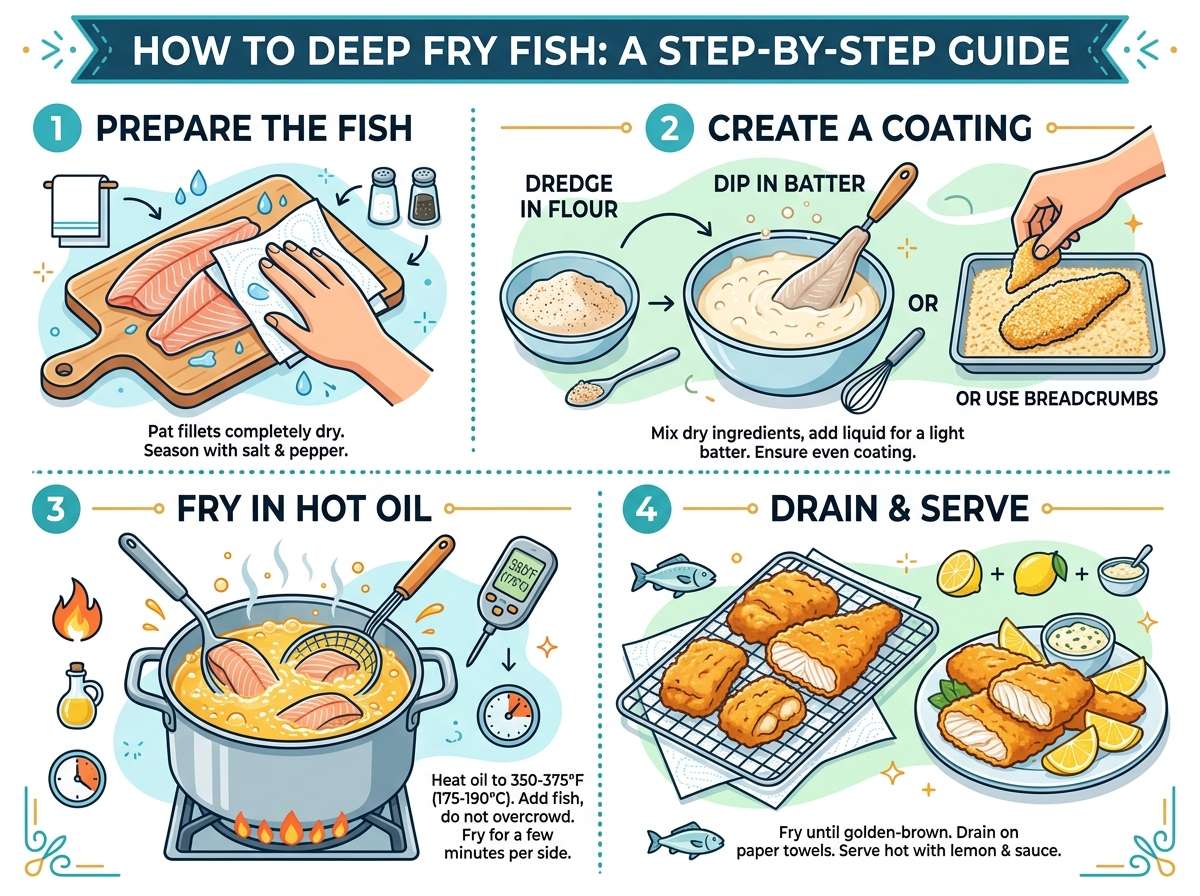
Drying: Once your fish is thawed, pat it completely dry with paper towels. Wet fish creates steam when it hits hot oil. Steam causes splashing and makes your fish soggy instead of crispy.
Cutting: If your fillets are really thick or large, cut them into smaller pieces. Pieces about the size of your palm cook evenly. Thinner pieces around half an inch thick work best.
Seasoning: Sprinkle your fish with salt and pepper right before frying. Don’t do it too early or the salt will draw out moisture.
Making Your Coating
The coating is what makes fried fish crispy and delicious. You have options here based on what you like.
Basic Flour Coating: Mix all-purpose flour with salt and black pepper. That’s it. Super simple and it works great. Use about one cup of flour with one teaspoon of salt and half a teaspoon of pepper.
Beer Batter: This is thicker and creates an extra-crunchy coating. Mix one cup of flour, one egg, one cup of cold beer, and salt and pepper. The beer adds flavor and keeps the coating light and airy.
Cornmeal Coating: Use cornmeal instead of flour or mix it half and half with flour. Cornmeal gives you a crunchier, more textured exterior. Add a little paprika and garlic powder for extra flavor.
Buttermilk Soak: Soak your fish in buttermilk for fifteen minutes before dredging in flour. The acid tenderizes the fish and makes it juicy inside. Then dredge in seasoned flour.
Panko Breadcrumbs: For maximum crunch, mix equal parts flour and panko breadcrumbs. Panko has larger pieces than regular breadcrumbs, so you get a crunchier coating.
You can add spices to any coating. Try garlic powder, onion powder, paprika, cayenne pepper, or cajun seasoning. Just don’t go overboard or your coating will be bitter.
Setting Up Your Frying Station
Organization makes the whole process smoother and safer.
Set out your bowls in order. First bowl has your flour mixture. Keep this dry. Second bowl has beaten eggs mixed with a splash of milk. Third bowl has your panko or breadcrumbs if you’re using them.
Place your dried fish fillets on a plate near your first bowl. Have your pot with oil nearby but not right on top of your prep area. Splashing is a real risk.
Have paper towels and your wire rack ready. You’ll need somewhere to put your cooked fish immediately after frying.
Keep your thermometer where you can see it easily. You need to check the temperature multiple times.
This setup is called your breading station. It keeps everything in one place so you can work quickly and safely.
Choosing and Heating Your Oil
The type of oil matters. You need an oil with a high smoke point. This means the oil can get hot without breaking down or smoking.
Best Oils for Frying:
- Vegetable oil
- Canola oil
- Peanut oil
- Sunflower oil
Avoid olive oil or butter. These have low smoke points and will burn at deep frying temperatures.
Pour your oil into your pot until it’s about three to four inches deep. You need enough oil to submerge your fish. Too little and the bottom might cook too fast while the top doesn’t cook enough.
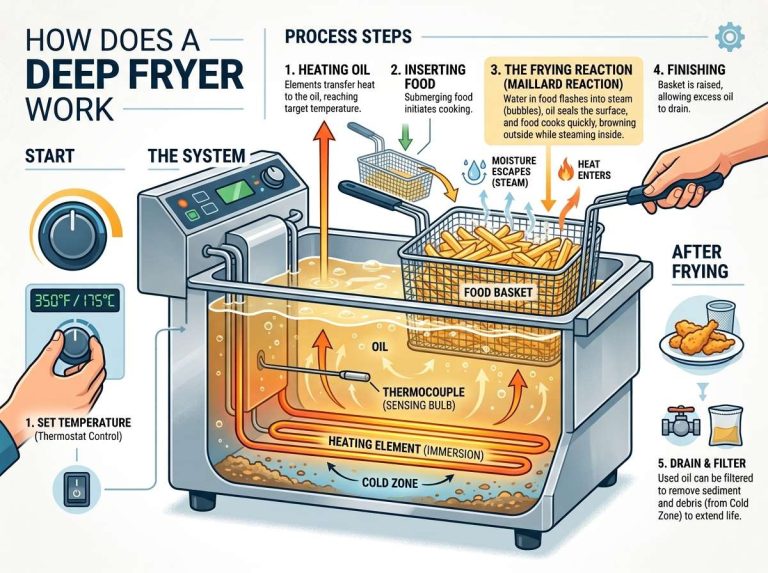
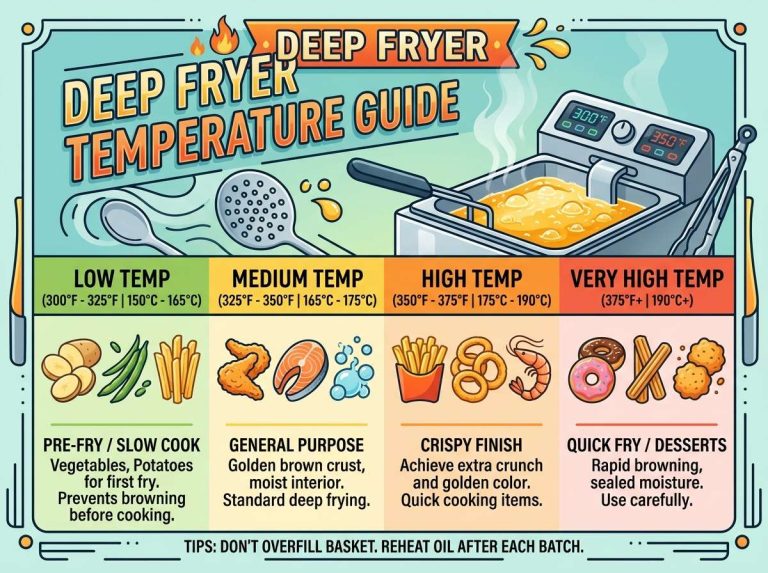
Heat the oil slowly. Clip your thermometer to the side of the pot so the tip sits in the oil but doesn’t touch the bottom. The ideal temperature for deep frying fish is between 350 and 375 degrees Fahrenheit. Most recipes call for 375 degrees.
This takes time. Don’t rush it. You might wait ten or fifteen minutes for the oil to reach the right temperature. Use this time to finish prepping your fish and breading station.
Once the oil reaches temperature, it’s ready. You can hold it there for several minutes while you bread your fish.
Breading Your Fish
Now comes the fun part. Take each piece of fish and coat it with your breading.
Start with the flour mixture. Press the fish into the flour, coating both sides well. Shake off extra flour. You want a light, even coating, not a thick layer.
Next, dip the floured fish into your egg mixture. Make sure it’s fully coated. The egg acts like glue, helping your breading stick to the fish.
Now place it in your final coating. If you’re using just flour, you’re done. If you’re using panko breadcrumbs, press the fish into the breadcrumbs so they stick. The more contact with the egg, the more breadcrumbs will stick.
Place each breaded piece on a clean plate. Don’t stack them or the breading will stick together. Let them sit for a few minutes. This helps the coating set.
The Frying Process
Check your oil temperature one more time. It should be at 375 degrees. If it’s dropped, let it heat back up.
Carefully place your breaded fish into the hot oil. Use tongs or a slotted spoon. Lower it slowly into the oil to avoid splashing. Never drop fish from above or hot oil will splash everywhere.
You can fry multiple pieces at once, but don’t overcrowd the pot. The oil temperature will drop too much if you put in too much fish at once. Space your pieces out so they’re not touching. Leave room for the oil to flow around each piece.
Once your fish is in, you can relax a little. Don’t poke it or move it around. Let it cook undisturbed for the first minute or two. The coating needs to set.
After a few minutes, gently flip your fish using tongs. You want to cook both sides evenly. The fish should float when it’s done, but you’ll flip it about halfway through cooking.
How Long Does It Take?
Timing depends on a few things. Thin fillets cook fast, thick fillets take longer. Smaller pieces cook faster than larger pieces. The oil temperature matters too.
At 375 degrees, most fish fillets take three to six minutes total. That’s three minutes per side roughly. Your fish is done when it’s golden brown and floats to the top of the oil.
You can also check by looking at the thickest part. Use a fork to flake it gently. If it flakes easily and looks opaque white, it’s done. If it still looks translucent, give it another minute.
Don’t rely on time alone. Each batch is a little different. Pay attention to color and use your fork to check doneness.
Removing Your Fish
Once your fish is golden brown and done, remove it carefully from the oil.
Use a slotted spoon or spider strainer. Lift the fish out slowly, letting the oil drain back into the pot. Hold it over the oil for a few seconds. Let as much oil drip off as possible.
Place your fish on a wire rack placed over paper towels. The rack lets air circulate underneath so your fish stays crispy. The paper towels catch dripping oil.
If you don’t have a wire rack, place fish directly on paper towels. You can flip it after a minute to let both sides drain.
Sprinkle a little salt on your hot fish right when it comes out. This tastes better than salting it later.
Keeping Multiple Batches Warm
If you’re frying several batches, you need to keep the cooked fish warm while you cook the rest.
Use your oven set to 200 degrees Fahrenheit. Place cooked fish on a baking sheet lined with paper towels. Put it in the warm oven. This keeps the fish hot without cooking it further or making it too crispy.
You can keep fish warm this way for about ten to fifteen minutes. After that, it starts to dry out.
Serving Your Fried Fish
Fried fish is best served hot right out of the oil. The crispy coating is at its best when it’s still warm.
Serve it with lemon wedges. A squeeze of fresh lemon juice cuts through the richness of the oil. It brightens up the flavor.
Tartar sauce is the classic pairing. You can buy it bottled or make your own with mayo, pickle relish, and a splash of lemon juice.
Malt vinegar drizzled over fish is amazing too. This is how they do it at traditional fish and chips shops.
Serve your fish with sides that complement it. Fries are the obvious choice. You can also do coleslaw, hush puppies, or steamed vegetables.
Troubleshooting Common Problems
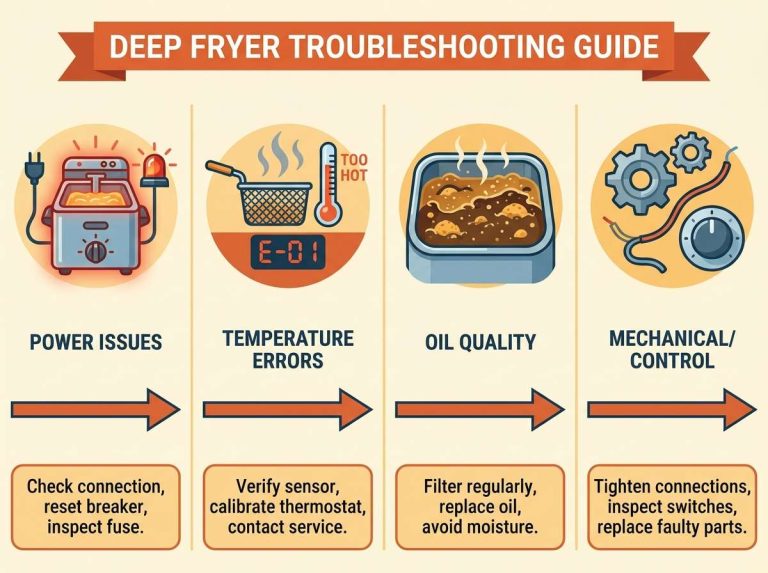
Greasy Fish: This means your oil wasn’t hot enough. The oil needs to be at least 350 degrees. If it’s cooler, the fish absorbs more oil and tastes greasy.
Fish Falls Apart: You flipped it too early or too rough. Let the first side cook longer before flipping. Use gentle tongs and flip only once.
Soggy Coating: Your fish had too much moisture. Pat it completely dry with paper towels before breading. Also make sure your oil is hot enough.
Coating Is Burning But Inside Isn’t Cooked: Your oil is too hot. Lower it to 350 degrees. Your fish might be too thick. Cut it into thinner pieces.
Uneven Cooking: Your pieces are different sizes. Cut all your fish into similar sized pieces so they cook at the same rate.
Coating Won’t Stick: Your fish is too wet or your egg coating wasn’t applied well. Make sure fish is dry. Use enough egg to glue the flour or breadcrumbs to the fish.
Safety Tips for Deep Frying
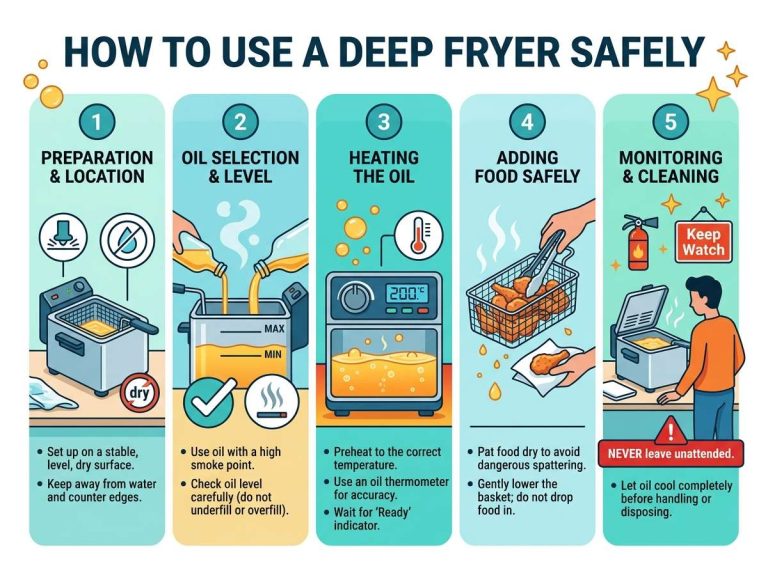
Hot oil is dangerous. Take these precautions seriously.
Never leave hot oil unattended. If you need to step away, turn off the heat.
Keep the oil away from kids and pets. Make sure they know not to touch the pot or thermometer.
Tie back long hair and roll up loose sleeves. You don’t want anything dangling near hot oil.
Never pour water into hot oil. If you have a small oil fire, cover the pot with a metal lid to smother it. Use a fire extinguisher if needed. Never use water.
Keep a fire extinguisher in your kitchen just in case. Make sure you know how to use it.
Wipe up any oil spills on your counter immediately. Oil makes surfaces slippery.
Use long tongs or a slotted spoon. Your hands should stay far away from the pot.
Let hot oil cool completely before disposing of it. Never pour it down the sink. Instead, let it cool, then pour it into a container and throw it away with regular trash.
Dealing with Used Oil
You can reuse your frying oil several times. It saves money and is better for the environment.
Let the oil cool completely. Strain it through a fine mesh strainer or cheesecloth to remove crumbs and bits of coating.
Store the strained oil in a glass container with a tight lid. Keep it in a cool, dark place. It lasts several weeks when stored properly.
Each time you reuse the oil, strain it again. After using it several times, it will get darker. Eventually you should replace it with fresh oil.
If your oil starts to smoke at a lower temperature than before, it’s time to replace it. Old oil breaks down and can’t handle high heat anymore.
Different Frying Methods
Deep frying isn’t your only option for fried fish. You have other methods too.
Shallow Frying: Use just a half inch of oil in a skillet. Your fish sits partially in oil. You flip it halfway through. This uses less oil but requires more attention.
Air Frying: An air fryer uses hot air instead of oil. It’s healthier and less messy. Your fish won’t be quite as crispy, but it’s still tasty and takes just a few minutes.
Pan Frying: Similar to shallow frying but with even less oil. Just a tablespoon or two in a regular skillet. Not quite the same as true deep frying but tasty and simple.
Recipes to Try
Once you’ve mastered basic deep fried fish, try these variations.
Cajun Fried Fish: Add cajun seasoning, cayenne, paprika, and garlic powder to your flour mix. Serve with remoulade sauce.
Beer Battered Fish: Use the beer batter coating mentioned earlier. The beer makes it extra crispy and light.
Herb Crusted Fish: Mix fresh herbs like parsley and dill into your panko coating. Add lemon zest too.
Spicy Asian Style: Use panko breading mixed with sriracha and ginger. Serve with sweet and sour sauce.
Classic Fish and Chips: Serve your fried fish with thick cut fries, coleslaw, and malt vinegar. Classic for a reason.
Health Considerations
Deep fried food is tasty but not the healthiest option. If you’re watching calories, eat it in moderation.
One serving of deep fried fish is typically three to four ounces. Pair it with vegetables to add nutrition. Coleslaw counts as a vegetable side dish.
The type of oil matters for health too. Vegetable oil and canola oil are better choices than solid shortening.
You can make healthier versions using an air fryer or by pan frying with less oil. These methods reduce the fat content significantly.
Storing Leftover Fried Fish
Leftover fried fish is good cold the next day. Store it in an airtight container in the refrigerator. It keeps for about three days.
You can reheat it in a 375-degree oven for five to ten minutes. This crisps it back up better than microwaving. Microwaving makes it soggy.
You can also eat it cold straight from the container. It’s actually pretty good that way, especially with a squeeze of lemon juice.
Tips for Restaurant-Quality Results
You want your fried fish to taste like it came from a restaurant. These tips help you get there.
Use fresh fish when possible. Frozen fish works but fresh tastes better.
Don’t skip the drying step. Truly dry fish is the foundation of crispy coating.
Keep your oil at the right temperature. Use your thermometer every single time.
Don’t overcrowd your pot. More fish means lower oil temperature and greasier results.
Flip only once. Let the first side cook completely before flipping.
Work quickly. Don’t let breaded fish sit for too long before frying.
Serve immediately. Fried fish tastes best hot and crispy right out of the oil.
Common Questions About Deep Frying Fish
Can I use olive oil? No. Olive oil has a low smoke point and will burn.
How hot should the oil be? Between 350 and 375 degrees Fahrenheit. 375 is most common.
Do I need to flip the fish? Yes, once, about halfway through cooking.
Can I fry fish without a thermometer? You can test the temperature by dropping a tiny piece of bread in. If it browns in about 60 seconds, you’re at the right temperature. But a thermometer is safer and more accurate.
What’s the best oil? Vegetable, canola, peanut, or sunflower oil all work well.
How long does fried fish keep? About three days in the refrigerator in an airtight container.
Can I make it gluten-free? Use cornstarch or a gluten-free flour blend instead of regular flour.
Final Thoughts
Deep frying fish is easier than you think. It’s fast, it’s delicious, and once you understand the basics, you’ll do it right every time. The key points to remember are dry your fish, keep your oil hot, use a thermometer, and don’t overcrowd the pot.
Start with a simple flour coating and a mild white fish like cod. Once you’re comfortable, experiment with different coatings and fish types. Try beer batter or panko breadcrumbs. Add spices and seasonings to make it your own.
The first time might feel a little intimidating with the hot oil. That’s normal. But once you’ve done it, you’ll realize it’s straightforward and safe as long as you pay attention. After a few times, deep frying fish becomes second nature.
You’ll be amazed at how crispy and golden your fish turns out. Your family and friends will be impressed. Restaurants don’t have magic. They just use good techniques and fresh ingredients, both of which you can do at home.
Now get in your kitchen and fry some fish. You’ve got this.

Mary is a home cooking enthusiast and kitchen appliance reviewer who loves helping people find the best tools for everyday meals. She enjoys testing air fryers, deep fryers, and other cooking appliances while sharing honest reviews and practical buying advice. Through FryerPick.com, Mary provides expert guides, product comparisons, and cooking tips to help readers choose the right fryer for their kitchen.