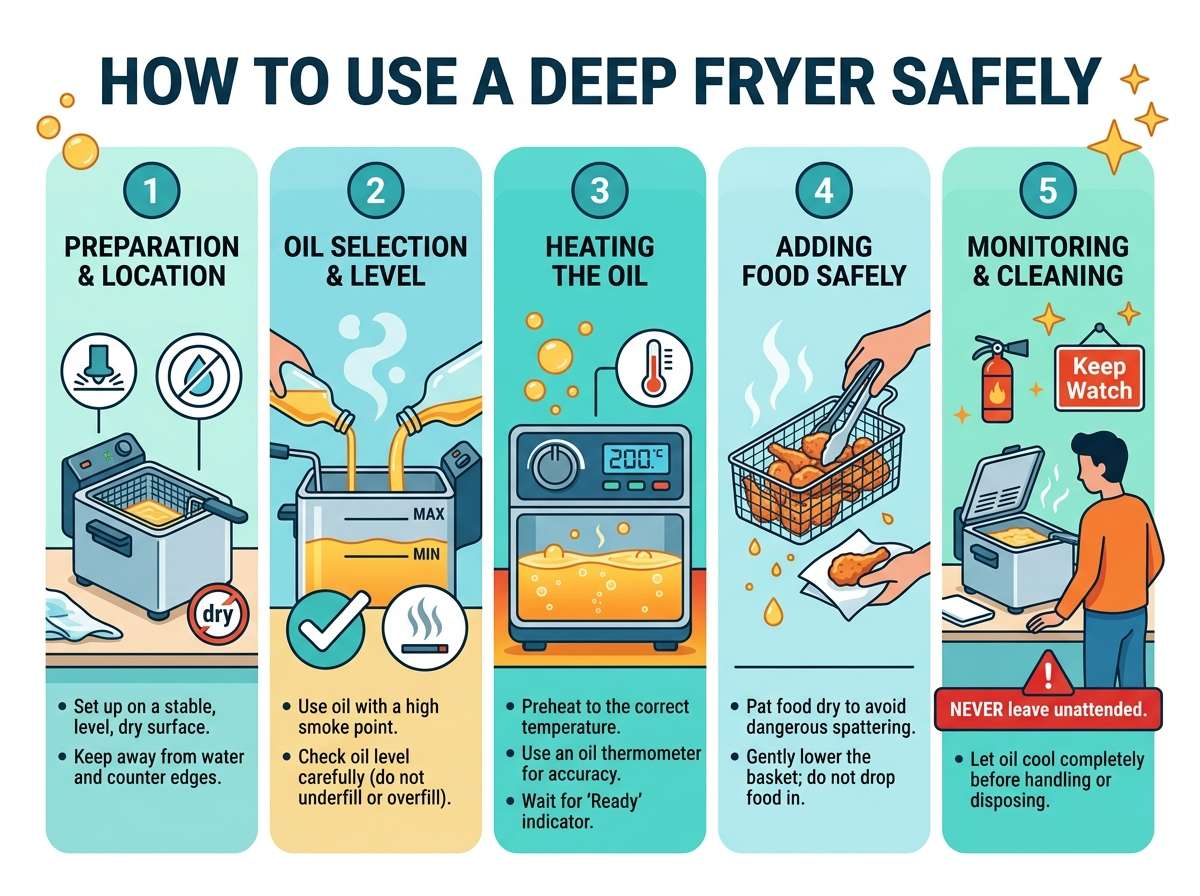
How to Use a Deep Fryer Safely?
Deep frying makes food taste amazing. Crispy chicken, golden fries, crunchy onion rings, all of it comes from one simple tool: the deep fryer. But hot oil is no joke. It can burn skin, start fires, and cause real harm if you don’t treat it with respect.
The good news is that deep fryer safety is not hard to learn. You just need to know a few basic rules, follow them every time, and stay alert while you cook. This guide walks you through everything step by step, in plain and simple language, so you can fry food at home without fear.
Let’s get into it.
In this article
Why Deep Fryer Safety Really Matters
Hot oil can reach temperatures far higher than boiling water. At these temperatures, oil can catch fire in seconds if it touches an open flame or gets too hot. It can also splash and cause painful burns if food is added the wrong way.
Every year, kitchen fires and burns happen because people rush the frying process or skip basic safety steps. Most of these accidents are avoidable. All it takes is a bit of patience and the right habits.
Think of your deep fryer as a small, controlled fire hazard sitting on your counter. Treat it that way, and you’ll stay safe every single time.
Pick the Right Deep Fryer for Your Kitchen
Before we even talk about frying, let’s talk about the fryer itself. Not every deep fryer works the same way, and some are safer for beginners than others.
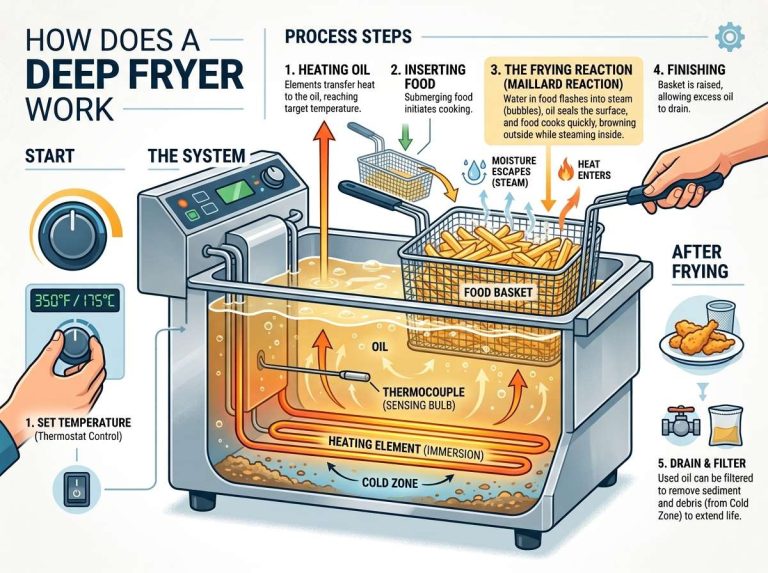
Electric deep fryers are usually the safest option for home cooks. They have a built-in thermostat that keeps the oil at a steady temperature, so you don’t have to guess. Many also come with a lid that helps stop splatters and traps heat inside.
Stovetop deep frying using a pot and oil is more old school, but it needs extra care. You control the heat manually, so there is more room for mistakes. If you go this route, always use a deep, heavy pot and a reliable oil thermometer.
Air fryers are not true deep fryers since they use hot air instead of oil, but they are a much safer alternative if you want that crispy texture with less risk.
For anyone new to frying, an electric deep fryer with a lid and an automatic shut-off feature is the smart pick.
Get Your Kitchen Ready Before You Fry
A safe frying session starts long before the oil gets hot. Here’s how to set the stage.
Clear the Area
Give yourself plenty of room. Move towels, paper, oven mitts, and anything flammable away from the stove or counter where the fryer sits. A cluttered space near hot oil is asking for trouble.
Check for Kids and Pets
Hot oil and curious little hands or paws don’t mix. Keep children and pets out of the kitchen while you fry, or at least a safe distance away from the fryer.
Turn on Ventilation
Frying creates smoke and steam, along with strong smells. Turn on your kitchen exhaust fan or open a window. Good airflow keeps the air clear and also helps prevent oil vapor from building up.
Have a Fire Extinguisher Nearby
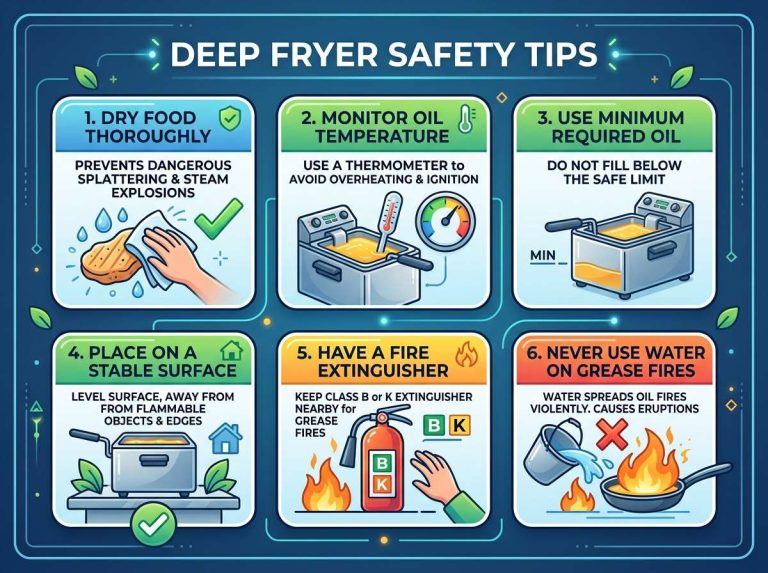
This one is easy to skip, but it’s one of the most important steps. Keep a fire extinguisher rated for grease fires (a Class K or Class B extinguisher) within reach. Never use water on a grease fire, since it will cause the flames to spread instead of going out.
Picking the Right Oil
The type of oil you use plays a bigger role in safety than most people think. Every oil has something called a smoke point, which is the temperature at which it starts to burn and give off smoke instead of just heating up.
Oils with a high smoke point are best for deep frying. These include:
- Peanut oil
- Canola oil
- Sunflower oil
- Vegetable oil
- Corn oil
Avoid oils with a low smoke point, like olive oil or butter, since they burn too fast and can create smoke, bad flavor, and even flare-ups at high heat.
Also, never mix old oil with new oil, and never reuse oil that looks dark, smells off, or has bits of burnt food floating in it. Used oil breaks down over time and has a lower smoke point, which raises the risk of a fire.
Never, Ever Add Water to Hot Oil
This is one of the golden rules of deep frying, and it deserves its own section because it’s so important.
Water and hot oil are a dangerous combination. Water is much denser than oil, so if a drop of water hits hot oil, it sinks below the surface and instantly turns to steam. That steam expands so fast that it causes the oil to explode outward in a violent splatter, sometimes shooting hot oil several feet into the air.
This is why you should always pat food dry with a paper towel before frying it. Frozen food should be thawed and dried first too, since ice turns into water the moment it touches hot oil.
Getting the Temperature Right
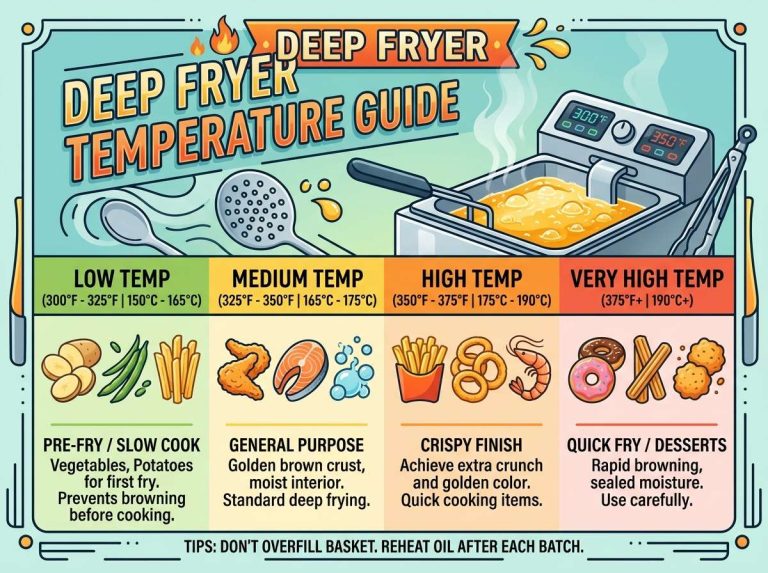
Temperature control is at the heart of safe and tasty deep frying. Too low, and your food soaks up grease and turns soggy. Too high, and you risk burnt food or even a fire.
Most fried foods cook best somewhere between 325 and 375 degrees Fahrenheit. Here’s how to keep things on track:
- Use a deep fry thermometer or the built-in gauge on your electric fryer.
- Let the oil heat up slowly instead of blasting it on high right away.
- Never leave the oil unattended while it’s heating, since oil can overheat quickly and catch fire without warning.
- If you see smoke rising from the oil, turn off the heat right away. Smoke means the oil is close to its breaking point.
A good rule of thumb: if the oil starts smoking, it’s already too hot for safe frying.
Adding Food to Hot Oil the Right Way
This step causes more burns than almost any other part of deep frying, so slow down and do it carefully.
- Lower the food in gently, using tongs, a slotted spoon, or a frying basket. Never drop food in from a height, since this causes splashing.
- Add food in small batches. Overloading the fryer drops the oil temperature too fast and also increases splatter.
- Face the food away from you as you lower it in, so any splash moves away from your body instead of toward it.
- Stand back slightly right after adding food, since this is the moment splatter is most likely to happen.
Stay Close and Stay Alert
A deep fryer is not something you can walk away from. Hot oil needs your full attention from start to finish.
Set a timer if that helps you remember cook times, but keep your eyes on the fryer too. Grease fires can start in under a minute if oil gets too hot, so this is not the moment to check your phone or step into another room.
Keep the lid nearby if your fryer has one, since covering hot oil can help smother small flare-ups before they spread.
Removing Food Safely
Once your food is golden and cooked through, take it out slowly and carefully.
Use a slotted spoon, tongs, or the built-in frying basket to lift food out. Let excess oil drip off before placing it on a plate lined with paper towels. This helps soak up extra grease and also keeps hot oil from dripping onto your counter or floor.
Avoid touching the fryer basket or pot with bare hands right after use, since metal parts stay hot long after the oil looks calm.
What To Do If a Grease Fire Starts
Even with every precaution, accidents can still happen, so it helps to know exactly what to do if oil catches fire.
- Turn off the heat source immediately, if it is safe to reach it.
- Cover the pot or fryer with a metal lid to cut off oxygen to the flames. This can put out small fires fast.
- Never use water on a grease fire, since it will cause the fire to explode and spread further.
- Use a fire extinguisher made for grease or electrical fires if the flames don’t go out right away.
- Leave the kitchen and call emergency services if the fire grows or spreads beyond the pot.
Knowing these steps ahead of time, rather than trying to figure them out during a real fire, can make a huge difference.
Cleaning and Storing Your Deep Fryer
Safety doesn’t end once the food is cooked. How you clean up and store your fryer matters too.
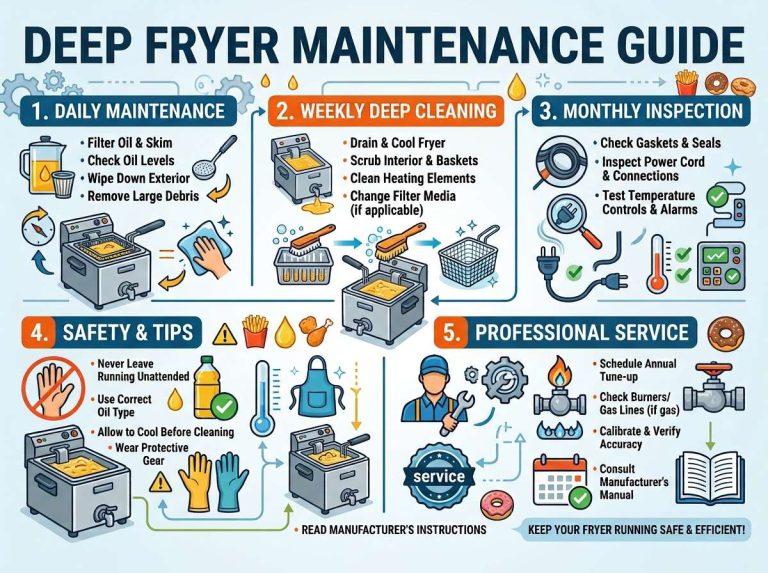
Let the oil cool completely before you touch, move, or pour it. Hot oil stays dangerous for a long time after the burner turns off.
Once cooled, strain the oil through a fine mesh strainer or cheesecloth to remove leftover bits of food. Store the strained oil in a sealed container in a cool, dark place if you plan to reuse it. Toss it out if it looks cloudy, smells bad, or has been used more than a few times already.
Clean the fryer basket, lid, and pot with warm soapy water, and dry everything fully before storing it. Leftover moisture inside a fryer can lead to splattering the next time you use it.
Never pour used cooking oil down the sink, since it can clog pipes over time. Instead, pour it into a sealed container and throw it away with regular trash, or take it to a local recycling center that accepts used cooking oil.
Common Mistakes to Avoid
A few small habits cause most deep frying accidents. Keep these in mind every time you fry:
- Overfilling the fryer with oil, which raises the risk of overflow once food is added.
- Using a pot that’s too shallow for stovetop frying, giving oil less room to rise safely.
- Wearing loose sleeves or clothing near the fryer, which can catch a splash or brush against hot surfaces.
- Leaving fryer cords near water or the edge of the counter, where they can get pulled or knocked over.
- Frying wet or frozen food without drying it first.
- Skipping a thermometer and guessing at oil temperature.
Simple awareness of these habits goes a long way toward keeping your kitchen accident free.
A Quick Safety Checklist Before You Fry
Here’s a short list to run through each time, almost like a pre-flight check:
- Clear the counter of anything flammable
- Turn on the exhaust fan or open a window
- Keep kids and pets away from the area
- Pat food completely dry
- Check that the oil is at the right temperature
- Keep a grease fire extinguisher within reach
- Stay near the fryer the entire time it’s in use
- Turn off heat and unplug the fryer once you’re done
Running through this list becomes second nature after a few frying sessions, and it takes less than a minute to do.
Final Thoughts
Deep frying doesn’t have to feel scary once you know the basics. Hot oil demands respect, but with the right prep, the right oil, careful temperature control, and full attention while cooking, you can fry food at home safely and with confidence.
Take it slow the first few times. Stay close to the fryer, keep water far away from hot oil, and always have a plan in case something goes wrong. Follow these habits, and deep frying will become just another normal, safe part of your cooking routine, one that rewards you with crispy, golden food every single time.

Mary is a home cooking enthusiast and kitchen appliance reviewer who loves helping people find the best tools for everyday meals. She enjoys testing air fryers, deep fryers, and other cooking appliances while sharing honest reviews and practical buying advice. Through FryerPick.com, Mary provides expert guides, product comparisons, and cooking tips to help readers choose the right fryer for their kitchen.